Category Archives: Texas birds

Birds of Goose Island

Birding at Goose Island State Park is always a treat although right now, we have a slight dearth of species since some of the winter birds (Eastern Phoebe for example) have left and the migrants and nesters are yet to arrive. Still, it’s normal to get 30 or more species on woods bird walks and over 50 on the shore walk. Then, just up the road are still the Whooping Cranes that spend each winter in a farmer’s field.

We got here a day or so ago and got the campsite that we like and I’ve logged 54 birds so far in rather laid-back birding. Here are some photos that I took to give a sense of the variety here:

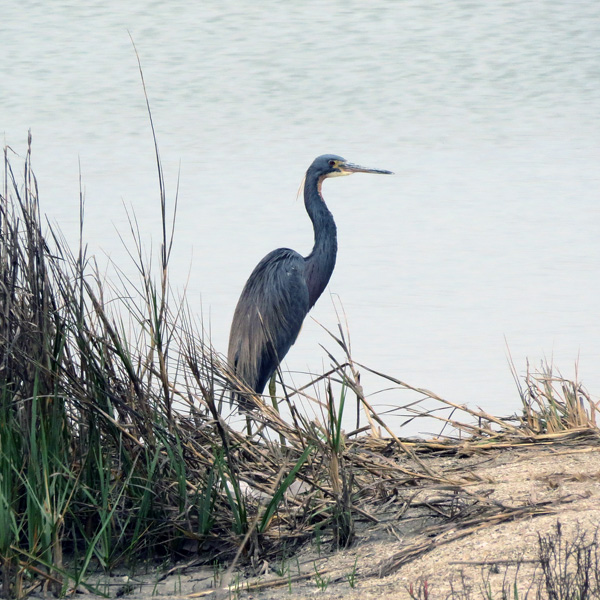
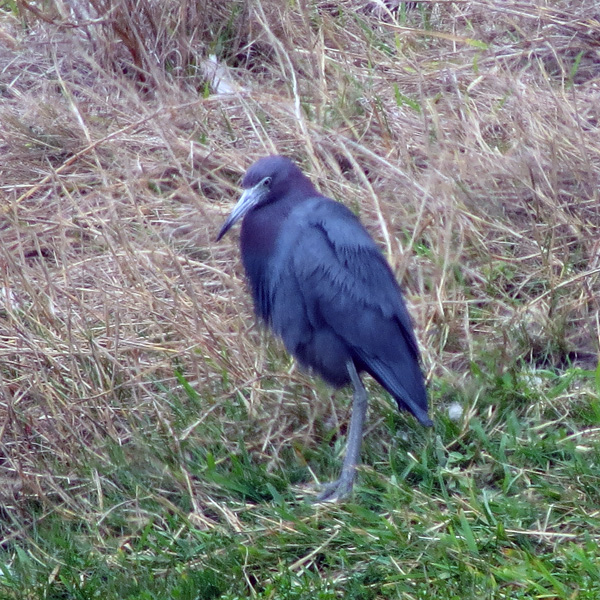
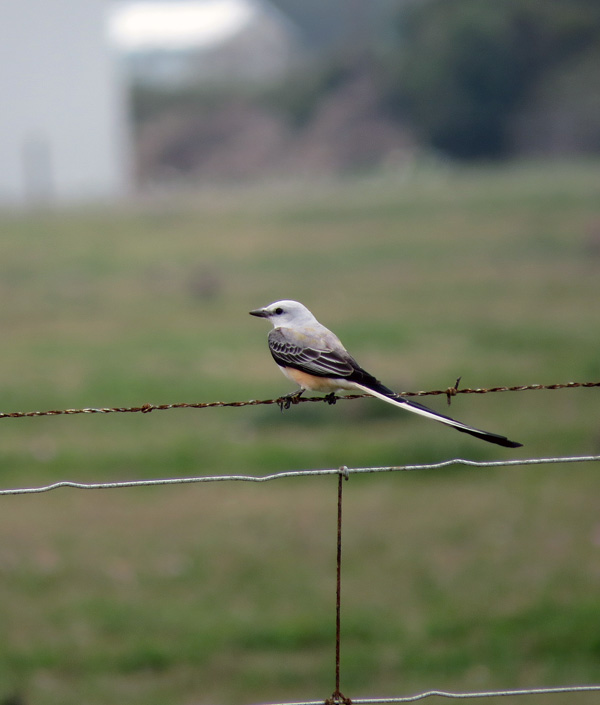
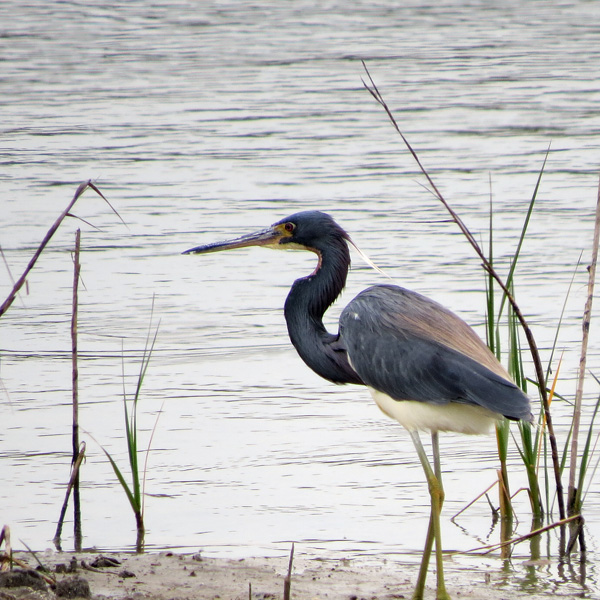
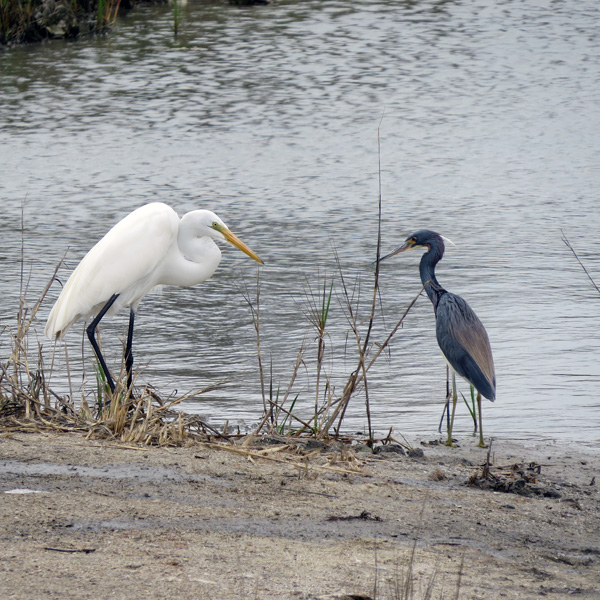
This Great Blue Heron is developing breeding plumage. A Little Blue Heron We have seen several Scissor-tailed Flycatchers, perched and in action.  Always a treat. A Tri-colored Heron A Great Egret checking out the Tri-colored Heron


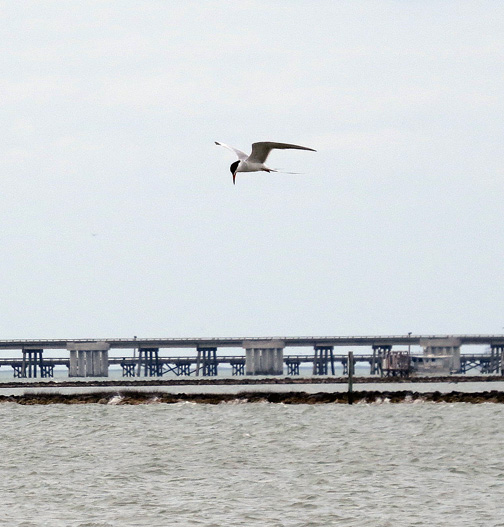
This Forster's Tern was working hard for lunch.

We are expecting a cold front tomorrow (72 down to 63!) and hope it produces a little warbler fallout action. We are here another week and I hope to hit 100 birds in the county by then – it’s fun to sort out the shorebirds once again.

Pushing The Camera’s Envelope

I have pretty much switched to my Canon SX50 HS digital zoom, leaving my more expensive camera back at the trailer. Generally, this is a good strategy but every so often, I end up pushing the digital zoom too much.

In some settings, the zoom will go all the way in to 200x or the equivalent of 4800mm. At this distance, the photo quality gets grainy, especially in poor light – but it captures a record of what you saw.

We had a great visit to Lost Maples State Natural Area where I got three life birds (more on that next time.) I heard about a nesting Great Horned Owl late one day so we drove out to the picnic area and soon located her in a cave-like impression in the cliff across the valley. The light was fading and she was in the shade but the photo, grainy as it is, looks almost like a painting. She was there the next day but sleeping.

Not far away, in another cliff in a neighboring valley, there is a Red-tail Hawk nest. The local bird hosts have built a pipe-tube pointer to allow you to pinpoint the far-away site. The first two times I checked it there was no activity. The next morning, I saw a RTHA flying over the campsite and later, when I took Penny for a walk up the trail, she was on the nest. Again, another long-range shot at the limits of the camera.

Even though it snowed in Vermont the first day of Spring, these nesters give one hope that warmer days are ahead. Happy Spring!

Some Texas Birds

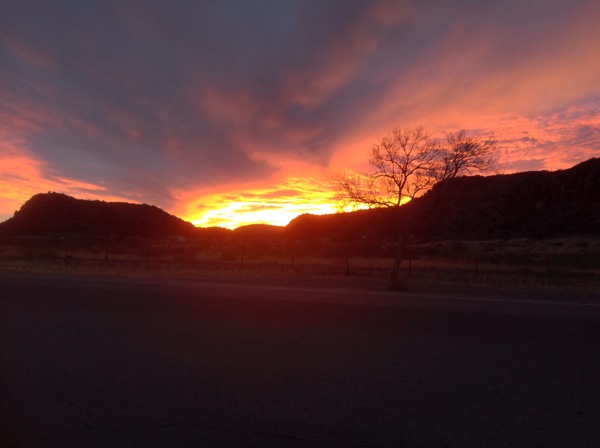
We have been staying at Davis Mountains State Park which is a picturesque high desert location with pretty good birding. The ongoing Texas drought is apparent: fewer birds, dusty trails, and beautiful sunsets. Here’s a picture I just took with the iPad, sitting in a grocery store parking lot.

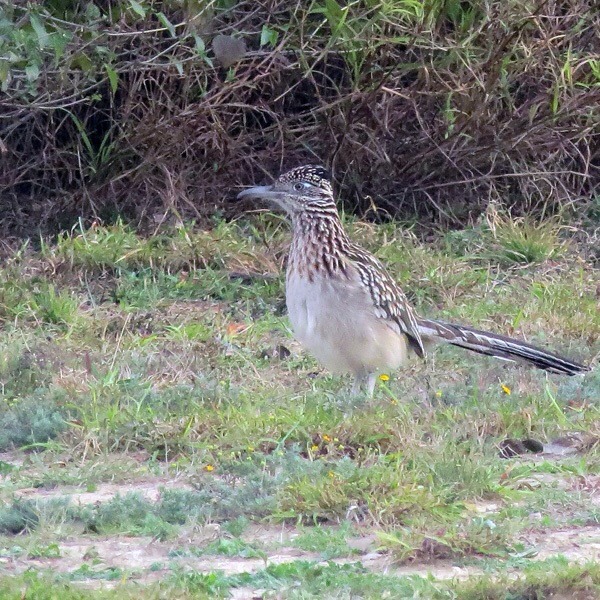
Here are a few bird photos that I’ve taken recently. The first is the Greater Roadrunner – a bird that drives Penny nuts.

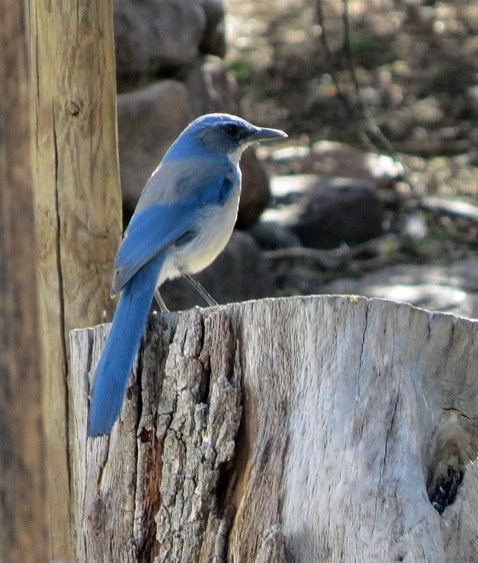
The Western Scrub-jay is a lot like our Blue Jay – smart, noisy, pretty.

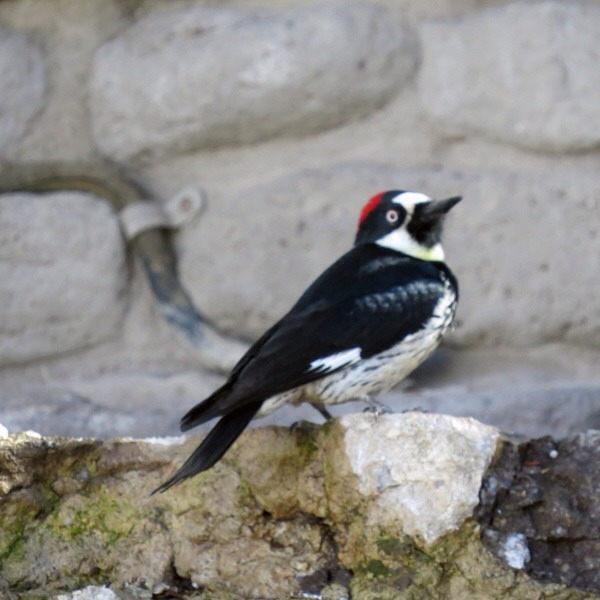
Another noisy but colorful bird here is the Acorn Woodpecker. They are a delight to watch.

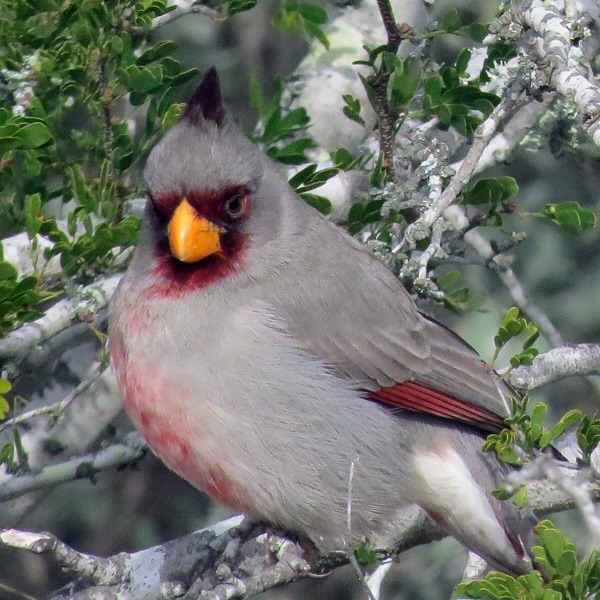
When you hear a "chip" down here, it may be a Northern Cardinal, but more often , a Pyrrhuloxia. Here’s a female.

We leave Saturday for Hueco Tanks State Park, just outside El Paso. Then to Arizona on Monday.

The Orioles of Salenino

One of the "must see" spots on any visit to the Upper Rio Grande Valley is the sleepy little community called Salenino. Just several miles from Highway 83, it’s a hispanic settlement with a garish cemetery, a big Roman Catholic church, mangy dogs that never heard of rabies shots, and some of the best birding in the Southwest.

You drive down this rutty clay road, hoping not to meet another vehicle, and there’s a small parking lot and then, the Rio Grande, and Mexico. Here is a two acre parcel where volunteers have been feeding birds since 2008 or so, supported by the hundreds of birders who visit each winter from across North America.

While there are many unique birds seen at Salenino each season, the three orioles are the daily stars. The big Altimira Oriole is seen in other parts of the Valley but this is the reliable place for Audubon’s and Hooded. Mary and I saw all three the other day, aswesatwith others inawn chairs watching the avian show before us. We have been there mant times before but it never disappoint. Hey, if the orioles are elswhere what’s not to like about dozens of Green Jays annd Great Kiskadees.

Here’s a big Altimira that we saw:

An Audubon’s Oriole came in for its peanut butter fix:

The Hooded Oriole is smaller and noted by its hood but this is a juvenile

This will be our last visit to Salenino this trip – and it is the last year for one of the long-time volunteers, Cheryl Longton. She’s pointed out the orioles, Brown Jays, Red-billed Pigons, Gray Hawks, Zone-tailed Hawks, and other special birds to hundreds of visitors. Great job, Cheryl. Good birding.

Life Birds #368 & #369

Warblers can be frustrating, flitting from branch to branch, often moving through and suddenly gone, and causing you neck pain as you try to watch them high in the trees. I’ve had several that were target birds but which I kept missing. The other day, several birders gave me the old "We got some good looks at them a few minutes ago" spiel, which while true, didn’t make my day.

Saturday, I returned with the dog to Anzalduas County Park to try once more. It was quiet (there is a fee for weekends) but when I saw and heard a singing Loggerhead Shrike on the way in, and then spotted an Eastern Bluebird as I parked the truck, I was expecting a good morning. And it was.

Going into the grove of trees we visited the other day, I saw all sorts of activity up ahead. Dozens of Blue-grey Gnatcatchers and Orange-crowned warbers worked through the foliage, with many American Goldfinches feeding as well. Then I spotted something different – smaller, black and white – and a Black-throated Gray Warbler, life bird #368, popped out in the open. I studied it as it moved back into the branches, and grabbed for the camera. It was moving away, little by little.

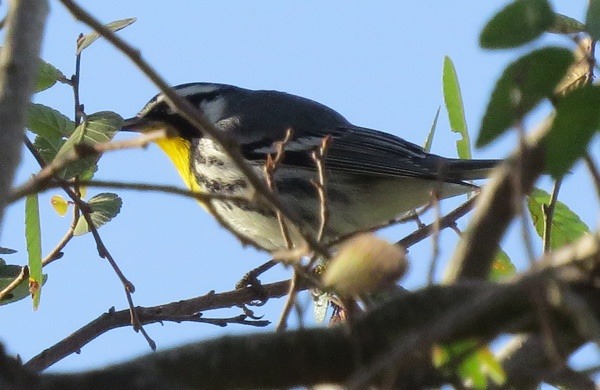
As things happen, I then saw some yellow and in seconds, was looking at my first Yellow-throated Warbler. This time I was ready with the camera and grabbed this shot.

Then, as is often the case with warblers, it was over. They had moved on and I was left with this "wow, that was something else" feeling of being at the right place at the right time. Good Birding.

Wrapping up the Lower Valley birding

We had guys from a RV repair service out of Tennessee, who winter in the Valley, come by to size up the work on our sagging belly pan. I had devised a plan to fix it but it was a two-person job so when Casey showed up alone, I pitched in and we got it buttoned up fine in less than an hour. Mary and I leave for Falcon Lake State Park in a couple of days so it’s nice to have it done.

Meanwhile, I’ve been trying to pick off some birds I have missed. Let me share with you some of the diverse birds that make this place so special.

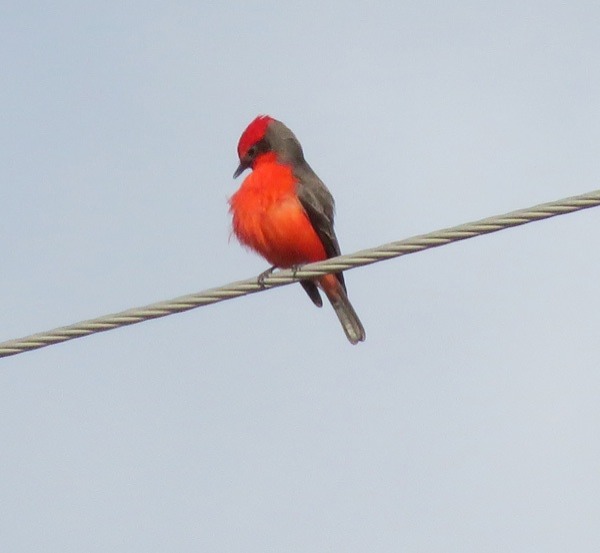
Perhaps my favorite is the Vermillion Flycatcher. They are my kind of bird – active in their flycatching and brilliant in coloration. Unlike their Least, Willow and Ash cousins who are impossible to identify without calls, these hotshots just put on a show.

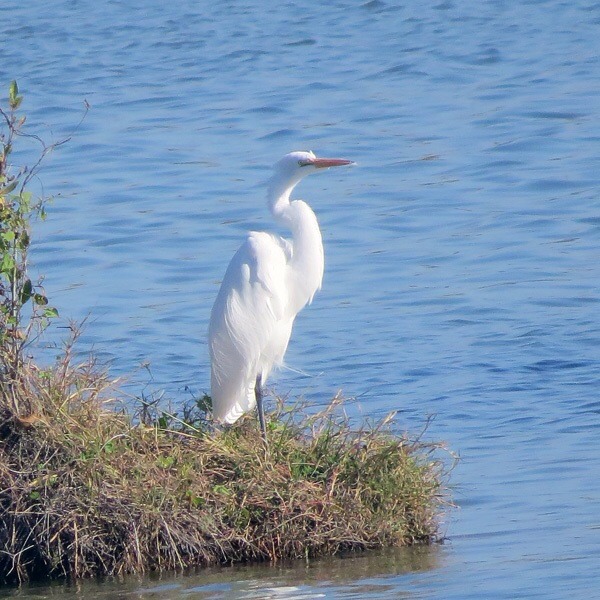
Just as brilliant are the Great Egrets.

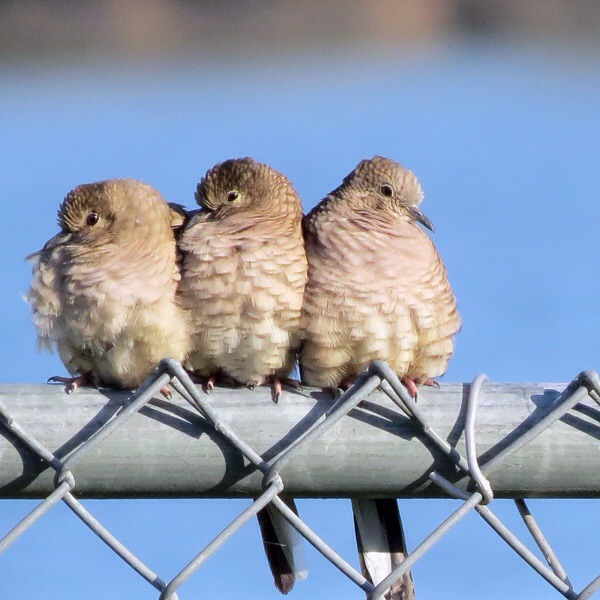
We see six doves here: White-tipped, White-winged, Inca, Mourning, Eurasion-collard, and Common Ground. These three young Commons were hanging out yesterday morning – begging for a caption.

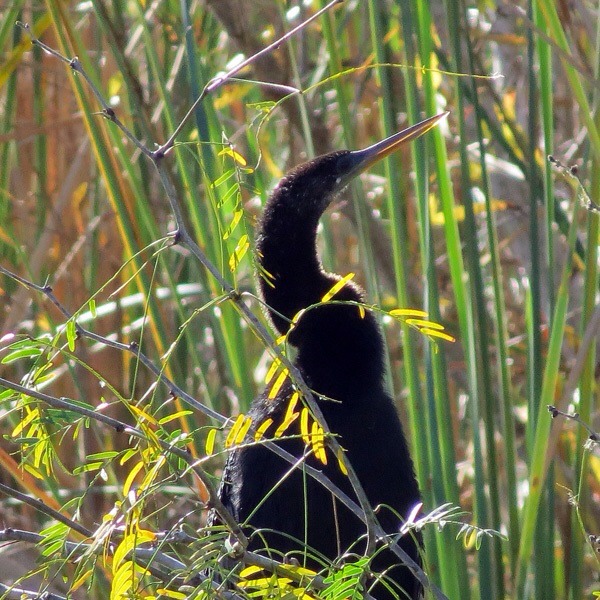
One of the ineresting fishing birds here is the Anhinga, aptly known as "Snake Bird."

I’ll put up a few more shots in a day or so – the 4G system is completely overloaded here. We’re moving to the boonies next week so we will see how that works out.

A month from now, we’ll be in California. Time to start easing westward.

More Rio Grande Valley Birds

The Green Parakeets were cool the first day or so but their noisy frenetic flying, throughout the day, is getting a bit old. However, like with many flocks of swirling birds, I wonder how they signal turns and swoops and dives. These guys chatter a lot but I don’t think it’s "Break right and dive toward that guy and dog" that they are calling out.

We’ve been going to some of the many birding sites and done a few bird walks. We have to manage the dog so often, I’ll ask Mary to take the walk while I go separately with Penny. I have used our bike setup a couple of times which gives her a workout. Yesterday, I came up on a perched hawk, stopped for a look but the squeaking front brake flushed it.

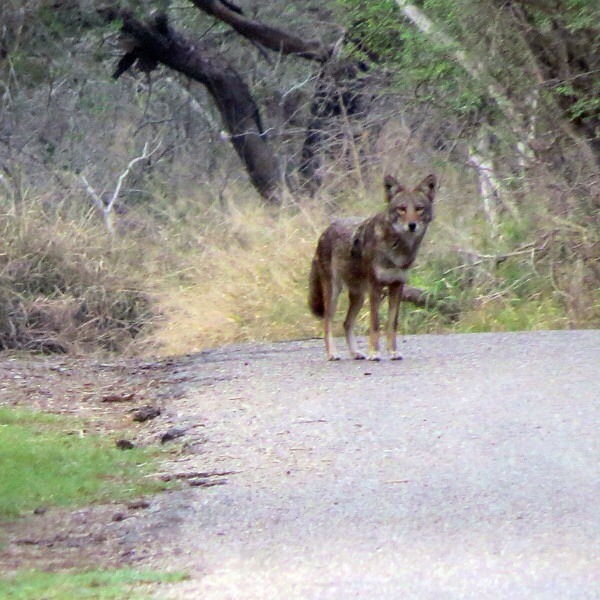
As we headed out the other morning, this coyote just stared whileI took long distance shots – then he just ambled off.

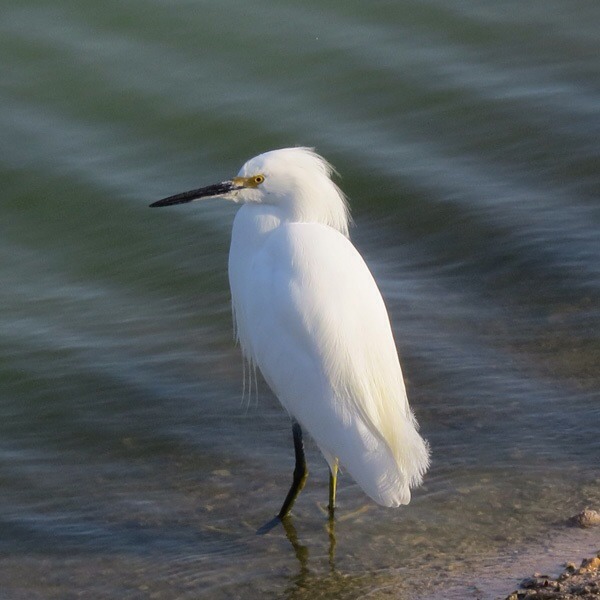
We see a lot of egrets – I had a wonderful Great Egret shot which I accidentally deleted from the camera. This Snowy Egret was also cooperative:

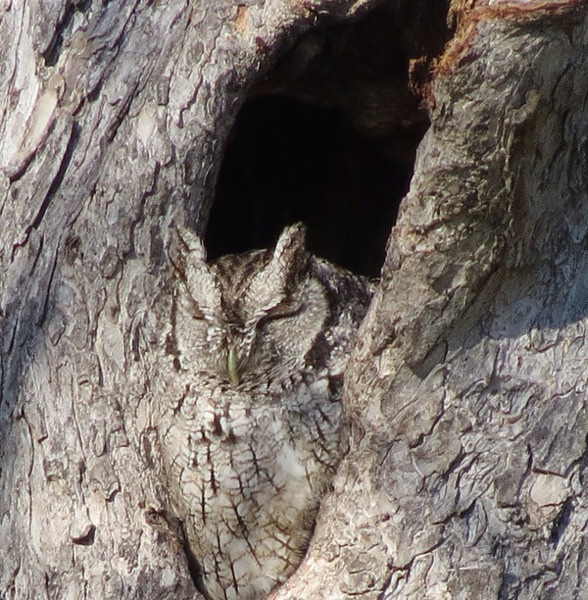
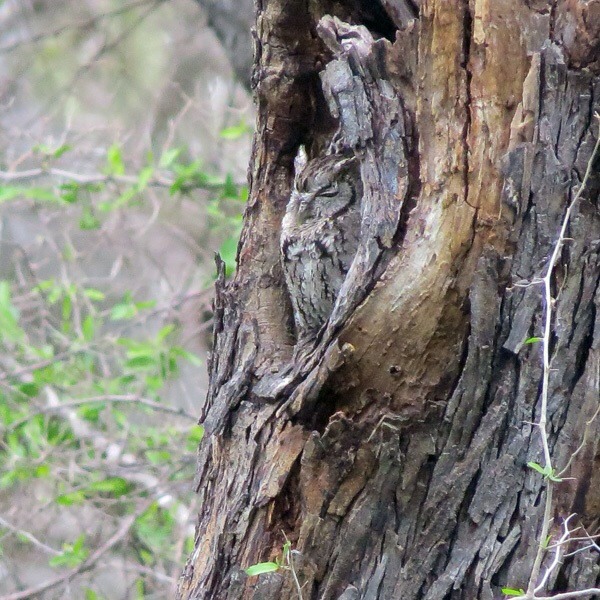
Monday, we birded for a while at a County Park not far away. Two British birders, who I had met the day before, showed us this Eastern Screech Owl in a tree right in the middle of the park. Talk about protective coloration!

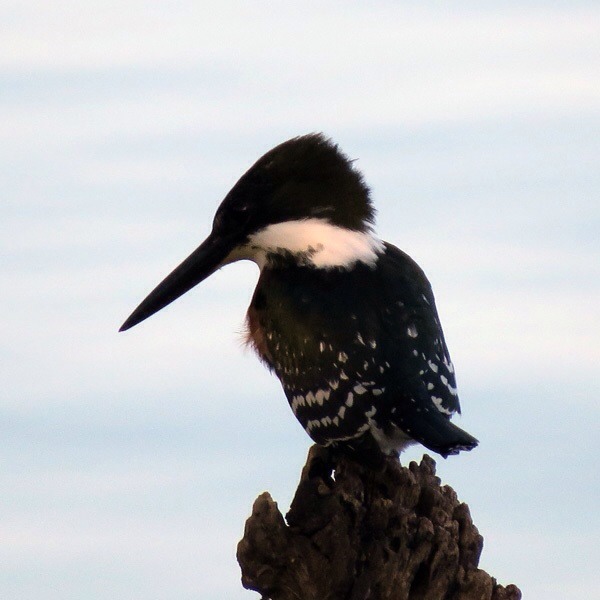
This Green Kingfisher was in poor light but dove and got a fish just after I took this shot.

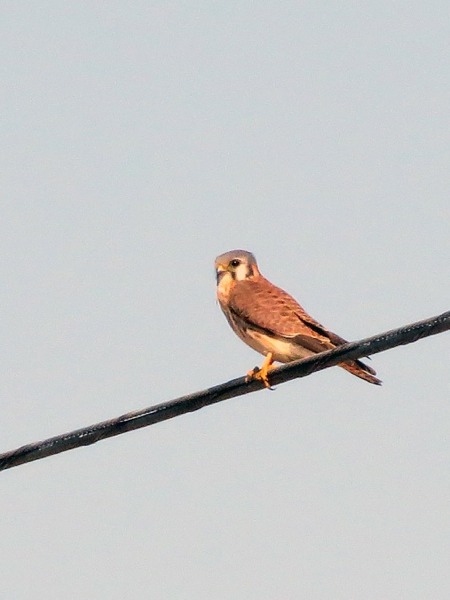
Driving along, it is common to see American Kestrel perched on wires. Perhaps these are the same ones we see in Vermont in summer.

And every so often, you get a reminder that this not New England birding:

Birding in Telcel Land

We are close to Mexico, in fact today I biked with Penny in mid-70’s weather (sorry, that’s a bit mean for our NE friends) down the Bentsen State Park trails, and hiked a mile to the Rio Grande. Aside from hot and dry and old flood debris, it was pretty plain – except for the birds.

However, as you get close to the border, the Mexican telephone system Telcel, grabs your signal and suddenly you are getting warnings about roaming charges. It’s a little maddening, especially in the midlle of a call. I just turn my phone off until I get a few miles north.

We are ensconced in a small RV park which is a first for us. It is an interesting mix of old geezers looking for the best buffet, and birders, looking for all the specialties of the Valley. Mary and I awake to the calls of Golden-fronted Woodpeckers and Great Kiskadees and periodically through the day, to the noise of fast-flying Green Parakeets.

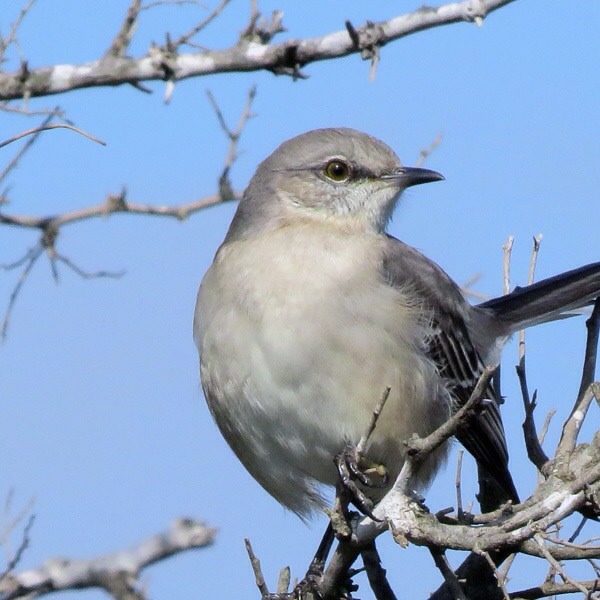
At the risk of boring our non-birding friends, here are a few shots from the last two days. The first is a Northern Mockingbird, the state bird of Texas:

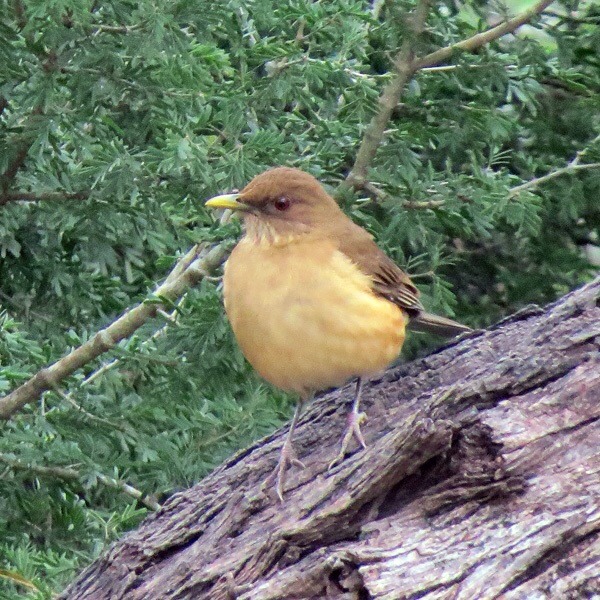
A local specialty is the rather rare Clay-colored Thrush, which acts like an American Robin but looks like its name:

Yesterday, I went for an early bird walk in rather chilly foggy temperatures. The ranger brought us to this well-hidden Eastern Screech Owl which we likely would have just walked by:

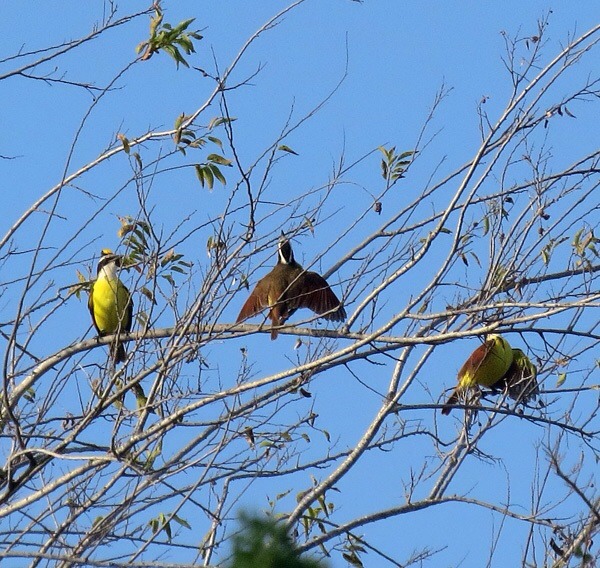
Greater Kiskadees, with their color and noise, are everywhere. These were drying their wings, as cormorants do, this morning:

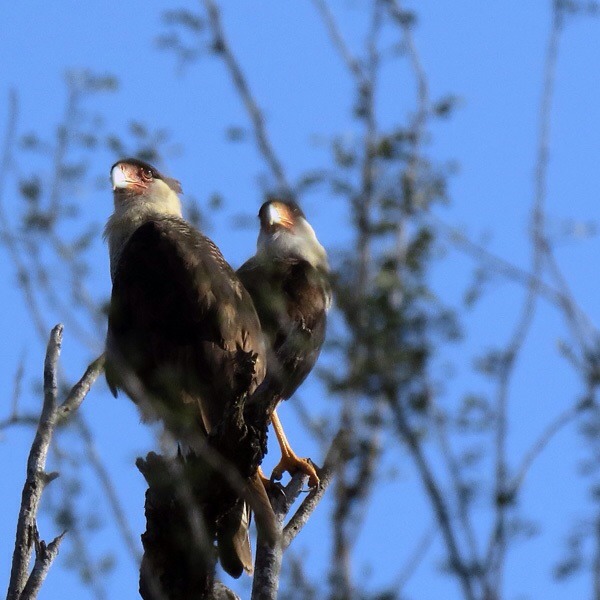
I remember the first Crested Caracaras we saw the first time we came to Texas. We could not identify this regal bird which sat on fence posts along the highway. Now, they are sort of ho-hum. Here are a couple perched in a tree this morning:

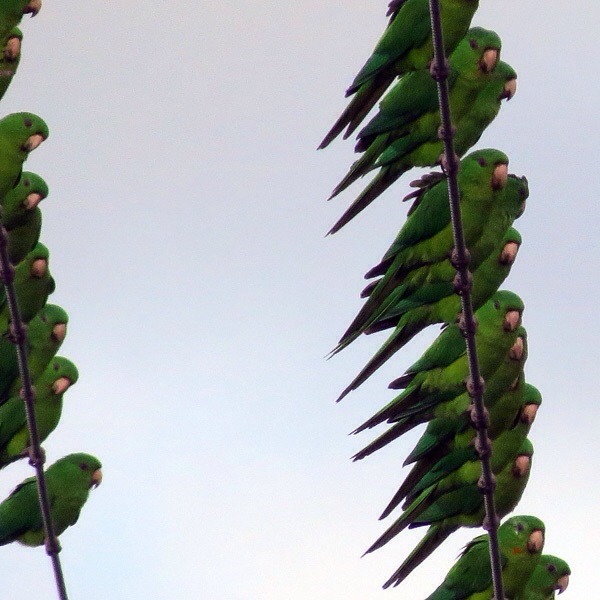
And lastly, the Green Parakeets, who came from escapees originally but have adapted to the "wild" like House Sparrows and European Starlings. Here, they paused for a bit before launching on their next frenetic flight:

This afternoon, we headed out to a "farm-to-market" busineess to get some fruit – a large bag of Pink Grapefruit and one of Navel Oranges. We won’t be getting scurvy on this trip. Bon voyage.

The Rare Roadside Hawk (from the archives)

As part of my preparation for our SW trip, I joined birder email groups in Tennessee, Louisiana, and Texas. One of the big deals for the last ten days has been the roadside hawk, a rare species from Mexico, that showed up at Falcon State Park.

I’m not that serious a birder, but getting more serious, and that sort of locked in our next destination from Goose Island State Park. This place is right on the Mexico border, next to a big international reservoir, and full of birds and birders. People drive here just to try to see the hawk.

Yesterday was our first day here (it’s a nicely laid-out park filled with Canadians and folks from Wisconsin, Minnesota, and elsewhere north. Very few New Englanders.

I was out walking Penny just after dawn (which comes here late so far west in the Central time zone) when a car stopped and asked me if I knew where the roadside hawk was. I passed on some news I’d heard about possible locations and returned for breakfast. Later that morning, they drove slowly by again — still no hawk.

A little later, I was talking with our Oklahoma neighbors (who have been coming here for 23 years) when the same car stopped, rolled down the window and reported, “He’s down by the recreation area in the top of a tree.”
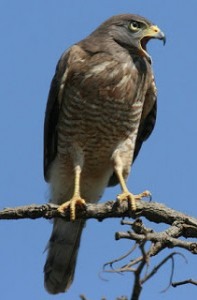
I grabbed my binoculars and walked down in that direction. Passing the recreation hall, a young man asked me if I had heard of any hawk sightings and soon he and his parents were walking with me down the road, where up ahead, we saw a small group of birders set up. (It turns out that my companions had driven over from Louisiana just to get to see the bird — every day a bunch more show up.) Sure enough, the young hawk was sitting in full view in a big bare tree, easily visible by binoculars. I could make out the striping and coloration but when I had a chance to look through a spotting scope, it was even more remarkable. He posed for ten minutes or so and then flew off, not to be seen the rest of the day.

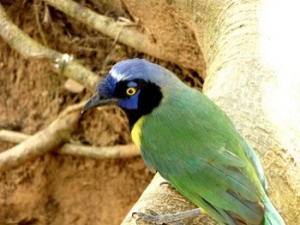
We are seeing some amazing birds — most of whom never get up our way. Green jays are spectacular as is the vermillion flycatcher. Today we saw all three orioles resident here: altimira oriole, Audobon oriole, and the hooded oriole. Visiting a sanctuary filled with golden-fronted woodpeckers, Great Kiskadoos, and orioles reminded me of the first time I snorkeled in tropical water. It was sensory overload.
So, Mary and I have given up snow for Lent. But we are reveling in the wonders of this part of our country. Originally published – 2/18/10

Roadside hawk photo by Wagner Machado Carlos Lemes
Green jay photo by JunCTio
Shooting Birds

One of the many photographic challenges, particularly when you have a Vizsla on leash in one hand, binoculars in the other, and a camera hanging from your neck, is to get a decent shot of flying birds. Here at Goose Island State Park, it’s sometimes easier since the vistas open up and many of the birds are larger and easier to find in the view finder. If there’s a stiff wind and you can catch them fighting it, they slow down for you.
So, with Penny “helping,” I have been shooting some of the birds we see on our outings, with varying success. It’s very much a work in progress and a $5k telephoto lens would help – but that’s not going to happen.

As a pilot, I like Brown Pelicans as much as any bird. Wonderful fliers, big targets, and they always look like they are having fun.

Not a good shot of a Northern Harrier but it does show the white body marking that, along with their low-flying hunting, makes them easy to ID.


An Osprey who got away while I grabbed for the camera


A couple of Roseate Spoonbills we saw yesterday. Their breeding plumage will start soon but they pretty neat right now.


The ubiquitous Turkey Vulture with its pronounced dihedral. They are everywhere in Texas.


White Ibis with the black wingtips – hard to miss.

So, tomorrow the sun should be out with better lighting possibilities. We’ll see how it goes – good thing it’s easy to trash digital prints. Practice does help.