Easter Weekend at a Texas State Park

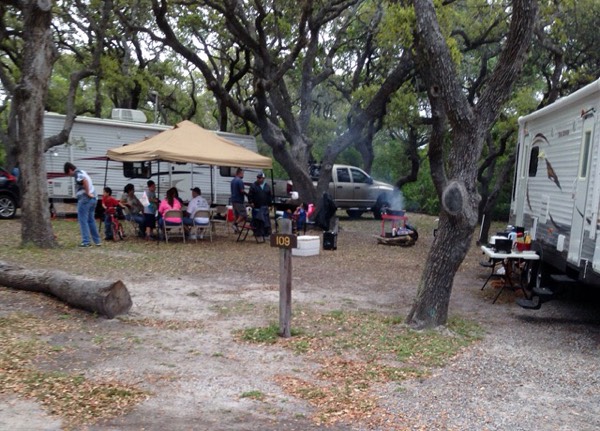
*Things started to change around Thursday as the vacant sites on our tree-lined park road started to fill up and the voices, energy, and comradarie of Hispanic families brought a new vitality to the neighborhood. Pickups full of camping gear, kayaks, bikes, and coolers rolled in and soon we could hear salsa music and the yells of bike-riding kids.

I know that Texas State Parks promote holiday use of their campgrounds but we have never been here before on Easter. A park friend of mine told me, "It’s especially big in areas with lots of Hispanic families – Laredo gets more than any." A Falcon park staffer told me that they get thousands and it can be an hour wait just getting into the park.

Lots of families tent camp and cluster in family/friend groups wherever there is room.
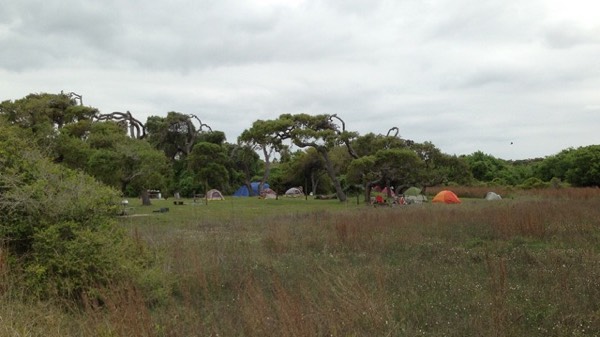
I see lots of chunky kids but few are looking at electronics: soccer games in the road, lots of volleyball practice, tree-climbing, bike riding with very little "organized (or monitored) by adults. Adults, with exceptions, tend to relax and let the kids romp.
Speaking of romping, I was out on a bird walk this morning when suddenly this girl comes racing down the path followed by a boy on a bike and a portly dad biking along. "Can’t keep up with her," he said as he rode by. I didn’t think about it until a few minutes later, when the same girl came flying by on the oyster shell trail followed by her family cyclists. Now, I was impressed. Later, back on the main park road, up they came and she stopped, bent over for a moment to recover, and began walking. I immediately asked her whether she ran in school, complimenting her as her dad answered for her.

He told me that she runs for a club, had just broken a world record, and come in second in a national race. I got her name, wished her well, and told them that I would follow her successes down the road. And off she jogged. It was a chance encounter with a young woman who may, some day, be an Olympian. Here’s part of a writeup in February by Rachel Cole for a Corpus Christi TV station:

*CORPUS CHRISTI –
Corpus Christi is the home of a brand new world record holder. Ciara Martinez, 12, is proud to have crushed the standing record in a 15K race.

Her coach, Edward Ortiz with Elite Feet of Corpus Christi says, 15K is 9.3 miles and she did it in an hour and six minutes, just about a seven minute mile pace.

Martinez set the new world record over the weekend in Dallas. Her time clocked in at four minutes faster than the previous record.

"We went to go race the 5K that I’ve been training for 6 months to break the world record, I came up short but I got first overall out of like 4-thousand women," she said….

This campground will be a ghost town Sunday night as all the local visitors return home. It will be nice to have some peace and quiet just before we head out – but we’ll miss the chaos of kids at play. It is a reminder of our grandkids and how much we miss them. Feliz Pascua.
Some Monday Birds

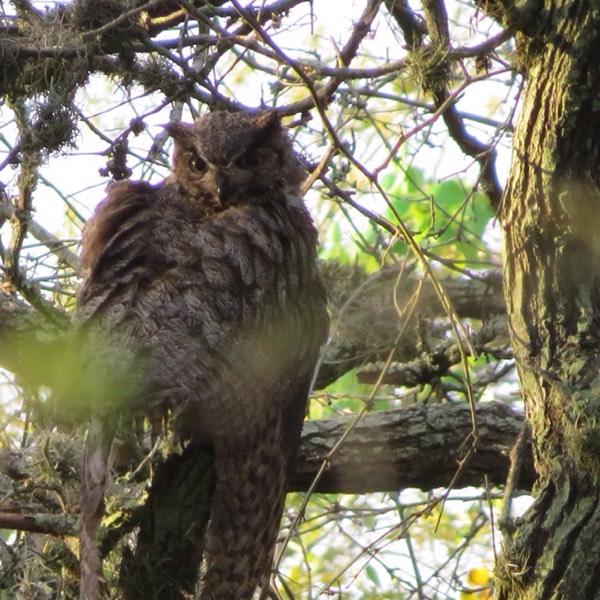
I was out walking the dog before daylight, listening to the morning chorus of birds and frogs when far off, I heard a Great Horned Owl hooting. After another coffee and bagel it was getting light out so Penny and I headed out for another jaunt, this time with my binoculars and camera. Not much was moving – we seem to be overflown by migrants – until I took a side trail, noticed some movement, and spotted this owl. It was very large, facing away from me, but turned periodically to check us out. It was difficult, with the limbs and lighting, to get a decent photo but a great start to the day.
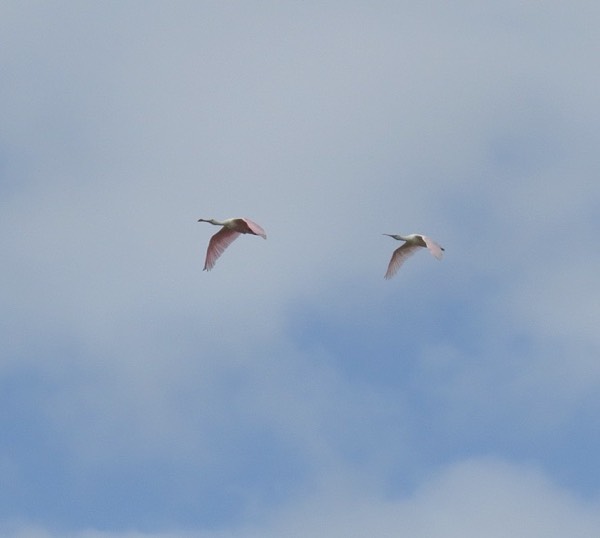
We had planned to go over to Port Aransas for the morning for some birding and after an easy drive and short ferry ride, were at the wastewater treatment facility – one of our favorite birding spots. The Leonabelle Turnbill Birding Center has hundreds of waterfowl that are used to visitors and just hang out on the facility’s ponds. Boardwalks and spotting scopes make this popular and very productive. Here are a couple of Roseate Spoonbills overhead (most are getting their breeding plumage).

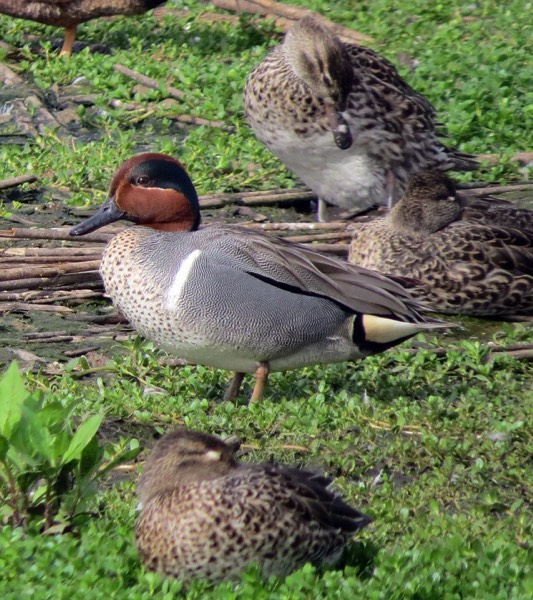
We had Cinnamon, Blue-winged, and Green-winged Teal.

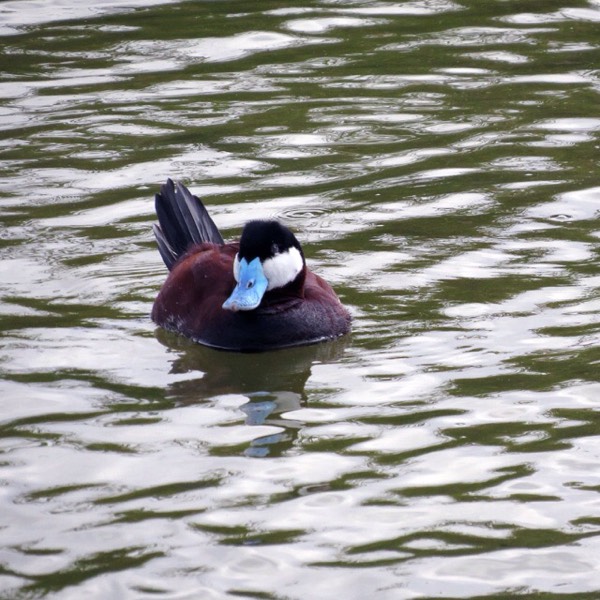
Ruddy Ducks in breeding plumage were eye candy for Vermonters.

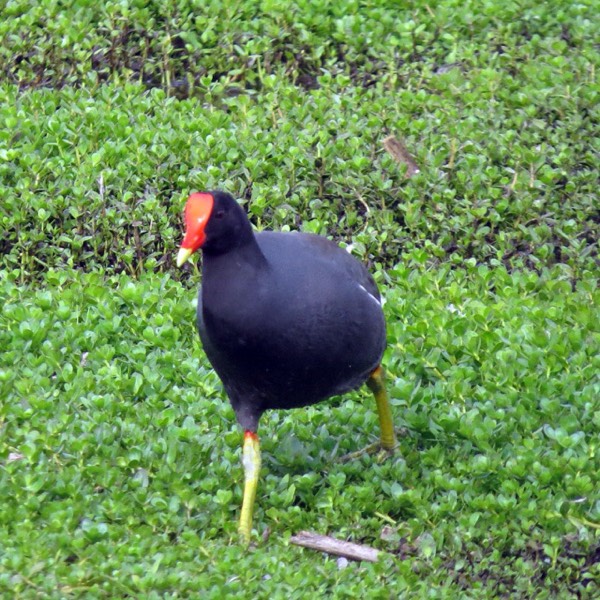
Even this Common Moorhen looked pretty spiffy trotting along.

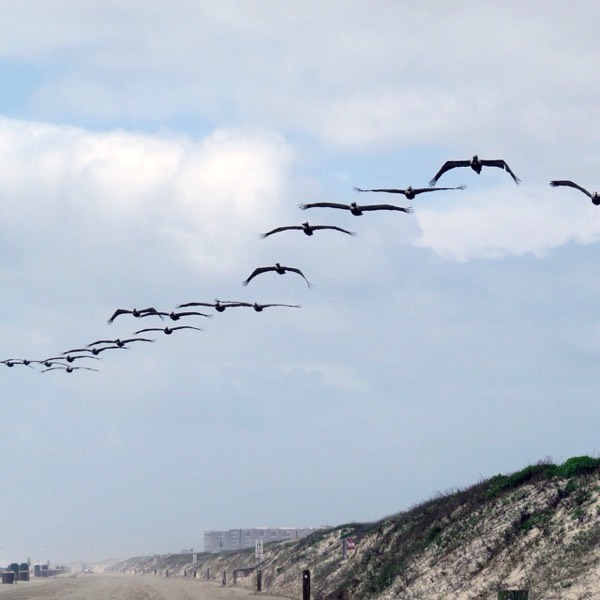
We took a drive down to the beach, just to see it again. I noticed a flight of about thirty Brown Pelicans flying very low coming up at us so I stopped the truck and grabbed a shot. As an aviator, I admire their flying skills and love to watch them in formation.

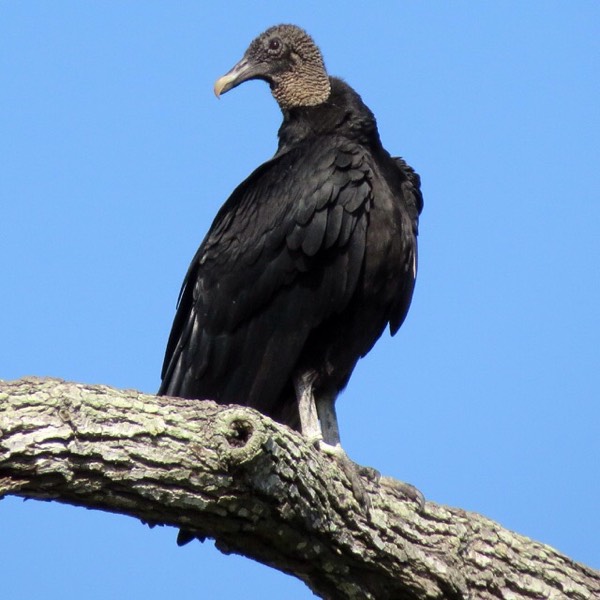
On the way home, we picked up some healthy lunches from "The Shack," a local barbecue place. Afterward, I felt a bit like this Black Vulture which I saw later on – fat, dumb, and in need of a nap.

A Morning Jaunt to Aransas NWR

One of the "must-do" trips when we are a Goose Island State Park is to get to the [Aransas National Wildlife Refuge](https://www.vtbirder.com/aransas-national-wildlife-area/) so we loaded up some lunch, our birding gear, and the dog and headed out yesterday morning. It’s only a short trip, much of it at 70 mph, and it is always a bit unreal to take the narrow roads through cotton country. The fields are continuous black soil, flat as can be, cut only by irrigation ditches. Way off, like mirages on a desert, trucks float along just on the horizon. It’s about as far removed from Vermont as possible.

The refuge is large and being remote, not that busy, even on a weekend. Mary and I get in free with our Senior Pass (one benefit of getting old) and there is a pretty driving loop along the coastline with several overlooks.

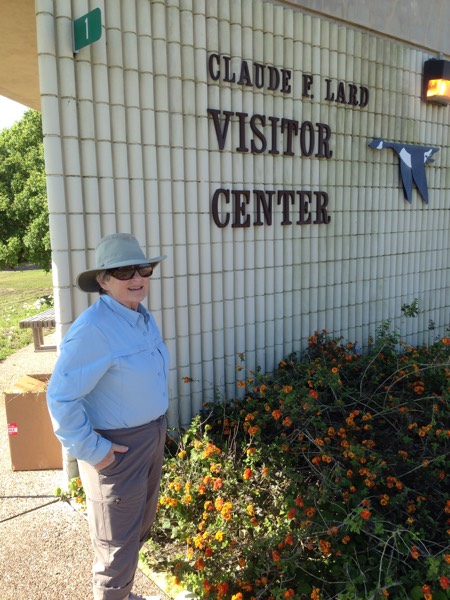
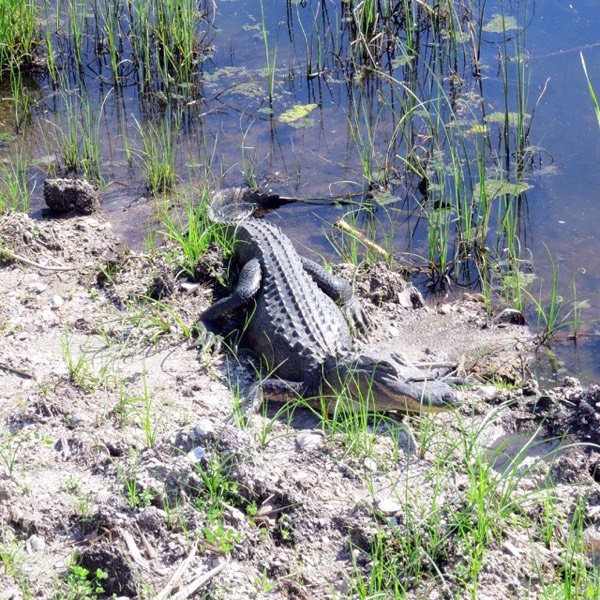
The first stop after the impressive visitors’ center is the alligator viewing pond. They’ve constructed a new viewing platform and right below it was this young alligator, taking the sun. It’s Mary’s type of alligator viewing – there’s no way, unless he sprouts wings, that he’s going to bother her.

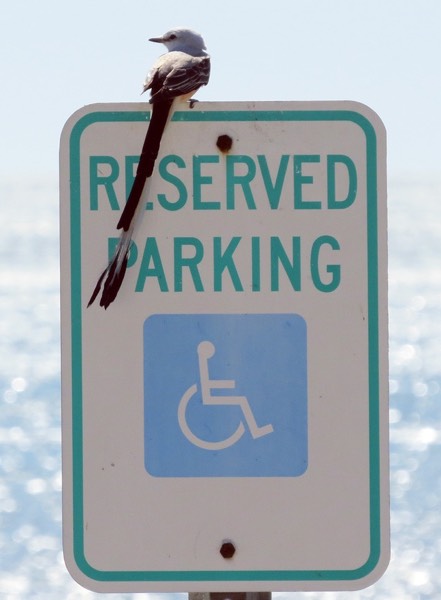
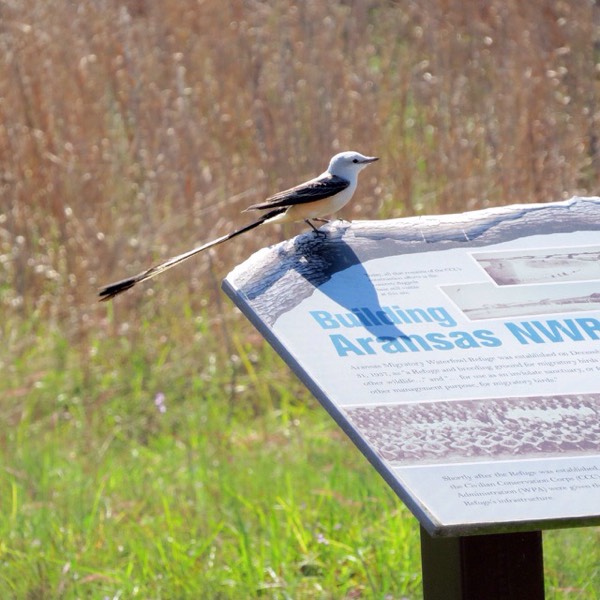
The birding was so-so with the exception of Scissor-tailed Flycatchers, who have just begun to show up. Some will stay here, others will continue their migration northward. There were over a dozen and all were having trouble perching in the stiff breeze. This one balanced on a sign.

As did this one.

Later, after seeing a couple of Whooping Cranes from the elevated platform, I thought I saw a bunch of white birds way up high. I tried to get my binoculars on them with no luck, finally giving up. I told Mary that I must have mistaken a swarm of insects for a flight of birds.

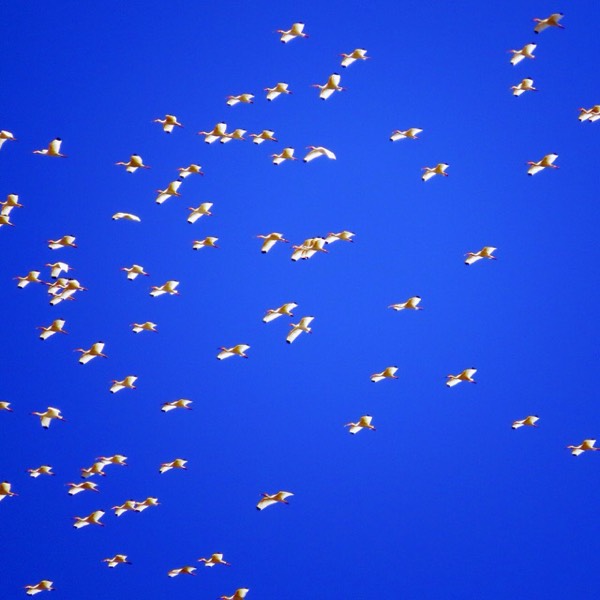
We moved on, driving the long scenic loop, when I thought I saw a similar group of white objects. I stopped the truck and realized right away that they were birds that showed up when the sun was on them but disappeared when they turned away. They were making large circles, thermalling and drifting with the wind. I got Mary on them and through the binoculars, could see that they were White Ibis. My camera didn’t focus well but you can get a sense of the neat swirling birds we were seeing.

The temperature showed 80 as we stopped in a grove overlooking the water. The wind, while making casual dining a workout, kept the bugs (which were there) away. It was a nice Saturday morning in southern Texas.

Taking Princess Ariel Home

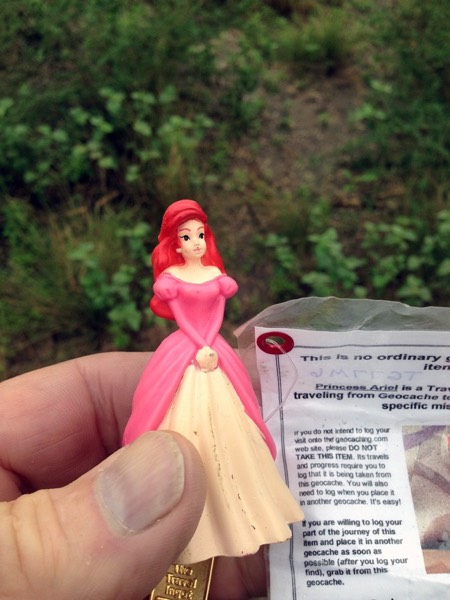
I did some geocaching at Choke Canyon State Park and want to introduce you to an interesting trackable that I found in a cache there.

I love geocaching in Texas parks: they all have multiple caches, the traffic is pretty high so there is good turnover in trackables, and they use large ammo boxes as caches that are a piece of cake to locate.

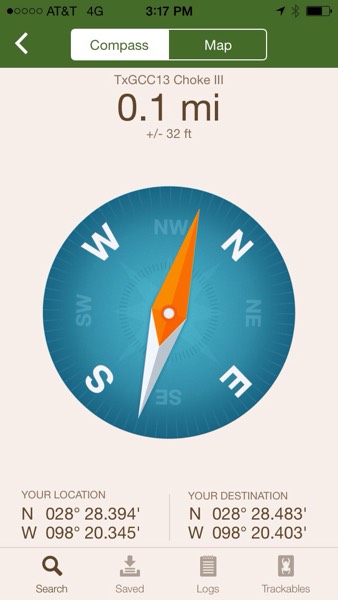
With GPS, you get led to the site. Here’s what my iPhone looked like as Penny and I zeroed in on the site.

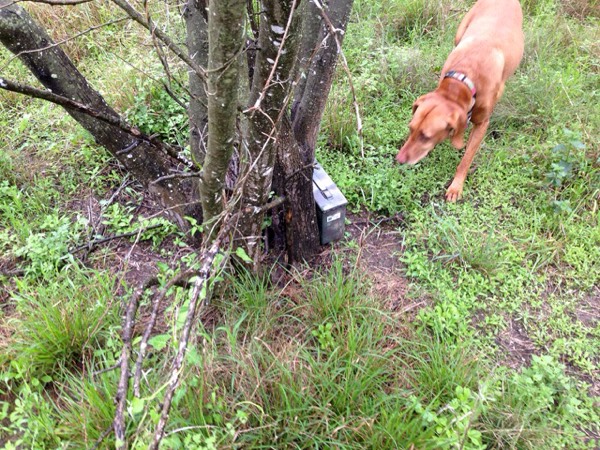
As expected, the cannister was easily found with my "truffle hound" helping me out.

I signed the log and saw that among all the items folks had left in the container (essentially junk like lucky coins and magic rings) that the was a trackable item with a metal tag attached.

Each trackable has a unique code that identifies it and allows the owner, and others like me, to observe the activity. I reported that I had taken the item so it now shows in my inventory.

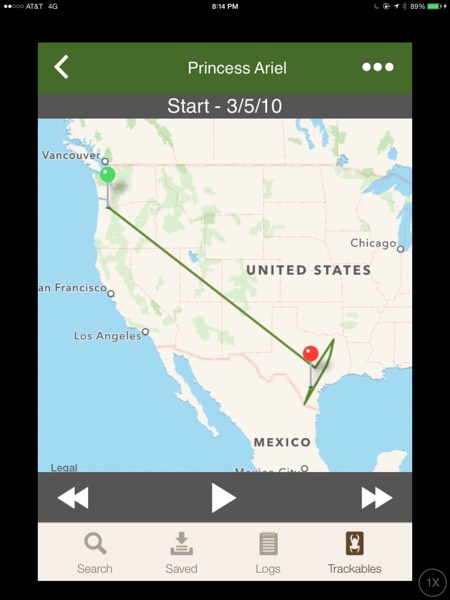
In looking up the number, I saw that Princess Ariel was launched in Vancouver in 2010 but as you can see from the chart, sort of got lost in Texas. (Probably stashed away in someone vehicle and forgotten.)

So, I plan to lug her back to Vermont, probably visiting a few caches along the way, and place her in an active cache where someone can find her and move her along. I think she needs to explore New England.

Whole Lot of Frackin’ Going On

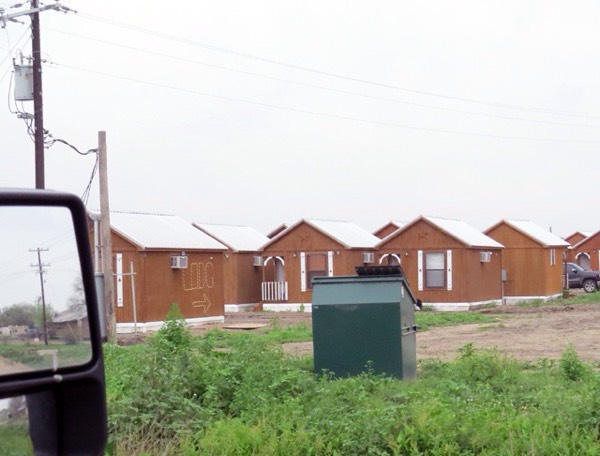
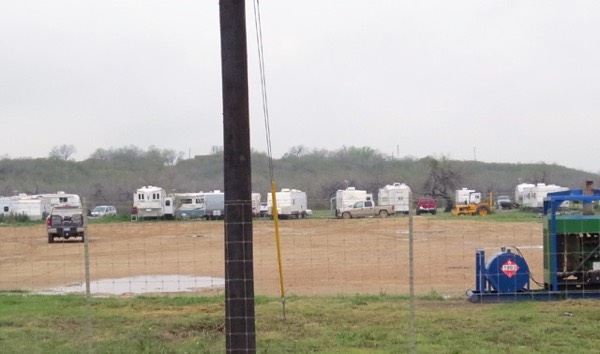
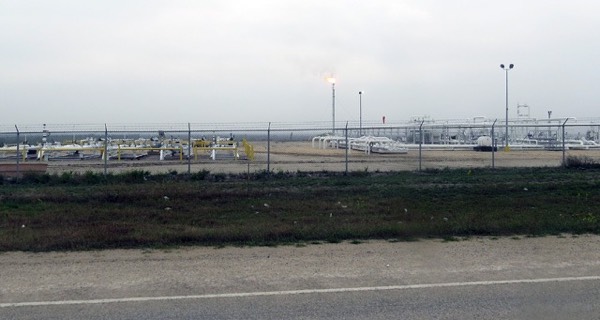
We started seeing signs for "ecolab services" and similar PR-approved company signs as we drove into Tilden, Texas. As we turned the corner toward Choke Canyon State Park I said to Mary, "I thought this was a sleepy cow town last time we were here," but several hundred yards later, seeing muddy tanker trucks, oil field equipment, and cheap RV parks it became obvious: fracking!

This man camp, one of many for oil field workers, was the first clue.

Next door were several muddy lots filled with workers’ RVs.

We were just disgusted at what we saw in the next twelve miles – flaring smokestacks, security checkpoints on every dirt road, anda highway laden with muddy pickups and tractor trailers and torn up by the heavy traffic. Here’s how an article by Bryan Mealer in Texas Monthly describes the drive:

As I hooked east and joined Texas Highway 72, the main corridor through the Eagle Ford, the world was instantly transformed. The once quiet two-lane road was as furious as a Los Angeles freeway. A tanker truck slid up behind me, lights flashing, then jerked its load into the opposing lane to pass. It barely made the distance, forcing an oncoming pickup into the grass to avoid a collision. I stepped on the gas to keep from being run over and soon I was rocketing along at 85 miles per hour, amid a convoy of semis and tractor-trailers, all of us shrouded in a haze of road dust.

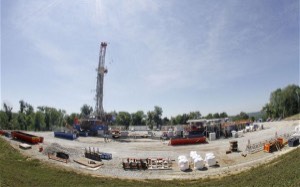
I began to notice the gas flares burning over the tops of the mesquite trees. Drilling rigs appeared every couple of miles, some far away, others pressed against the barbed-wire fences that lined the road. They seemed a product of science fiction, both beautiful and barbaric, like battleships turned on end. Each was festooned with Texas and American flags and surrounded by a ring of air-conditioned trailers. Billboards shouted at me from the sides of the road: “Mineral Acquisitions!” “Frack Water for Sale!” “Packers Plus: The Leader in Open-Hole Multi-Stage Fracturing.” “Hit by a Semi? Call 1-888-277-HURT.”

If we had had options, we might of kept going but fortunately, the state park is an oasis in this environmental madness.

We can see a dozen or more waste gas stacks off in the distance from our campsite. We are sitting on the Eagle Ford Formation, an area of porous shale rock 50 miles wide and 400 miles in length. Some local folks have made many millions, others pay more for the every day items they need.

It’s school break and many families are here. I met a guy from West Texas in the shower room and we talked a bit while he waited for his wife. When I mentioned Vermont, he asked me how construction workers handle the snow and cold. After explaining about closing in work early, finding interior jobs, or collecting unemployment and going ice fishing or snowmobiling (yes, I said that) I asked him if he was a carpenter. He told me that he was an oil driller, working in the other big shale field, and said "Sir, we go all day and night regardless of weather."

His wife came out and we talked about how important is was for them to take time to go camping with their kids, to ditch the electronic games, to hike and fish, play board games, get dirty.

It was a conversation I could have, and have had with young parents in Vermont. This wiry little driller and his born again wife were delightful and made me realize that there are pluses and minuses to fracking. He’s gone for days but working hard, making good money. And worried about his job. The boom rush is tenuous – last winter many were laid off as the oil companies regrouped.

With oil prices continuing to drop, this whole black gold rush may come to a screeching halt in the near future. Our kids and grandkids will likely end up paying for the environmental cleanup.

Rain is Forecast – Too Little, Too Late

Shortly after we arrived at Choke Canyon State Park, I drove over to check out the 65-acre lake where, six years ago, we had seen a rare [Northern Jacana](http://en.m.wikipedia.org/wiki/Northern_jacana). I recalled the dainty prancing of the bird on the floating vegetation, oblivious to the dozens of birders watching it. "Wouldn’t it be great to spot something unusual?" I mused as I drove.

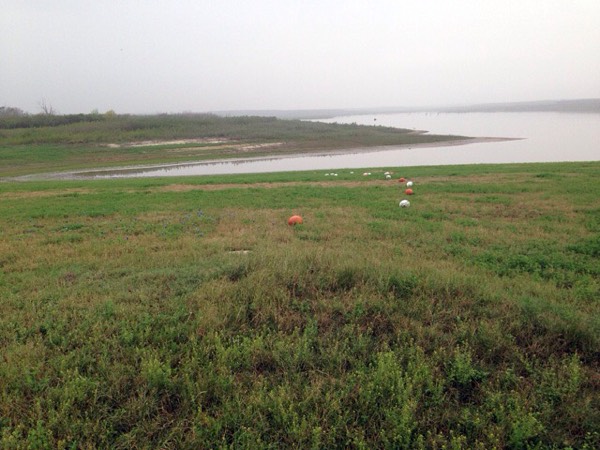
What I found was nothing – nada! No bird, no lake The Texas drought had taken its toll.

Texas has been in drought conditions for about five years and Choke Canyon Reservoir, where we are camped, is only about a quarter full. It doesn’t seem to affect the fishing; the place is crawling with guys going after bass, blue catfish, and crappie. The ones I talk to say they’re doing great.

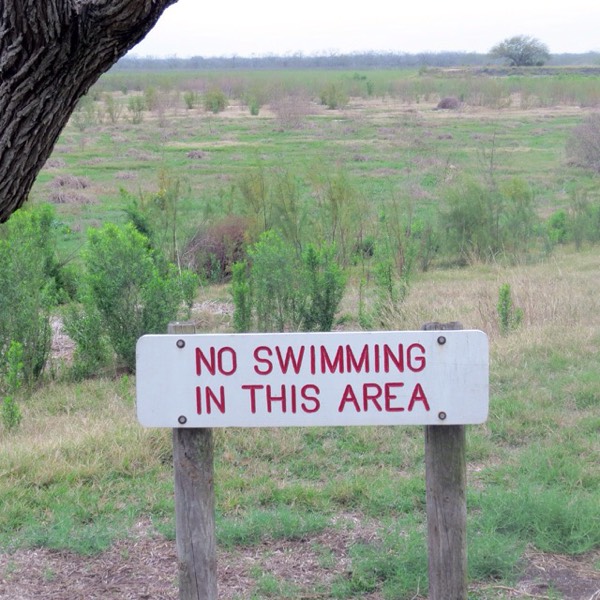
I visited another section of the park yesterday and found some mudflats where Least Sandpipers, Greater Yellowlegs, and a Great Egret were feeding. It took me a moment to realize, after I saw floats lying on the grass, that this was once the swimming area and as the water dropped, they just left the cables and floats in place.

We have several days of thunderstorms ahead with warnings of flash flooding. While the storms may hammer the campsite and especially all the spring break families here for the weekend in tents and pop-up campers, the system won’t make a dent in changing the reservoir level.

And I think it is time for the park staff to remove the sign to the "75-Acre Lake."

Here’s a New York Times article about some of the tensions arising from the drought.

Camping Near a Battle Zone

About five AM yesterday, both Mary and I were wakened by a muffled thumping. I thought it might be some wild pigs messing with our propane grill so Mary yelled out the window while I got some shoes on and put the leash on Penny, who was barking and trying to get out the door. Mary said, “I think something’s hung up,” since the noise was so steady.

Flashlight in hand. I cautiously went out to the yard, just in time to hear a loud explosion in the distance. “They’re fighting over in Mexico,” I said as we listened to a major gun battle going on across the lake. Lots of large guns. 20-second bursts of assault rifle type shooting – it was eerie. The shooting went on for about a half an hour.

We are only a mile or two from the border, which goes right down Falcon Lake. The nearby city is more like five or ten miles away.

Our next door camping family is a local Hispanic couple and their kids here for the weekend. I saw him in the morning and oh yes, they heard it. He wAs wondering for a while if they were safe. He told me that he used to take his daughter over to a dentist for her braces, but stopped that about four years ago.

The park staff here is all Hispanic and none of them cross the border. Their concern is that they might be mistaken for the wrong person.

Earlier this week, about 50 at-risk kids were here on an outing run by the sheriff’s department. They rode bikes, went fishing, had two meals and a great time. Several of the adults with the group talked with a friend of mine and described some of their environment: nearly every day, parts of bodies are deposited on the Laredo bridge, the result of the drug wars. About half the kids were orphans, many having lost family in violence.

We don’t need to go to the mid-east to encounter terrorism and kids caught in war zones. It’s right here along the Rio Grande. Yesterday morning’s gun battle, whatever the reason, was just another reminder.

Note: the campground and U.S. side is very safe and at no time have we felt nervous about our safety.

Yesterday’s Critters

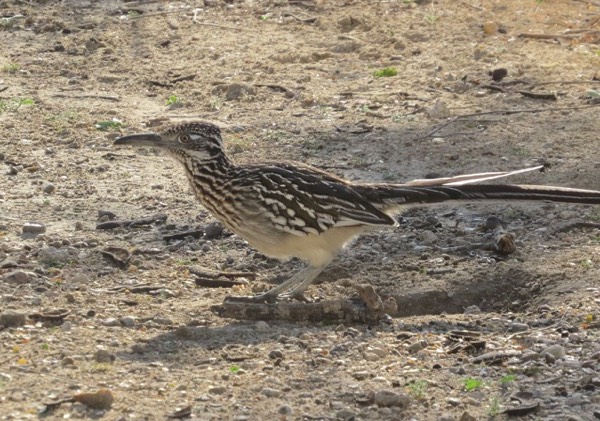
I decided to document some of the wildlife I saw yesterday here at Falcon State Park as we prepare to move on. Here’s a Greater Roadrunner skulking through our back yard.

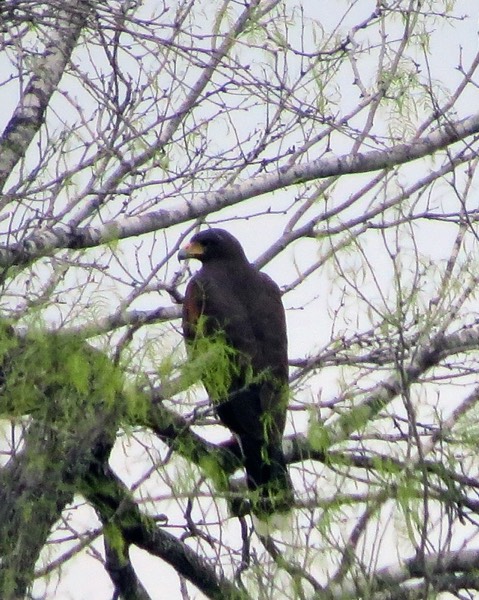
I took a brief drive down the nearby “dump road,” often a good spot for desert species and found this Harris’s Hawk perched quite a way off, but watching me.

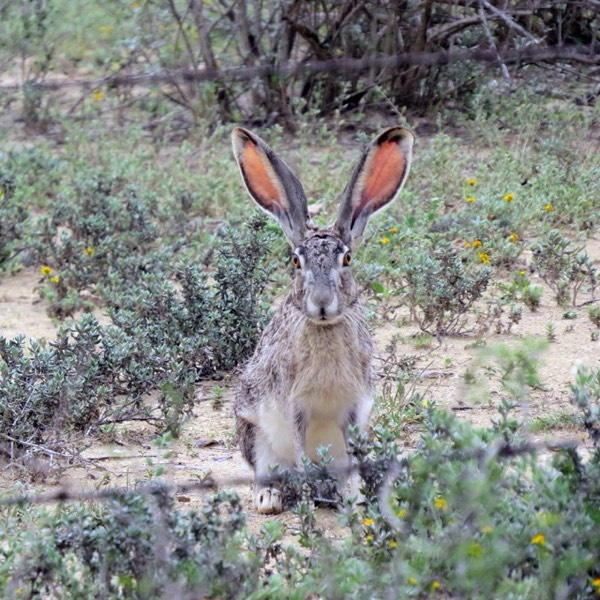
Just further ahead this Jackrabbit, the first I’ve seen, watched from behind a barbed wire fence.

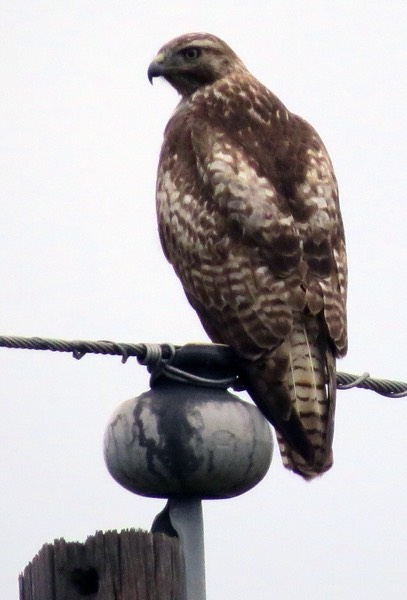
Driving back, I spotted this hawk perched beside the highway. Traffic being light, I stopped and took a few shots. I’m calling it a juvenile Redtail.

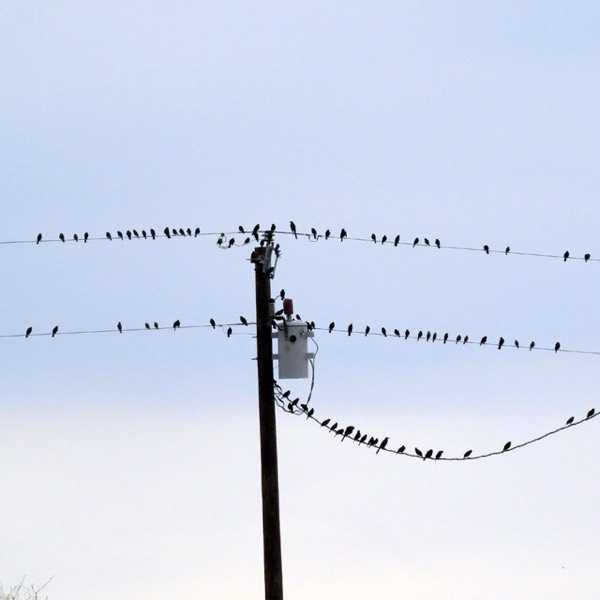
Later, on a dog walk, we encountered this gathering of Redwing Blackbirds chattering away. Each day this week, there has been a constant stream of blackbirds and cormorants heading northward.

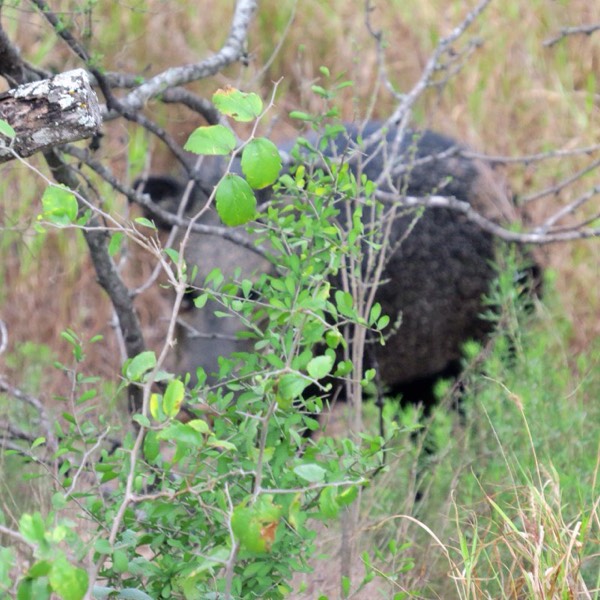
Last evening, while driving out to a spot with a reliable 4G signal, I saw a group of Javelinas crossing up ahead. This guy waited, as I slowed down, and stayed pretty well hidden.

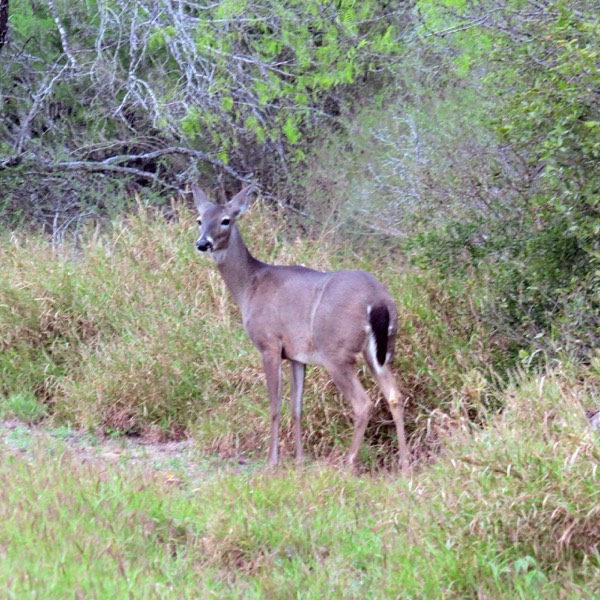
As I returned at dusk, this deer stood beside a speed limit sign on the park loop. The deer here look pretty healthy although their numbers are modest and unlike some parks, they are wary of humans.

Since we’ve been here, I saw a bobcat crossing the road way up ahead one morning but have yet to see any of the many coyotes that live here. I’ve certainly heard them, sometimes rather close It is evident from the scat on the trails that there are many critters around. Penny, if I don’t watch her, is in hog heaven.

A Morning Dog Walk

We awoke this morning to the call of a Common Paraque, a furtive desert bird that I’ve rarely seen but often heard. This one was in a tree just outside the Airstream but when I went out, barefooted with a flashlight, it flew off and all I got was bruised feet from the sticks and pebbles. Here’s a shot – not mine – of this elusive bird.

Penny and I took our normal early morning walk, just at daybreak, and wandered through the nearly-deserted campground. Many of the folks who stay here all winter have moved on (we leave Monday for another park.)

A pack of coyotes, not far off, started some wild howling, which always gets Penny’s attention. She listens but has no inclination to join her cousins.

The sunrise on our walk was spectacular, developing as we moved along, resulting in this scene as we neared the finish.

Just then, four cottontails pranced out into the roadway, freezing on the asphalt when they saw us. Not exactly Mensa candidates. Penny did her stalking routine and nearly pulled my arm off when they ran. As we got to our site, our resident Curved-bill Thrasher greeted us. It will be singing most of the day.

It’s sweatshirt and shorts weather this morning but will get into the mid-70’s later on. We are finally getting some normal Texas weather after a cool damp February.

Sunday Afternoon Digiscoping

I took advantage of a damp Sunday afternoon to practice some digiscoping with my iPhone. The lighting was poor but the dog and I had several outings and got a lot of fresh air. I can see why people opt for carbon-fiber tripods- my aluminum one gets pretty heavy one long jaunts.

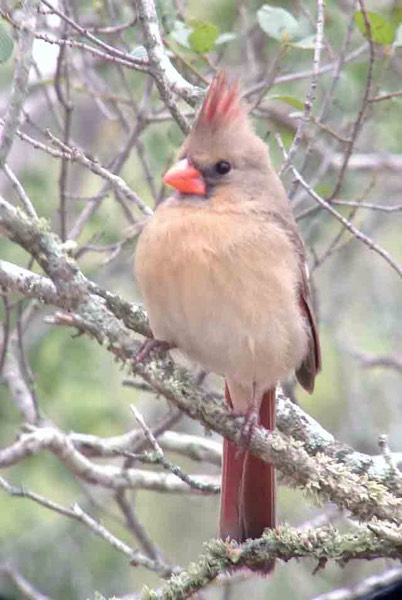
Here’s a female Northern Cardinal which I sometimes confuse with the Pyrrhuloxia, her Mexican cousin. (Thanks, Sue, for the correction.)

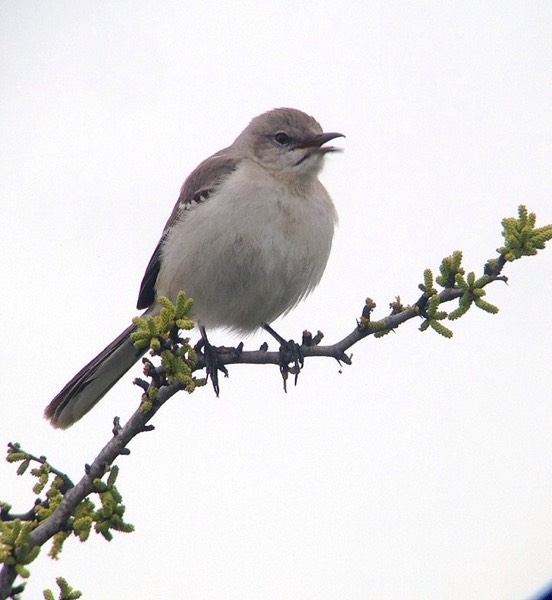
You can’t walk 100 yards here without seeing the Texas state bird, the Northern Mockingbird. They are singing and tussling for territory but unlike blackbirds, they don’t wear out their welcome.

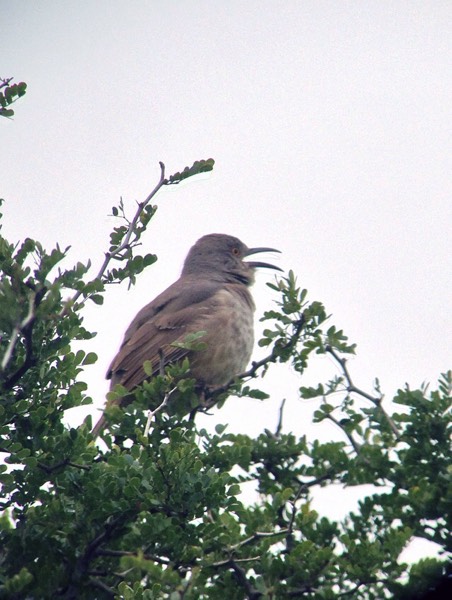
Curved-bill Thrasher are amazing singers and seem to go on for minutes without a pause.

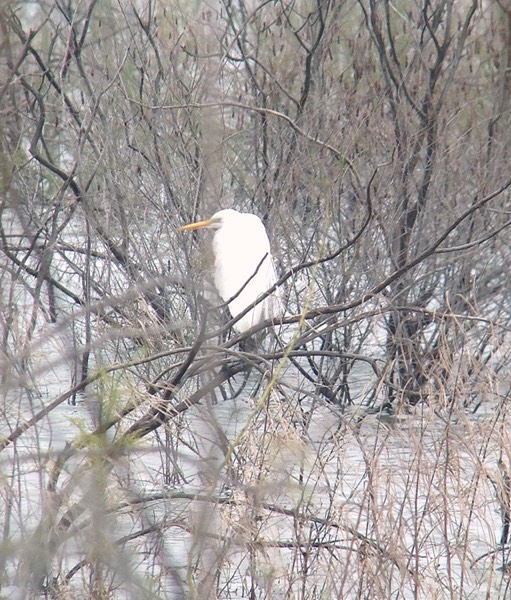
We went down by the lake and found this Great Egret trying to hide in the rushes

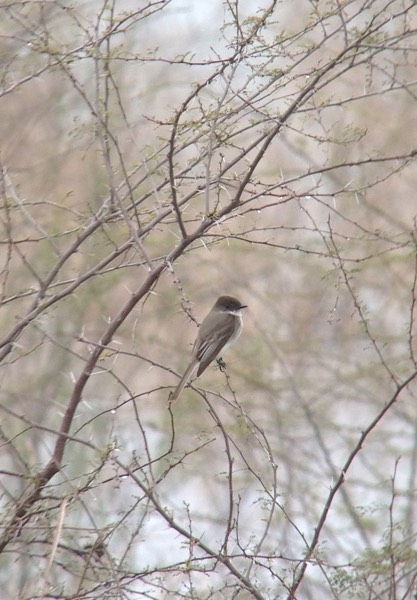
This Eastern Phoebe and a partner were actively feeding and calling. It’s nice to think that the “fee-bee” call will be in our Vermont woods in a couple of months.

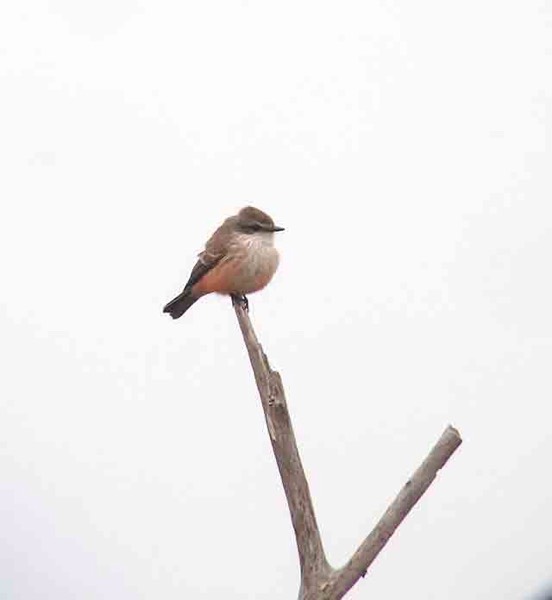
Not to be outdone, this female Vermillion Flycatcher performed for us. There are perhaps four pairs in the park and while the males are the most spectacular in plumage, the gals do ok.

Vermillion Flycatchers are my kind of bird: easy-to-see, wonderful to watch in action, and inclined to return to, or near the same perch. What’s not to like?