Pop-up Birds

Often when birding, a bird pops around a tree trunk or up to the top of a shrub and you want to get it in your binoculars but at the same time, take a photo. Good photographers are fast and shoot like paparazzi’s when a good bird shows itself while the rest of us fumble and often miss the opportunity. (I usually have a Vizsla on leash jerking my arms as I try to lock on the bird.)

Practice does help and when birds are at feeding stations, they tend to stick around for more photo ops.  Other times you just fire away and check the results later.  Here are a few photos from the last week or so, including one (the Verdin) yesterday morning. They are a nice example of the diversity of birds we just see in our travels (“Oh, it’s just another Altimira Oriole.)

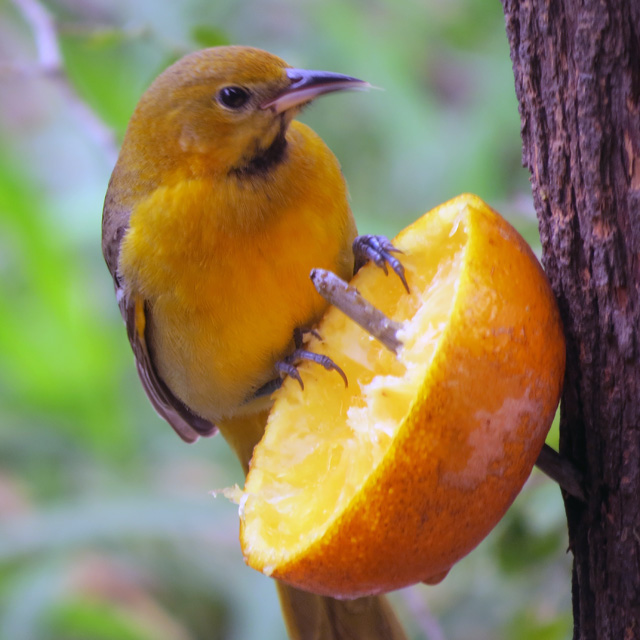
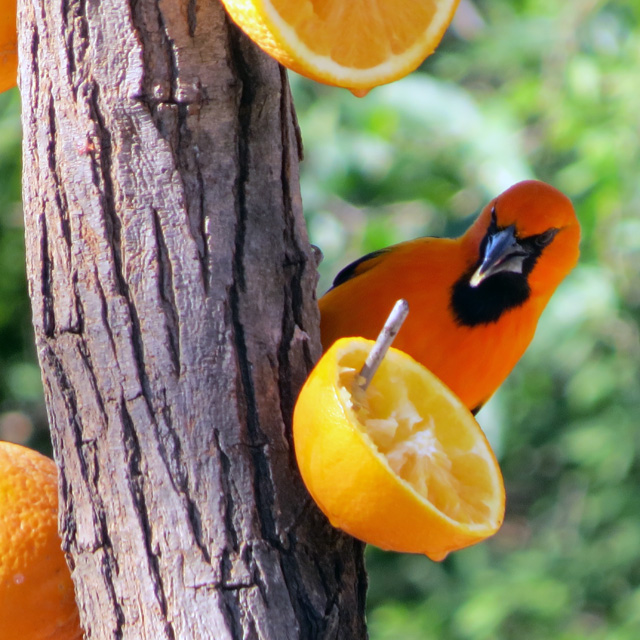
An Altimira Oriole feeding at Bentsen Palm State Park this week.

An Altimira Oriole feeding at Bentsen Palm State Park this week.

A juvenile oriole earlier this week.

A juvenile oriole earlier this week.

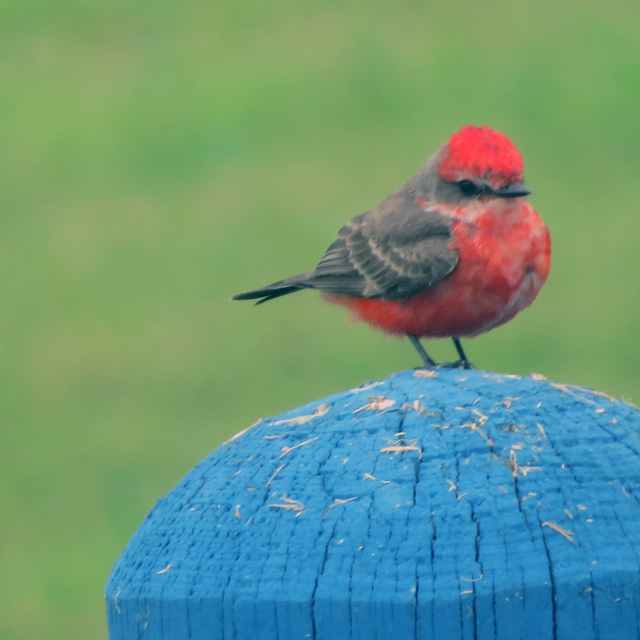
A molting Vermillion Flycatcher at the county park.

A molting Vermillion Flycatcher at the county park.

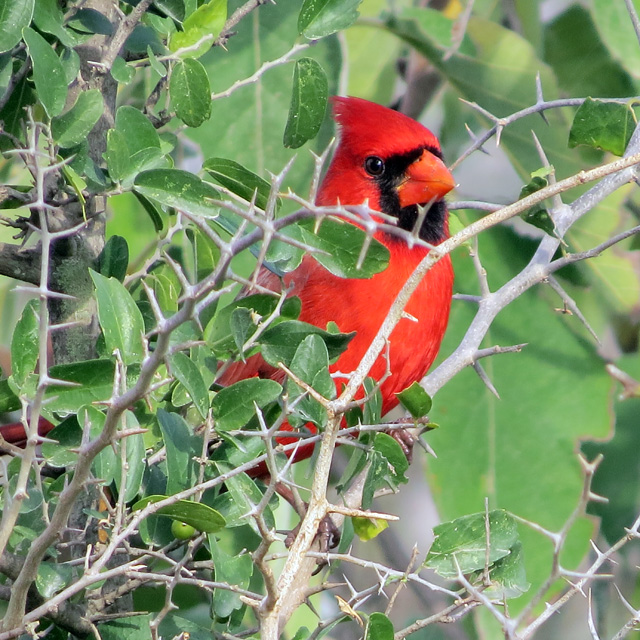
A Northern Cardinal "hiding" yesterday morning.

A Northern Cardinal “hiding” yesterday morning.

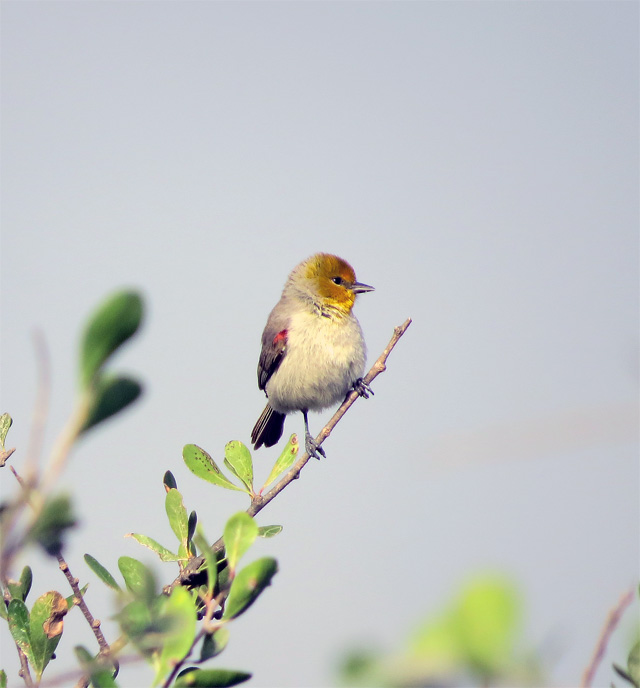
A pretty Verdin that posed just long enough before departing.

A pretty Verdin that posed just long enough before departing.

We have a few more days here in the Valley before heading up to Falcon Lake State Park. While it will be tough to leave the birds, we won’t miss the traffic and the barking of local dogs who are left out all night. I’m looking forward to some peace and quiet in the boonies.

Getting Buff

One of the things I’ve noticed in the Southwest is the amount of car washing that goes on — cars and trucks are washed continually. There are small setups everywhere – no do it yourself but rather guys who tackle the job as a team. Here in the RV park, roving entrepreneurs will wash your rig or your vehicle for very reasonable prices. Needless to say, they are hard-working Hispanics. When I got a haircut the other day, the young barber said that next time, I could get my truck detailed while I got my hair cut — they had a guy to do that.

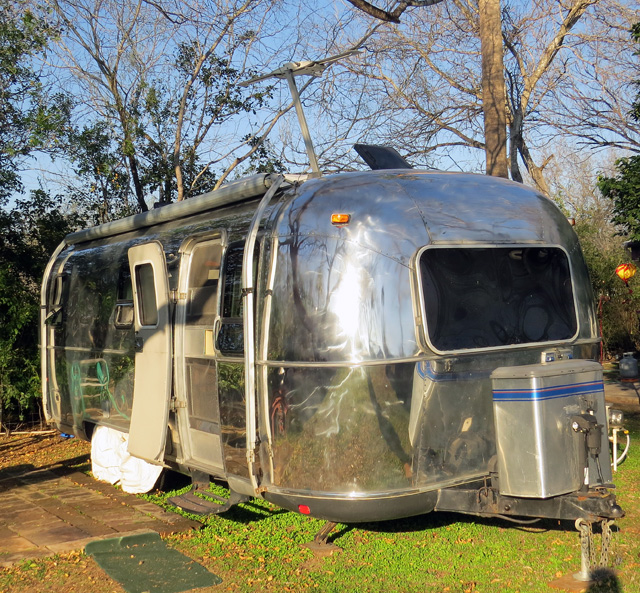
So when we arrived, we had by far the filthiest RV unit in the park. We had hit a lot of slush and grubby roads on our trip down from Vermont and the first time I had a chance to tackle the job was when we got settled here at Americana RV Park. You can’t use the potable water system for vehicle/RV washing but there’s an abandoned water system here that available. The water has a lot of minerals but it gets the caked mud and salt off leaving lots of spots and cloudy areas. That prompted me to start working again on polishing, not just for aesthetics but more for protection of the aluminum.

So far, so good.

So far, so good.

I brought my polishing supplies and equipment with me so for the last several days, I have spent an hour or two dabbing on polishing compound and buffing it out. The system I use has a coarse grit, a medium one, and a final polish. I’m working with only the medium stuff and it is slow going, and pretty dirty. I have to wait until people are up and about since the buffer is noisy, and need to finish before the sun gets too high and the temperature too hot — and a morning when I’m not birding or otherwise engaged — so it will be a slow process. It’s a pretty good upper body workout to wrestle with the buffer while balancing on a stepladder.

I’ve got about a quarter of the rig done and will do a little more here before we leave. It’s good to see the unit shine — just to know that it’s better protected. It also sets it off from the SOBs (Some Other Brand) that fill these parks — Airstreams are few and far between.

More Birding License Plates

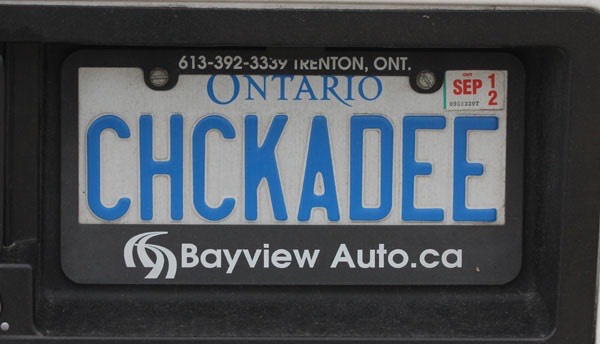
A few years ago, I started collecting photos of birding license plates after One of our Canadian friends mentioned that had started a collection. So their plate, shown here, was my first one.

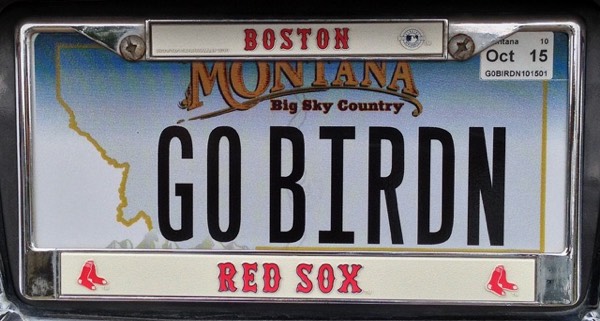
We are in prime vanity plate territory so this week I’ve gathered a few more including this one (with a bonus Red Sox frame) from our next door neighbors, Ray and Linda. Ray is a former Vermonter from Wilmington.

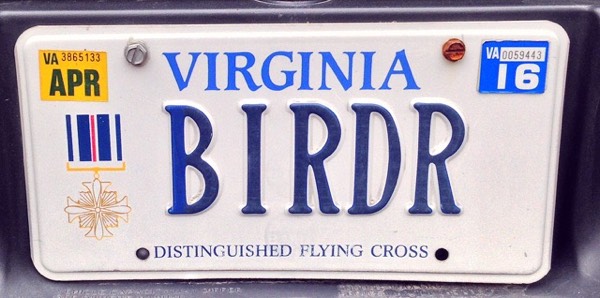
The owner of this plate was a former Vietnam era chopper pilot so besides birding, we had some things in common.

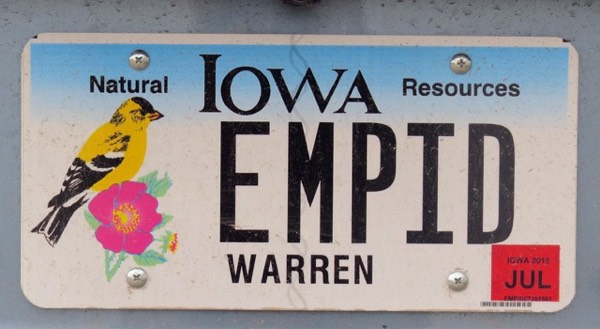
I saw this last one at the county park yesterday afternoon, telling the owner that she had to be a hardcore birder with a plate like that. Empids are flycatchers that look alike and are virtually impossible to identify if they are not singing. They drive most birders a little nuts when it’s not breeding season.

As I wrote this, I realized that I don’t have the iconic Vermont plate, the one that everyone down here mentions when they see my green tags. It is Fred and Chris Pratt’s "Pipit" which I see on the backroads of Vermont and just a day ago here. In Vermont the plate is often muddy from their outings but I need to track it down before we leave for my license plate life list.

Have you got one? Send an image to me by email and I’ll add to the collection.

Chasing Mister Yellowthroat

It started about eight-thirty one night over a week ago when a sharp knock on the Airstream door launched Penny into a barking frenzy. I got her leashed as I opened the door to two Canadian birder friends who were doing a Paul Revere imitation, spreading birding news. "Dick, did you hear about the rare Gray-crowned Yellowthroat discovered at Estero today?"

I not only had not heard about it, but had never heard of it. They filled me in a bit and then went on to notify other birders in the park. Here’s what I read online the next morning:

Gray-crowned Yellowthroat is common shrubland species from northern Mexico throughout Middle America to Panama. It was formerly a breeding bird in the ABA Area, but more or less disappeared at the turn of the 20th Century. It’s become somewhat regular in south Texas since 1988 or so, with a number of records scattered throughout the area. A pair of birds even attempted nesting in Cameron County in 2005, though at least one of them was likely a hybrid with Common Yellowthroat. The last record of this species in the ABA Area was in 2006.

With Mary watching the dog, I was off to Estero Llano Grande State Park, about 45 minutes away. There was a bird walk scheduled but I decided to look for the Yellowthroat and joined 20-30 others on a path soon to be called "the stakeout." We watched, pacing to and fro, for a couple of hours and seeing/hearing nothing, most of us decided to go on an informal walk with a couple of the park hosts. We saw a wide variety of birds ( the place is one of the top spots in the Valley) but returning, met a couple of guys with big smiles, who told us, "We saw it about 15 minutes after you left." Returning to the stakeout, we spent another hours seeing nothing but brush and tall grass. C’est la vie.

I took a day off for other stuff but returned two days later about 9:30 A.M. to the news, "Sue (one of the hosts) and some folks just saw it. Go get it." There were even more birders waiting, some napping, some reading, some chatting. It was like old home week, I saw a couple of folks I first met last year. And the photo gear – several had "baby joggers" to carry in their massive lens. All was for nought – I waited nearly three hours and the bird never showed again. I decided to forget it.

So every day for a week, I read eBird reports on morning sightings, as I went elsewhere for other birds or activities. Finally, I decided to try one more time. I left before daylight yesterday and was the first onr there. After an hour, three other birders showed up and wouldn’t you know, walked right past the bird in the first ten minutes. The problem was, I was back on the path searching, just out of sight. One came back to let me know (which was very nice to do) but by the time I got there, nothing – except a nice picture they took. I watched for another half hour, getting pretty discouraged, thinking that I wasn’t destined to see it.

More birders showed up and shortly, there was a yell (someone had heard it call) and as I got there, some people were seeing it in the grass but I couldn’t. Looking through binoculars, just willing that bird to show up is hard work. But, one eagle-eyed gal from Illinois was caling out positions ans suddenly, it moved up the bush and we all had decent looks. My camera’s autofocus went wild on the branches so the documentary shot I took was pretty sad.
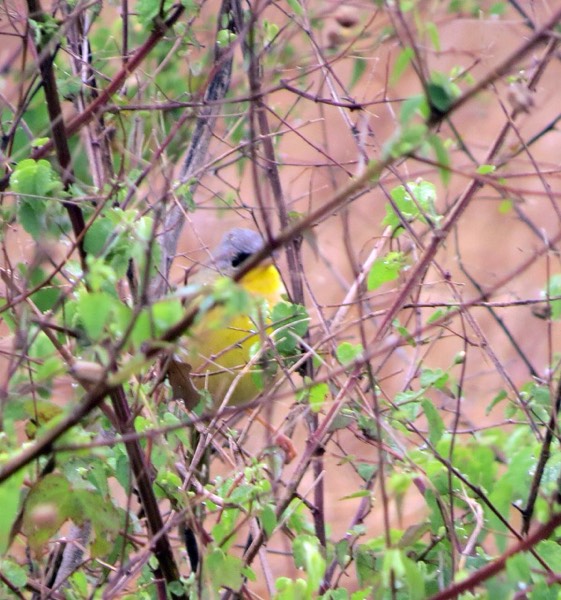
However, Dan Jones, one of the top birders in the Valley, took a shot two days ago when the bird was perched. As you can see, it’s beautiful.
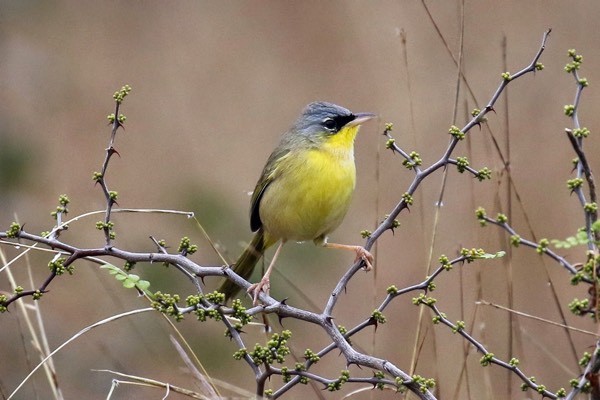
So much of birding is being at the right place at the right time. If I never again hear, "Oh, you should have been here 15 minutes ago," I won’t be heart-broken. Meanwhile I am enjoying the memory of finding such a neat bird for life bird #417.
Free Range Porkers

When I bird with Penny in our woods at home I never have her on leash and her wildlife encounters are usually with red squirrels or chipmunks – she tends to ignore deer. We have encountered a few Black Bears, which either I have spotted first or at least grab her, one moose chase years ago, and a couple of coyotes/coydogs that she deigned to chase.

In the South/Southwest, I tend to keep her leashed – often because of park rules but also for her safety. Yesterday morning was a good example: we were birding a scrubland looking for desert birds and had seen a Harris’s Hawk, several Verdin, even a Greater Roadrunner. No one was around as we trudged down a long truck trail and I had her leash looped through my belt and we were getting tangled every so often.

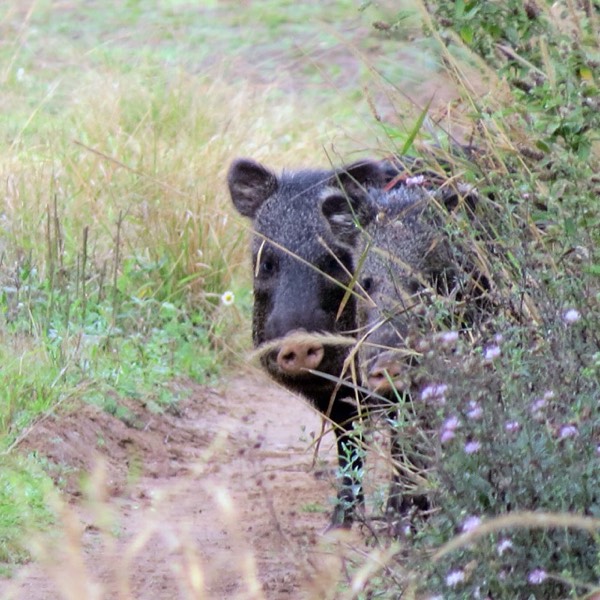
I was about to let her loose for a bit when up ahead, a black object stood in the path. A javelina, no three, no even more. Penny hadn’t seen them as I took a picture of these two watching us.

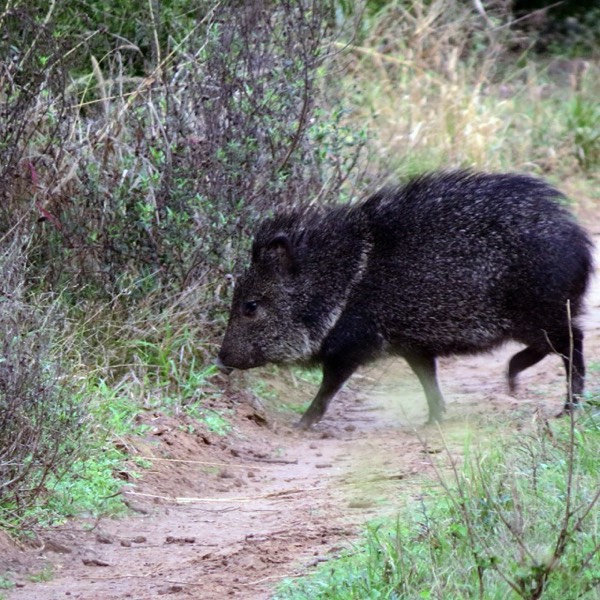
They scooted across, melting into the brush, then this one ambled over. You can see how black they are against the clay trail.

By now, Penny had them spotted and one last one tore across the opening. We move down the road and her nose was at full alert. I could hear a little rustling on both sides so I clapped my hands, told them to get lost, and we continued on. These porkers had some young ones but unle the big feral hogs in other parts of Texas, these guys are wary of us. Or at least that’s my story.

It’s interesting that just two nights ago, I suggested to Mary that we not but pork until we get back to Vermont. Antibiotics, feedlots, gestation crates – it’s the only type of pork you can get in most of the country. These guys, while free of that stuff, would probably be like eating a leather belt. Hard to fatten up on sagebrush, tumbleweed, and cactus.

The best bird of the morning was a Green-tailed Towhee which I heard, and glimpsed. I’m at 127 species for this county and hope to hit 140 before we leave. We hiked about five miles today – no hills but lots of soft clay – and Penny has started her 12th year with a good workout.

Turtle Love & Some Birds

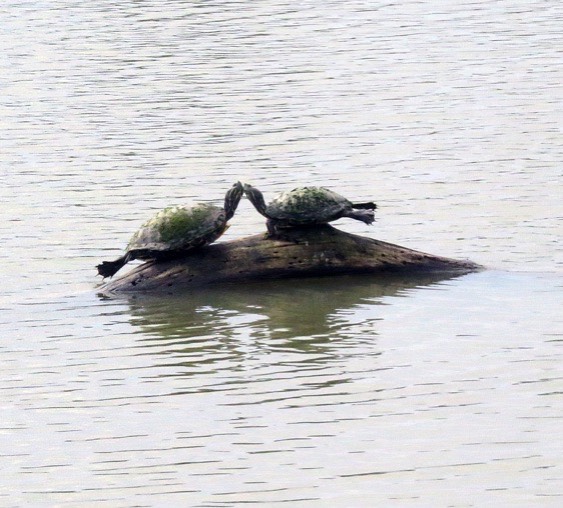
With Valentine’s Day approaching, I thought that "will you be my Valentine?" would be a good caption for these two turtles I saw the other day.

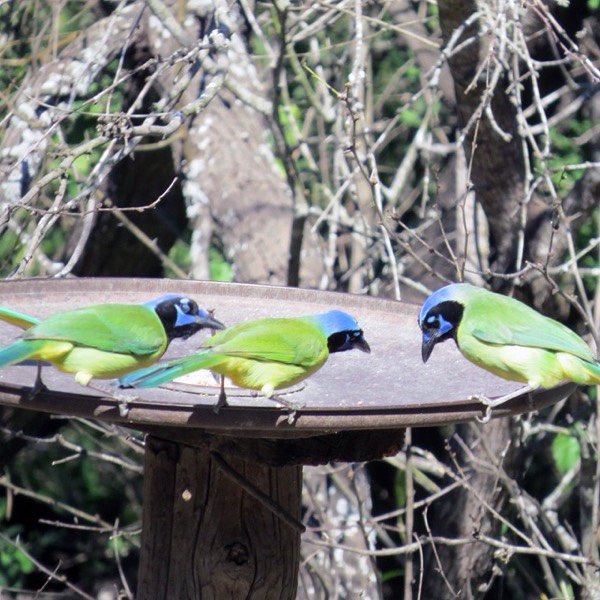
One of the specialties of the Rio Grande Valley is the Green Jay. Here, three contemplate the slim pickings at a feeder.

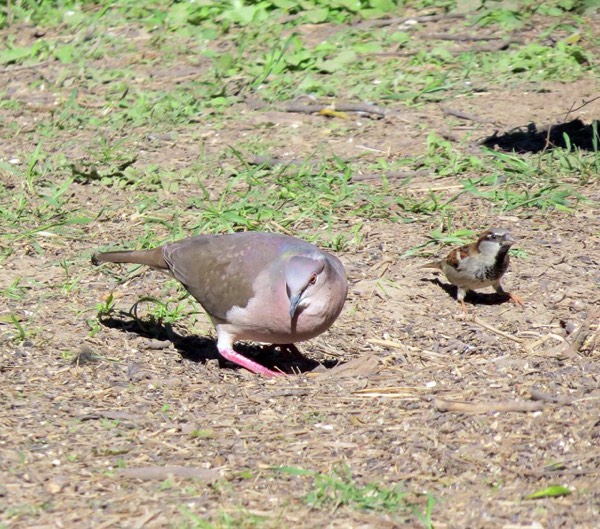
The biggest dove here is the White-tipped Dove, here shown beside a House Sparrow.

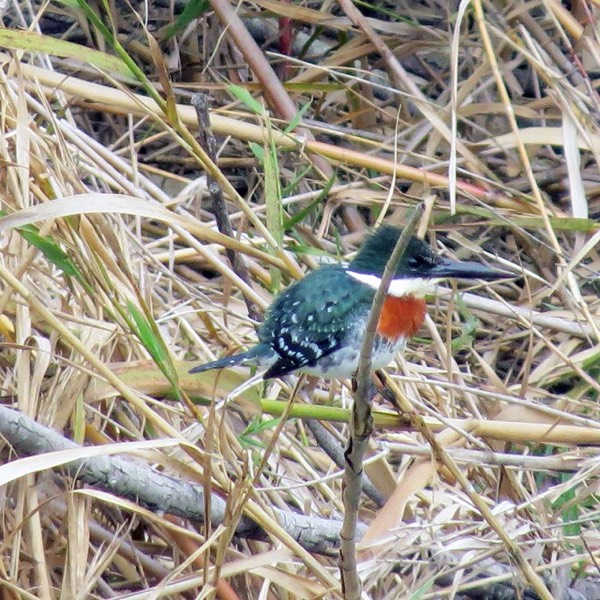
This male Green Kingfisher is quite the dude.

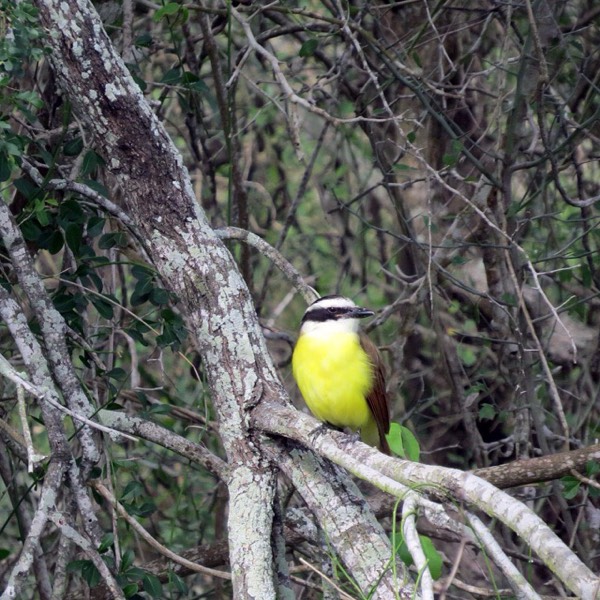
The Great Kiskadee is a beautiful but noisy flycatcher.

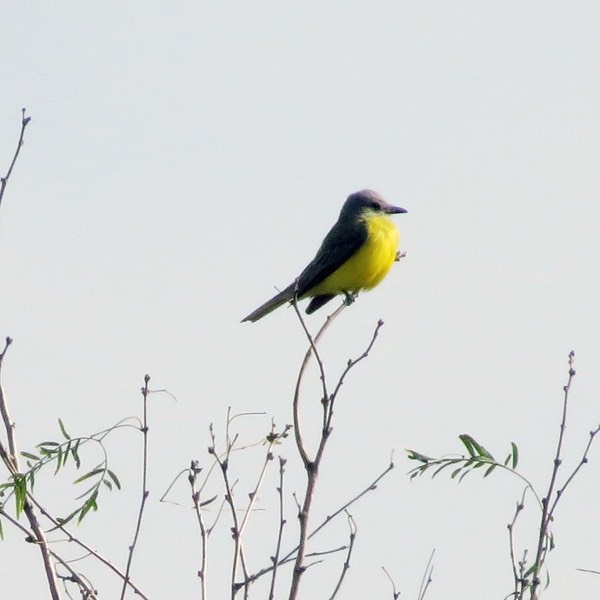
This Couch’s/Tropical Kingbird was quiet so he’s tough to identify.

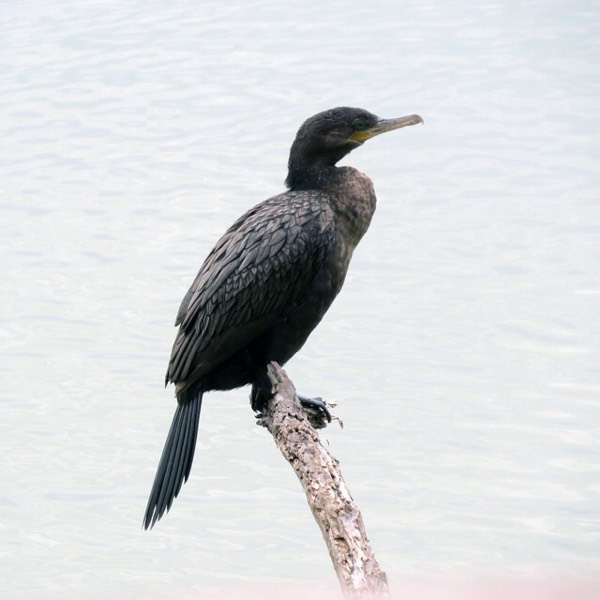
The lighting for this Neotropic Cormorant is not good so you can’t see his bright eye. His long tail is the clue. His Double-crested cousins have much shorter tails (in relation to their bodies.)

We are still awed by the colors and diversity of the species we see and hear. It’s never "Just another Green Jay" day for us. Good birding.

A Couple of RGV Raptors

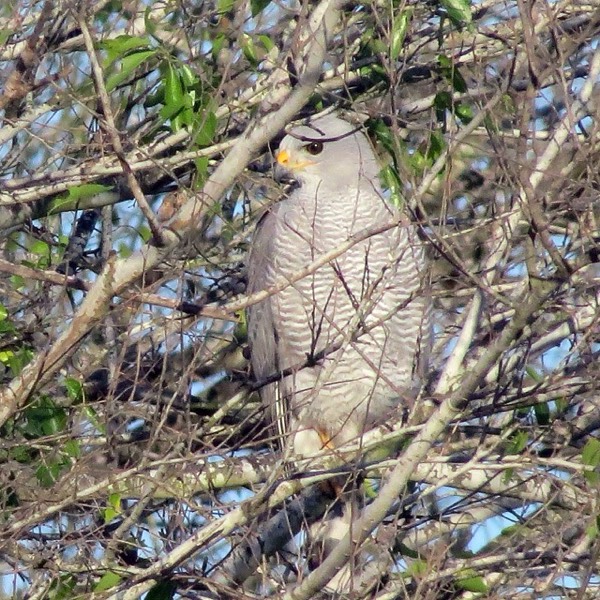
I spotted a flash of grey as I drove up over the levee to the County Park this morning. I had already counted four American Kestrels on the short road in and pulling over, I saw a Grey Hawk sitting in the trees. They are a specialty of the lower Rio Grande but I’d only seen a couple over the years so this was a treat – and a nice omen to the early morning outing.

I walked Penny on leash for two hours plus and picked up 33 species, including 10 I haven’t seen in the County this year. The other highlights were a Black Phoebe, two Couch’s Kingbirds, several Vermillion Flycatchers, and a dozen House Finches (which are rare in this area.)

It was a nice contrast to some chasing I’ve been doing of a rarity spotted last Saturday – a Grey-capped Yellowthroat. I just missed it by 15 to 20 minutes on two different days and spent quite a few hours, side-by-side with other birders, looking for it. It was neat to watch the people – folks with cameras so large that they use baby jogger trailers to transport them. The lack of success was a bit disappointing but it’s also a lesson in “being at the right place at the right time.” I’ve moved on – even if it gets sighted again.

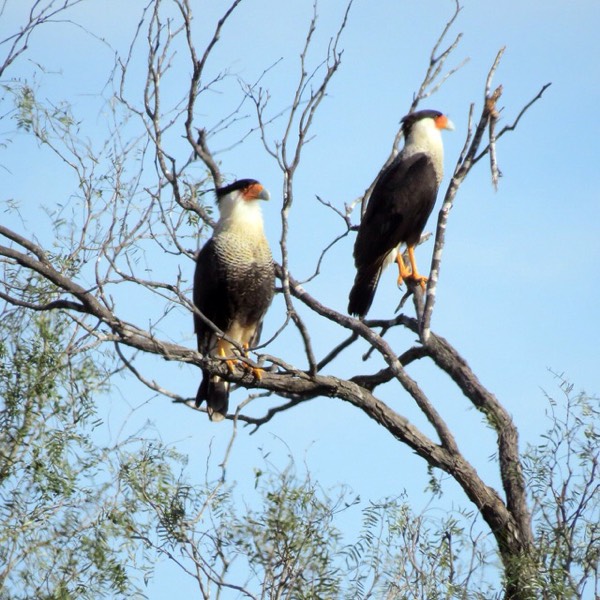
Two days ago, after shopping I took Penny to a wildlife area to which I had never been and the first thing we spotted was this pair of Crested CaraCara – sometimes known a the Mexican Eagle. The habitat, on the edge of County, was more desert-like and I saw Verdin, Black-throated Sparrows, and Pyrrhuloxia.

I am waiting for better internet service before adding a number of nice photos of birds I’ve seen. The weather has been good (as we monitored the Blizzard) and all in all, we like this area. Good birds but too many people. Lots of wonderful birders including our own Chris and Fred Pratt, who everyone seems to know, but with whom our paths have not crossed. Make sure you read this great post by Ken Benton to get a sense of the “madness” of birders. It captures the spirit and enthusiasm of the North Branch Nature Center Staff. Good Birding.

Another Cute Owl

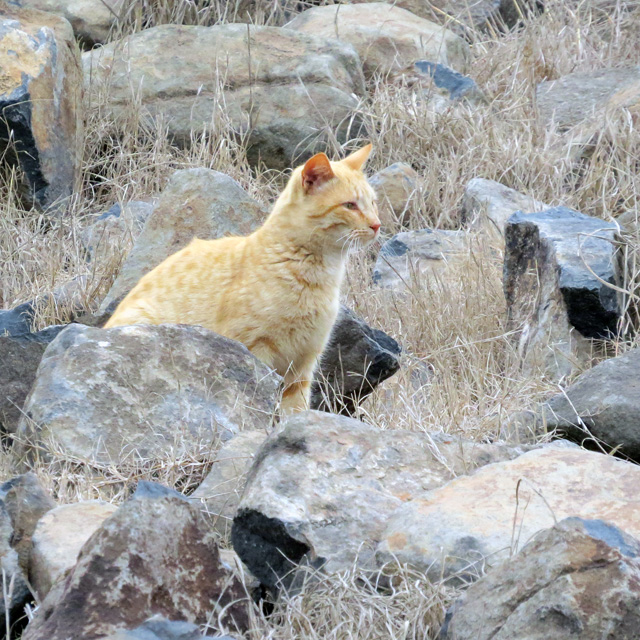
Having found the Eastern Screech Owl the other day, yesterday I went hunting for a Burrowing Owl who is located not far away. I had driven there Wednesday but only found a feral cat hunting on the rock piles where the bird was reported.

Yesterday afternoon, the first thing I spotted was a Loggerhead Shrike and then another feral cat. “Great,” I thought, being pretty sure that the bird would be laying low.

Feral cats are everywhere in Texas -- and while pretty, are quite devastating to the bird population.

Feral cats are everywhere in Texas — and while pretty, are quite devastating to the bird population.

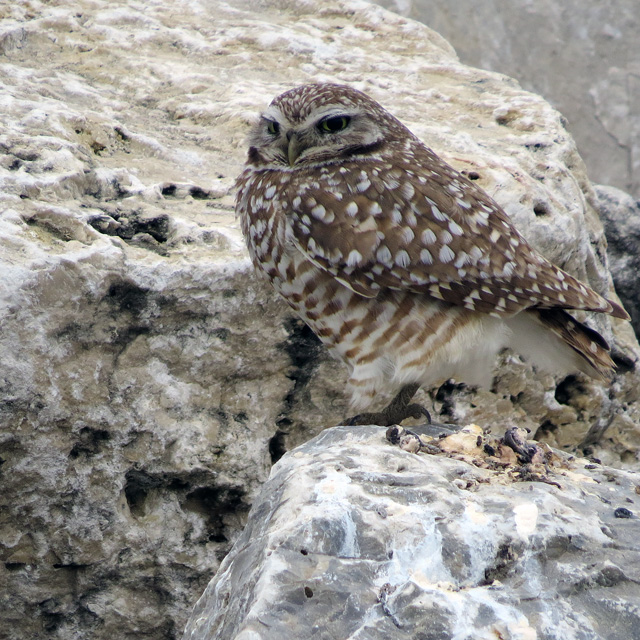
However, as I scanned the piles of rocks along the dike, a Burrowing Owl was perched up like nothing was amiss.  This is the best look I’ve had at one — and I took a few shots through the open truck window as the guy/gal posed.

BurrOwl1W

The Burrowing Owl appears to be diurnal because it can often be seen foraging during the day. In fact, it hunts all day and night long and is most active in the morning and evening. It catches more insects during the day and more mammals at night.

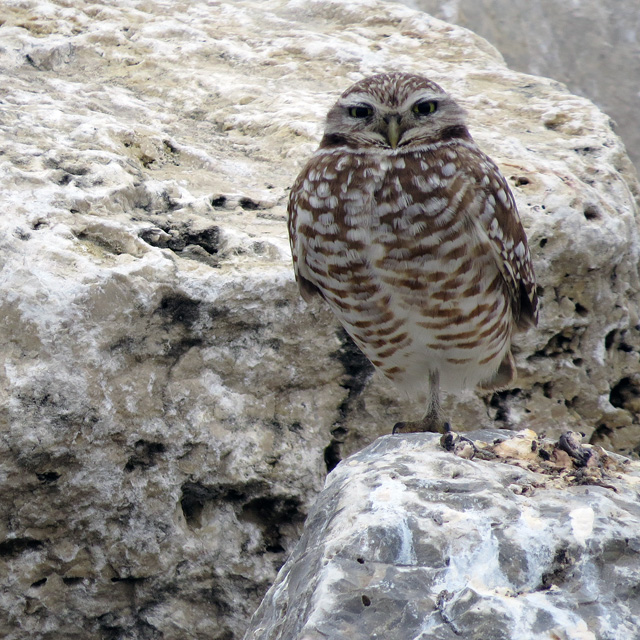
"Hey, you looking at me?"

“Hey, you looking at me?”

I plan to return with Mary to see this guy again once the cold front winds die down. It’s a great bird.


Hello Mr/Ms Eastern Screech Owl

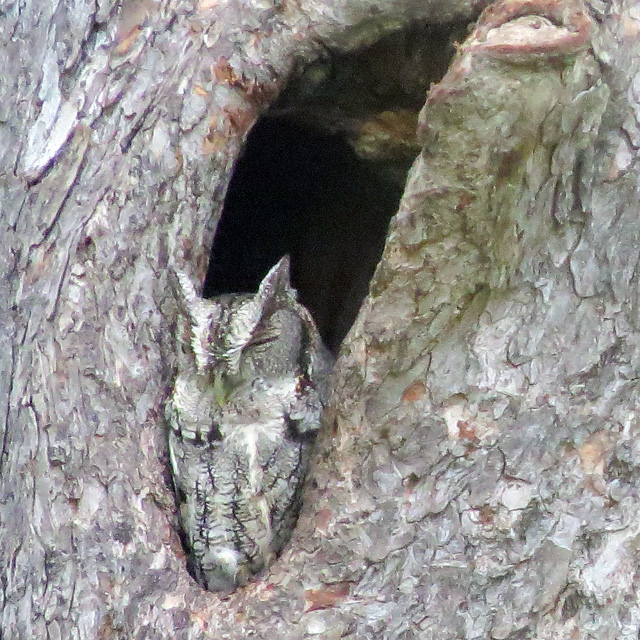
Last year, a couple put us on to an Eastern Screech Owl nesting in a tree at nearby Anzalduas Park. I could not spot it during our first visit this year but yesterday, a friend pointed out the correct spot (we were keying off the wrong building) and sure enough, there he/she was. I took a rather long-range shot so as to not bother the bird although it seems to sleep through hordes of visitors.

You can't see me (without help from others.)

You can’t see me (without help from others.)

The park is very birdy – lots of activity in the trees and overhead.  Here are a couple of other shots from Wednesday’s visit.

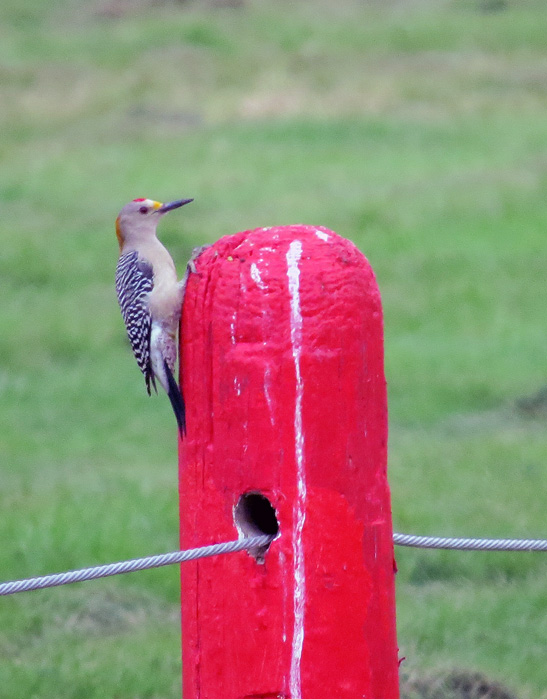
Golden-fronted Woodpeckers are pretty common and pretty noisy -- and just pretty.

Golden-fronted Woodpeckers are pretty common and pretty noisy — and just pretty.

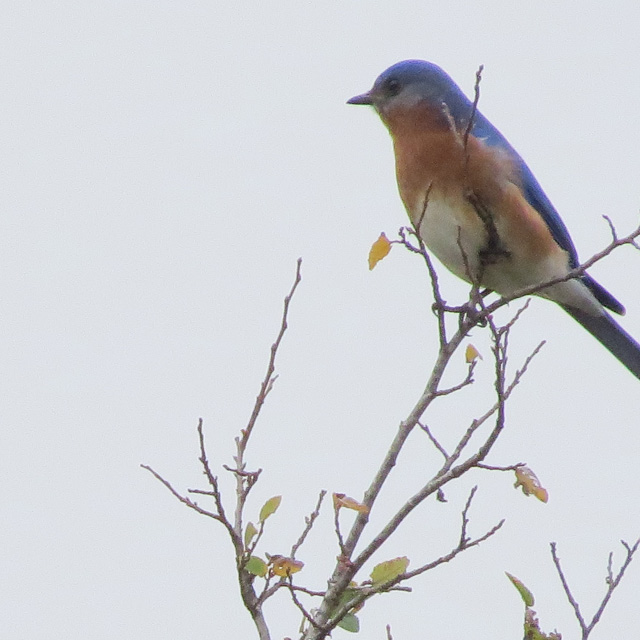
There were dozens of Eastern Bluebirds at the park.

There were dozens of Eastern Bluebirds at the park.

I’m waiting for better weather to launch the kayak here in the Rio Grande. The border runs down the middle of the river so as long as I stick to the correct side …. perhaps I’d better carry my passport.  Good birding


Goodbye Goose Island State Park

After a chilly (by Texas standards) start, we had a good end to our week at Goose Island. The birding was good and I got a couple of life birds: Clay-colored Sparrow and Harris’s Sparrow. One of my birding goals for 2015 is to get at least 100 birds in five U.S. counties. I did it in 2014, just squeezing through with my home county. So I was hoping to reach 100 birds during our week at Goose Island. It’s not easy since while the waterfowl are around (although I missed Green-winged Teal), only Orange-crowned and Yellow-rumped Warblers are present.

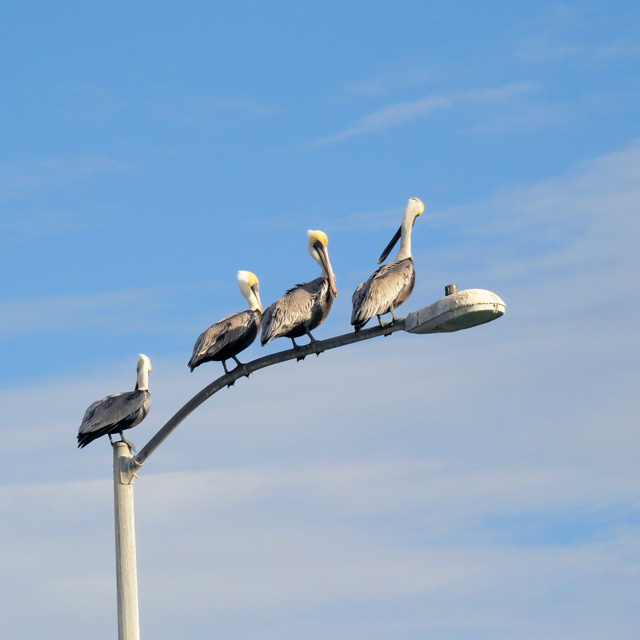
One of the common sites at Goose Island is the Brown Pelicans waiting for anglers to return and clean their fish.

One of the common sites at Goose Island is the Brown Pelicans waiting for anglers to return and clean their fish.

By Saturday night, I was at 99 species; we were leaving Sunday morning. I got up early, took the dog for a long walk, and visited some feeders which had been unproductive all week. As things would have it, the 100th bird who hopped out of the bushes was Vermont’s State Bird, a pretty Hermit Thrush. Then, four White-Throated Sparrows arrived and I called it quits at 101 and went back to hook up the trailer and get ready to depart.

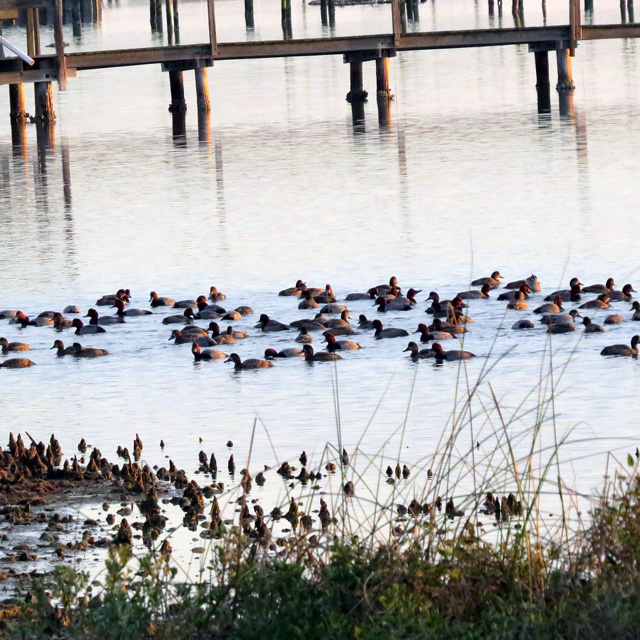
Large rafts of Redheads are everywhere, as are duck hunters traveling by noisy airboats.

Large rafts of Redheads are everywhere, as are duck hunters traveling by noisy airboats.

We are rather limited with Wifi and busting our data plans for the phones and iPads so posting photos is a challenge. After a long wait one night, I told a fellow who was standing their in the dark with his cell phone that “It’s like watching grass grow.” He didn’t get it — turns out he was a visitor from the Netherlands. He certainly agreed that the reception was awful. We are now in the Rio Grande Valley with thousands of other Winter Texans, many from Canada. Each year, as more folks get multiple devices, the signals get worse. You can get a 4G signal with three or four bars but there’s so much demand that you might as well forget it. I get up early and it works like a charm.

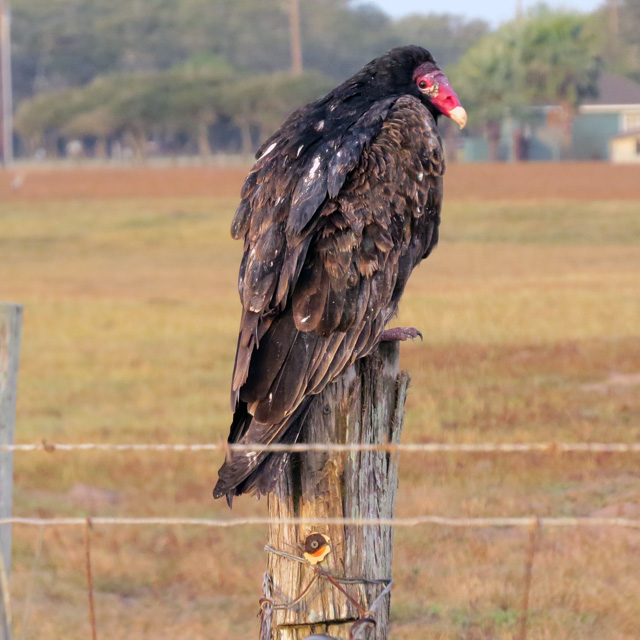
A face only a Turkey Vulture mother could love.

A face only a Turkey Vulture mother could love.

We are not sure we’ll make it back on the way home but in any case, it remains one of our favorite state parks in the Southwest.