Pushing The Camera’s Envelope

I have pretty much switched to my Canon SX50 HS digital zoom, leaving my more expensive camera back at the trailer. Generally, this is a good strategy but every so often, I end up pushing the digital zoom too much.

In some settings, the zoom will go all the way in to 200x or the equivalent of 4800mm. At this distance, the photo quality gets grainy, especially in poor light – but it captures a record of what you saw.

We had a great visit to Lost Maples State Natural Area where I got three life birds (more on that next time.) I heard about a nesting Great Horned Owl late one day so we drove out to the picnic area and soon located her in a cave-like impression in the cliff across the valley. The light was fading and she was in the shade but the photo, grainy as it is, looks almost like a painting. She was there the next day but sleeping.

Not far away, in another cliff in a neighboring valley, there is a Red-tail Hawk nest. The local bird hosts have built a pipe-tube pointer to allow you to pinpoint the far-away site. The first two times I checked it there was no activity. The next morning, I saw a RTHA flying over the campsite and later, when I took Penny for a walk up the trail, she was on the nest. Again, another long-range shot at the limits of the camera.

Even though it snowed in Vermont the first day of Spring, these nesters give one hope that warmer days are ahead. Happy Spring!

The Balmoreah Triangle

The wind advisory for southern New Mexico was not kidding: Saturday we endured one of the tougher nights we’ve had with winds gusting off the lake at 50 mph or more, and the Airstream shaking and making all sorts of groans and bumps. At one point, I went out with a light to see if my belly pan and back bumper repairs were holding – and they were. Our neighboors, a young family with three boys, lost their tent in the melee and had to crowd into the grandparents’ small RV next door. You could taste the dust in the air; Mary and I were glad to hitch up in the early morning darkness and be on the way to Texas.

Winds were high on Sunday but they were out of the north and directly behind us. The trip through boring oil fields was mercifully short and we arrived at Balmoreah State Park, a small CCC-built park featuring wonderful wonderful spring water in thee midst of a desert. This "oasis" turned out to be our Bermuda Triangle and we could not wait to get out of there.

The first issue, which by itself would have been a small annoyance, was the internet situation. Here we were, four miles from I-10, and the At&T signal was either weak or when available, some version that was unuseable for either email or web. And unlike our present site, you could not drive a few miles and find a signal. I needed to make reservations for later in the week but Nada.

Then, a real stress-inducing event hit. After we had just parked but not unhitched or set up, the truck alarm went off with Mary sitting in the truck with the door open. I got my keys, reached in to turn the ignition on to stop the noise, and then tossed my keys on the seat saying "In case it happens again." I then took Penny for a walk since she’d been cooped up for several hours.

I returned to find an ashen-faced wife saying, "We are in serious trouble – the truck is locked." I freaked out, trying to blame her (it was my fault), realizing that on a Sunday in a town with 649 people, help was miles, and perhaps days away. Her pocketbook, my glasses, and our phones and Ipads were securely locked away. And then I noticed that my window was down about a little less than an inch.

I took two wire coat hangars from the trailer, made a three foot- long snake with a hook on the end. Carefully, with a number of misses, I hooked the ring and slowly started dragging it toward me. My heart sank as the contraption slid off the neat nearly hitting the floor but soon the keys were nearly at the opening and I got hold of the ring. I don’t recall breathing but must have. I got the small accompanying key through the opening but the thick plastic end of the truck key jammed. Carefully, I worked it through, with literally no room to spare, and had the key, the door open, and a victory horn toot that drew Mary from the trailer with relief. If the window had been up another eighth of an inch, we would have been hosed.

The third event, about which I’ll write more later, happened just afterward. The refrigerator would not turn on and the stuff in the freezer – particularly ice cream, was thawing fast. I checked fuses, power supply – it was dead. I went in town to the only store – no RV repairs in area, nearest store for a cooler about 50 miles away, so I bought a bag of ice and returned.

We had planned two night so I had unhitched in preparation for some birding on Monday (I was looking for a Clark’s Grebe which are often seen at a nearby lake.) We decided to leave this cursed place so I did some quick birding in late afternoon – and got the grebe – and came back and hitched back up for a quick getaway in the morning.

So, we are in the cooler/ice mode but our spirits are good and we are exploring options. We are in a beautiful small park in the hill country (Lost Maples State Natural Area) and hope to see the Golden-cheeked Warbler here. We’ve tossed out the map and literature from Balmoreah – don’t think we’ll be visiting there again this trip, or this lifetime.
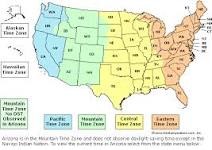
Central Daylight Time

We have been perched just north of the Texas line for a week waiting out spring break. Today, we head into Texas and lose an hour right away as we cross into The Lone Star State.

It’s is fun to watch the time on the iPhone and iPad change as you cross the time zone line. Often, there’s a road sign announcing the change and the devices will change right than, or miles later. Having had lots of practice, I can change the truck clock fast but wait until we are settled to change my watch and the several clocks we have in the trailer.

Moving by vehicle, the time transitions are easy compared with flying. We do note that moving from the eastern side of a zone, to the western side of the next is noticeable at both ends of the day – this morning it was light about 6:30 while tomorrow, it will be 7:30.

We are ready for some green scenery – cactus and sagebrush are getting rather boring. It’s nice, as we think about our return, to know that we are just have one more time zone to go – even though we’ll dawdle in Texas while we wait for the snow to melt in Vermont.

Postscript : We just endured one of the toughest nights of the trip, with stiff winds rocking the rig all night. Neighbors in a tent with kids had to abandon ship and move to a nearby RV and we expect a tough trip today. There is a wind advisory out for today as well. We have a short haul and will be travelling with a tailwind. These western winds have little to stop them – they are nasty – and dusty.

Texas School Break – Please End Soon

This is an interesting week, as thousands of schoolkids and their families overwhelm Texas State Parks. There are no sites available, nor have there been for months. The noise level is high, the bathrooms are oversubscribed, and even if you like kids, it is a good place to avoid.

We decided to hang out in New Mexico, which on the surface, sounded like a great plan. What we did not plan on is obvious now: Texas families and college kids who also can not find room in Texas drive here. So each RV with Texas plates usually offloads about four kids, their bikes, their energy, their noise.

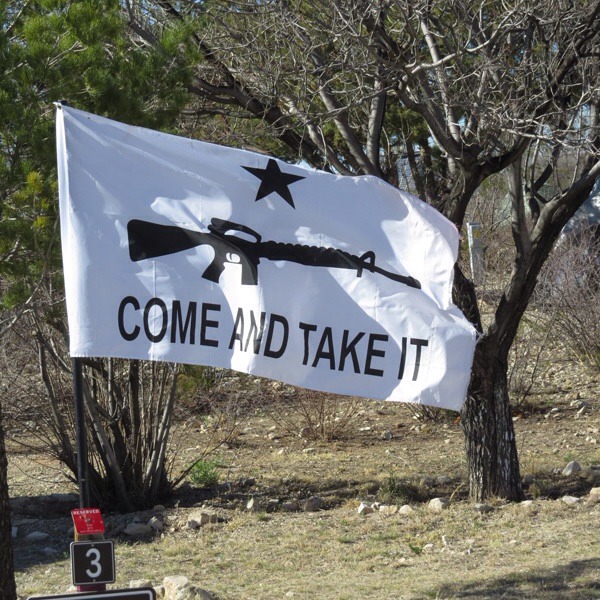
When we first arrived, we drove past four sets of tents with flags flying. I thought, "oh, a contingent no scouts." A later walk with the dog unveiled that we had a contingent of Texas A&M guys, budding Tea Party members, who had a "Don"t Tread On Me" flag, an American flag, and this one:

The other item that we’ve forgotten about given the makeup of winter parks is: don’t pick a spot near the playground. As I listen to screaming and yelling kids playing, I remind myself that they will tire and slow down – and try not to be curmudgeonly. After all, kids are out with family, getting exercise and fresh air, and I’ve seen few, if any electronic devices in use.

The place we are going Sunday, Balamoreah State Park, is full this weekend but has a dozen slots open Sunday night. Tuesday we plan to head to one we’ve never visited, Lost Maples State Natural Area to try for the Golden-cheeked Warbler.

We’ll start heading back, slowly, about the first of April with an arrival time of about mid-month. We will see how snow melt and mud season goes before deciding on whether to bring the rig all the way home, or leave it on flatter/drier ground elsewhere. We’ll cross that Shady Rill bridge when we get to it.

Some Birds of the Desert

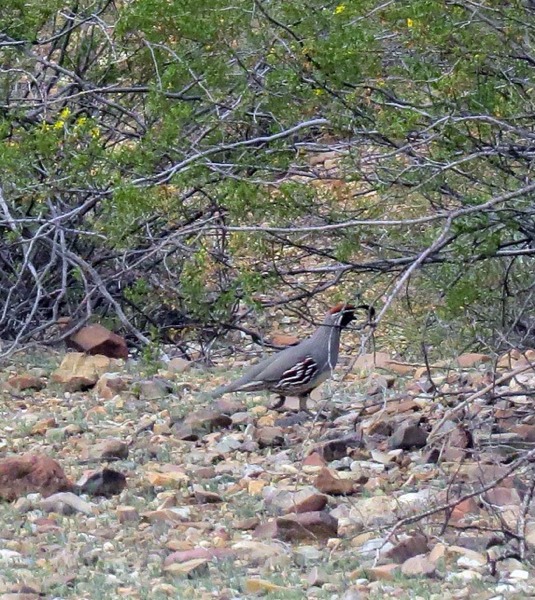
Gambel’s Quail are runners, very hard to photograph as they scurry through the brush. Here’s one almost obscured as it darted past me.

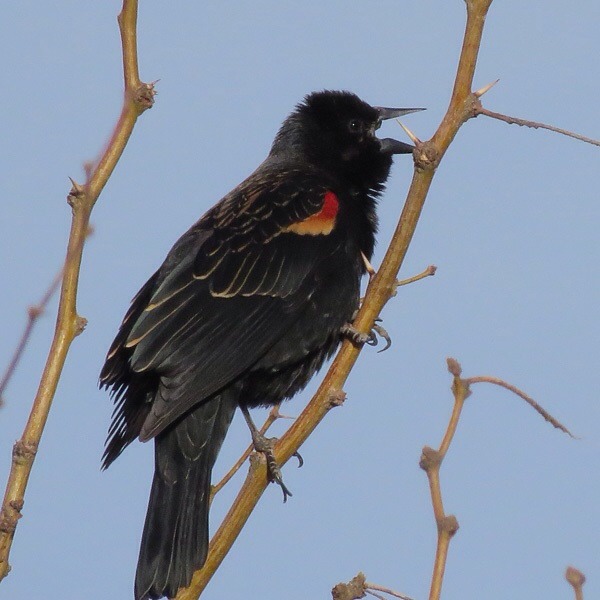
On the other hand, this Red-winged Blackbird was so intent on singing that he allowed me to walk right up to him.

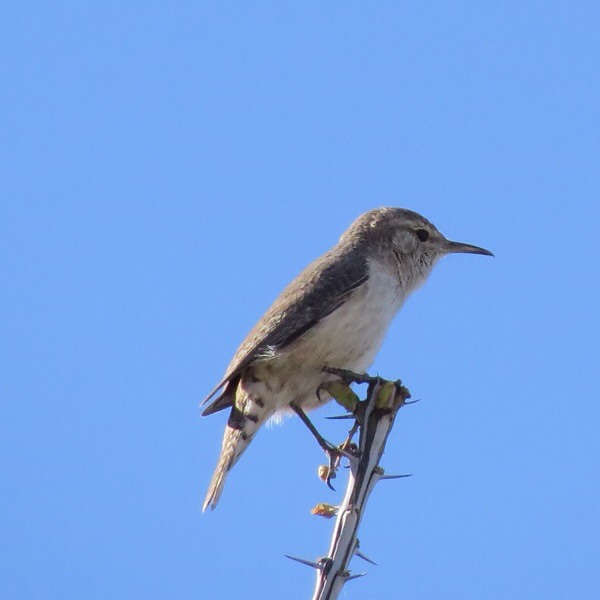
The big brassy Cactus Wrens have been pretty obvious throughout most of the Southwest but it wasn’t until New Mexico that I got some good looks at their smaller cousins, Canyon Wrens.

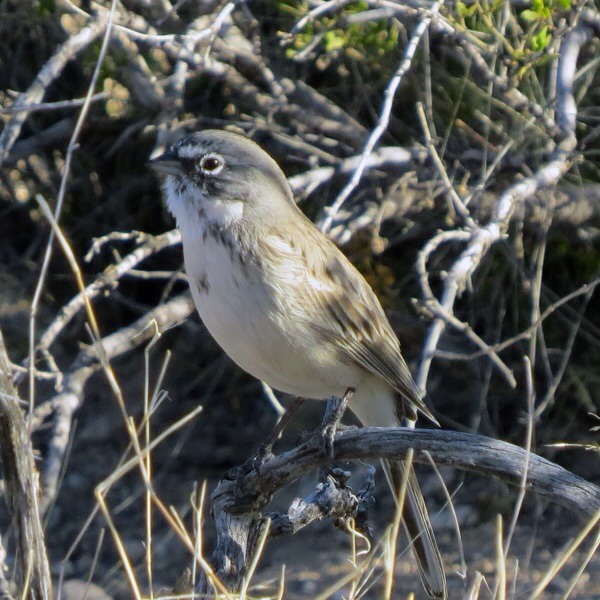
One of my life birds this trip is the Sage Sparrow, who like some of the quail, likes to run from you. This one sat still for a photo.

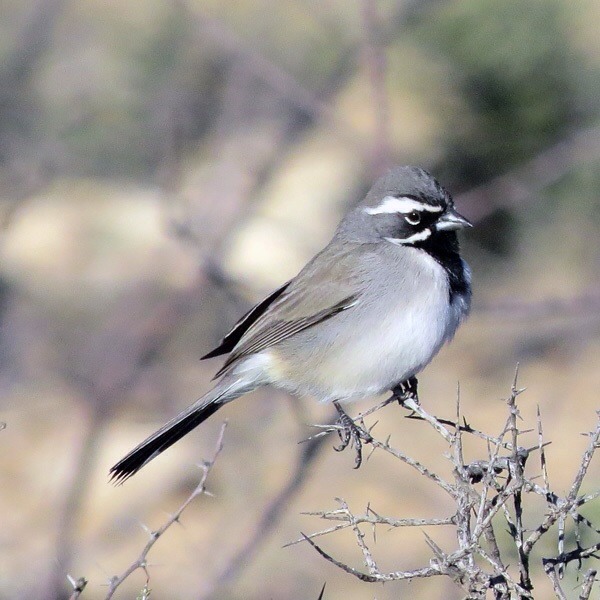
And lastly, one of the neat birds of west Texas, southern Arizona and southern New Mexico is the handsome Black-throated Sparrow.

Arizona Desert Flowers

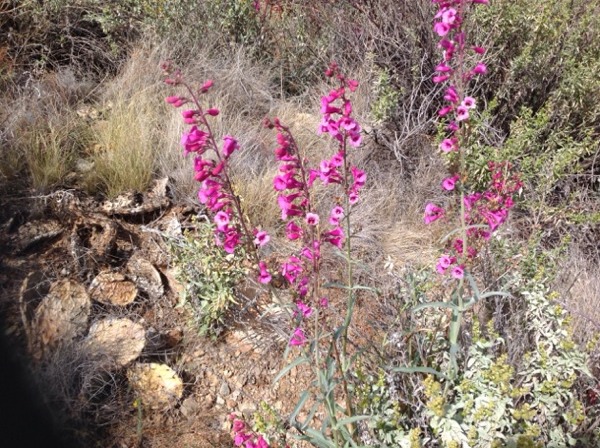
Just before we left Arizona, we got a couple of modest rainfalls and the flowers started popping out. Of course, I have a dozen bird books but nothing on desert flowers – and we haven’t been near a bookstore since. So I’ll identify the few I know and ask you to comment on the others. Here in New Mexico, it is drier and the plants are just dry and dusty.

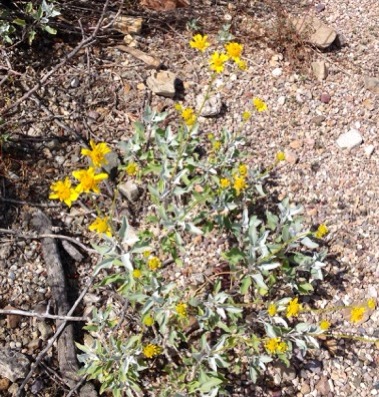
This plant, which my friend, Heather Campbell identifies as Narrowleaf four-oclock *mirabilis linnearis*, was where I saw my first Costa’s hummingbird.

This yellow roadside plant was everywhere.

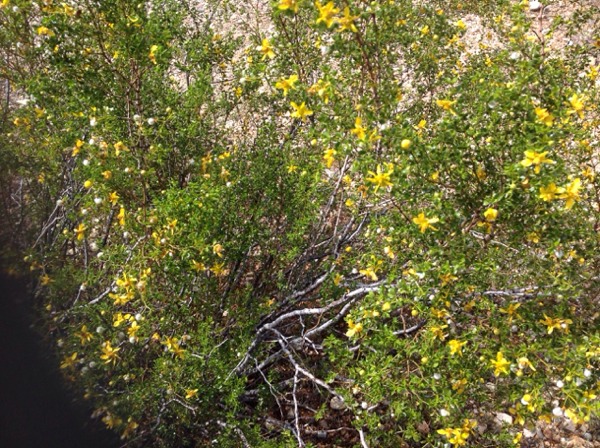
The creosote bush is all over the Southwest and while having no connection with the sticky black substance we use on fenceposts, it does have some interesting properties that cause it to grow apart from its kin. You can read more here.

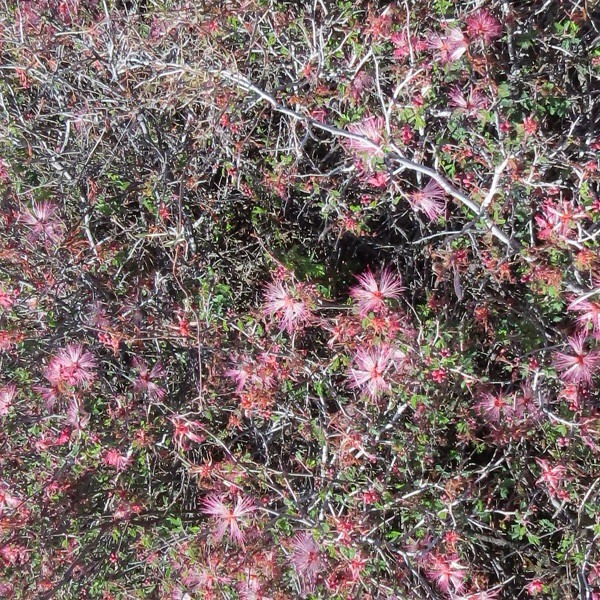
This lovely plant is Pink Fairyduster – *callandria eriophylla*. (Thanks Heather)

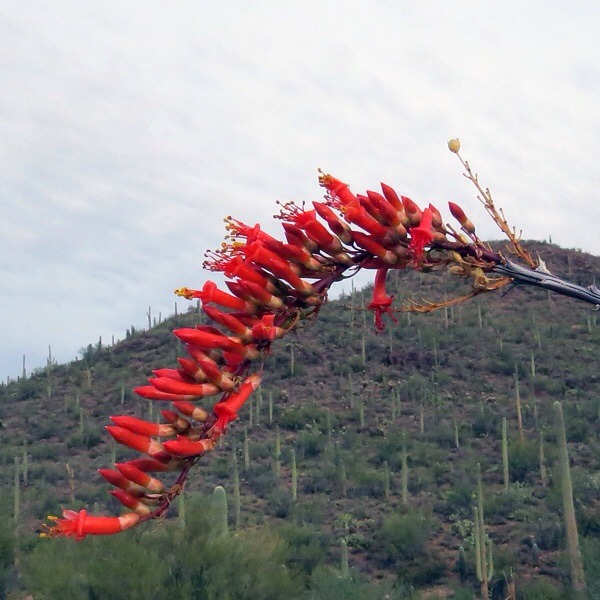
The flowers of the Octillo cactus popped after the rain.

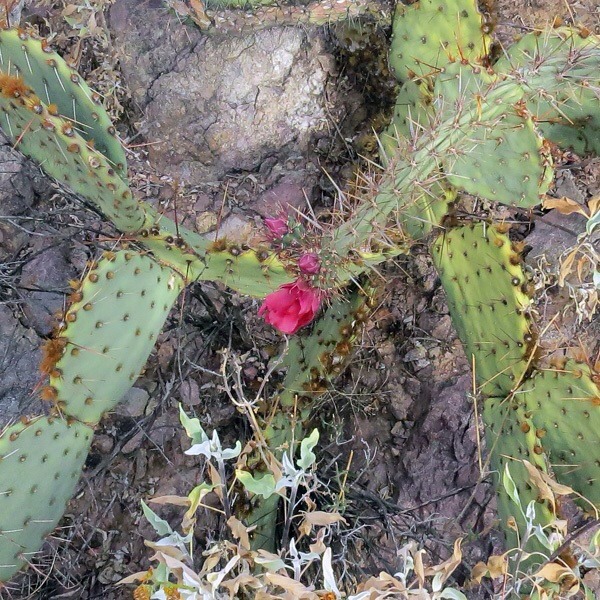
The Beavertail cactus blossoms are more subdued. (Thanks Heather)

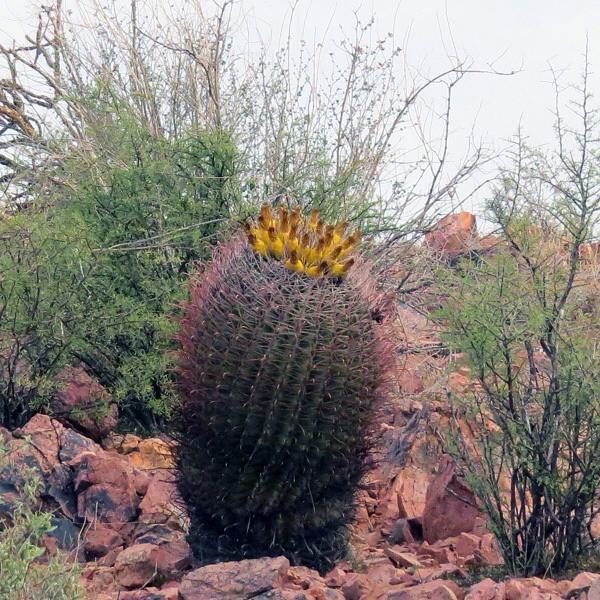
Compass Barrel Cactus blossoms later – I think this is last season’s fruit.

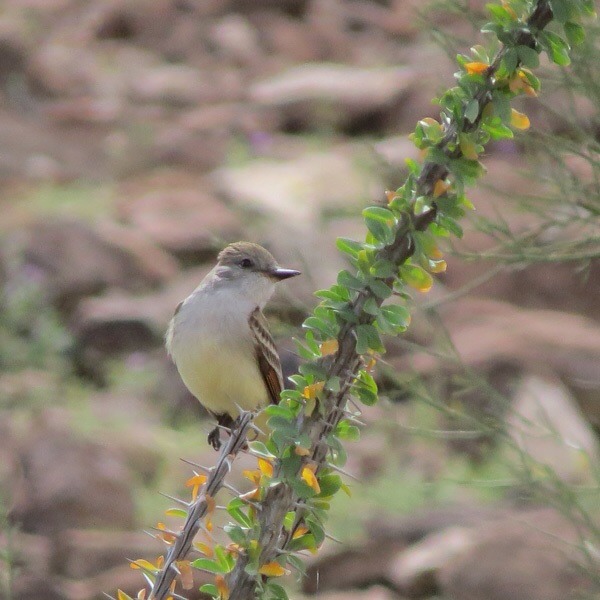
Lastly, here’s a Say’s Phoebe on an Octillo with yellowed leaves. (Thanks Heather)

So, if you spot some corrections on plant ids, feel free to chime in.

Birds of San Eligo Lagoon

The San Eligo Lagoon just south of our California camping sites, is a favorite of many local birders (although I met none in three visits but did meet a good birder from MA) and it is easy to see why. An innovative reclamation site for treated wastewater, it has great trails and a wide variety of birds. Here are some that I saw while there.

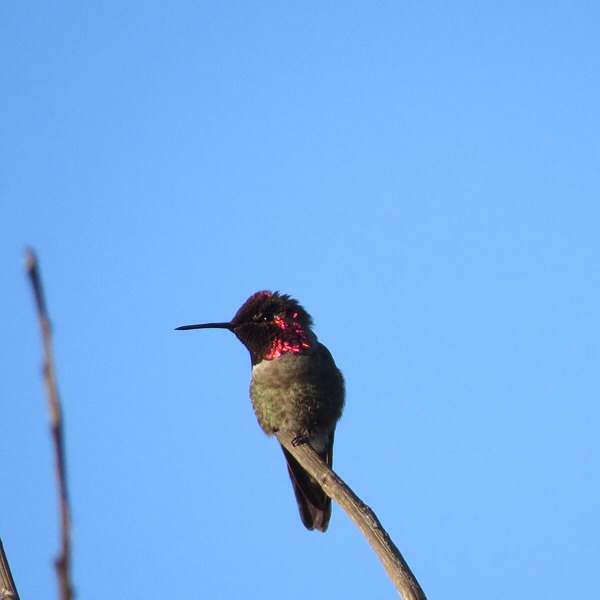
The Anna’s Hummingbird was fairly common but a wonderful feisty hummer:

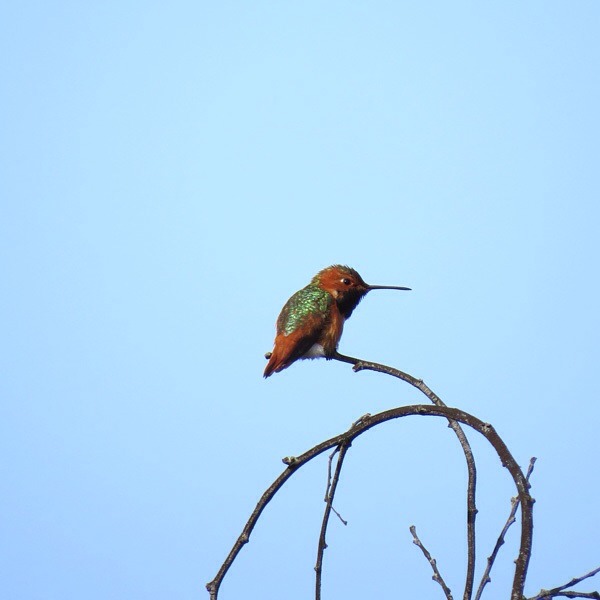
The Allen’s Hummingbird was a lifer for me:

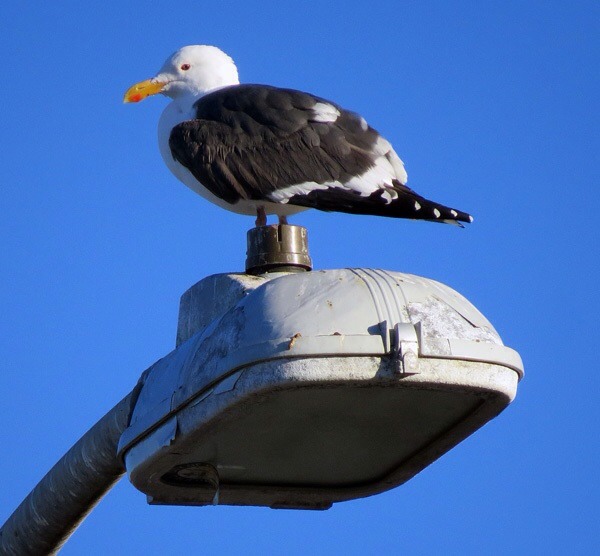
As was this Western Gull:

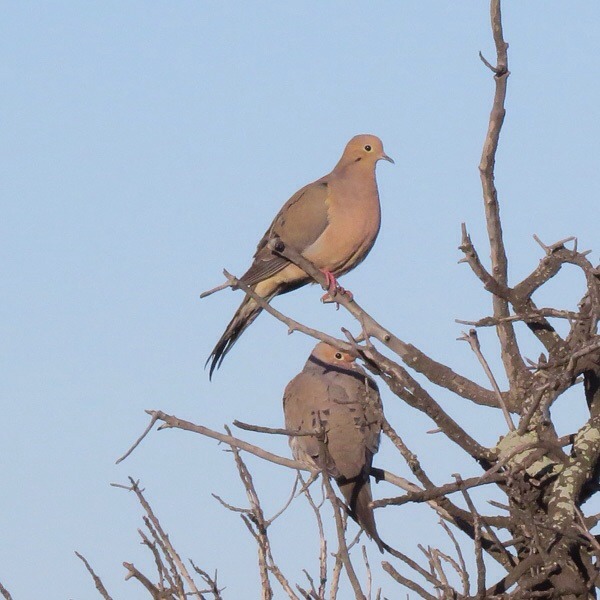
Mourning Doves are common friends nearly everywhere we go:

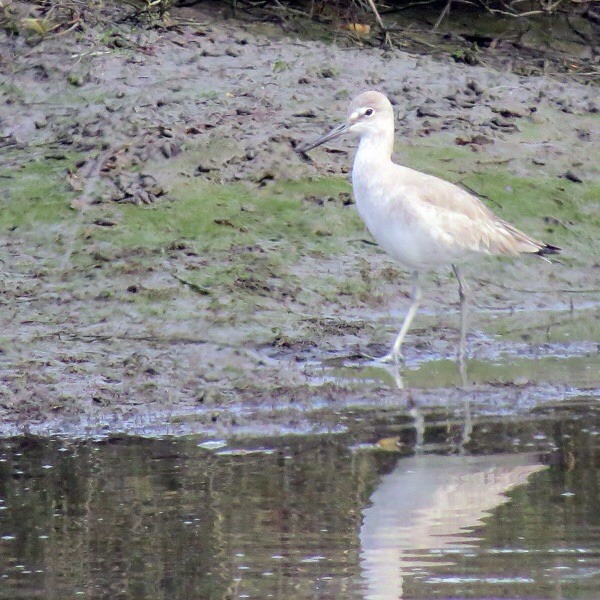
The Willets in the west are lighter but still give their Willet-wing display when they fly:

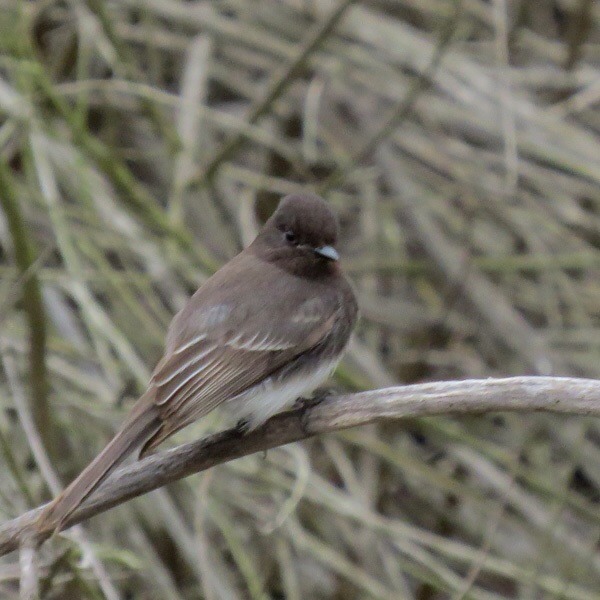
Black Phoebes are fun to watch as they actively forage for insects:

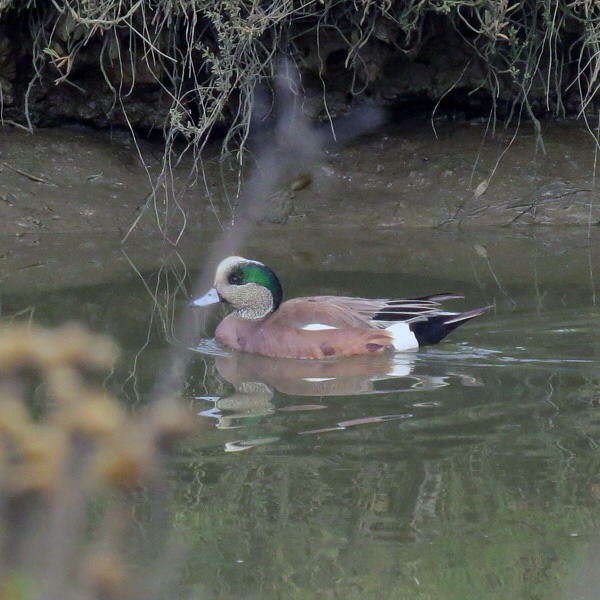
The lagoon had dozens of American Wigeons like this handsome dude:

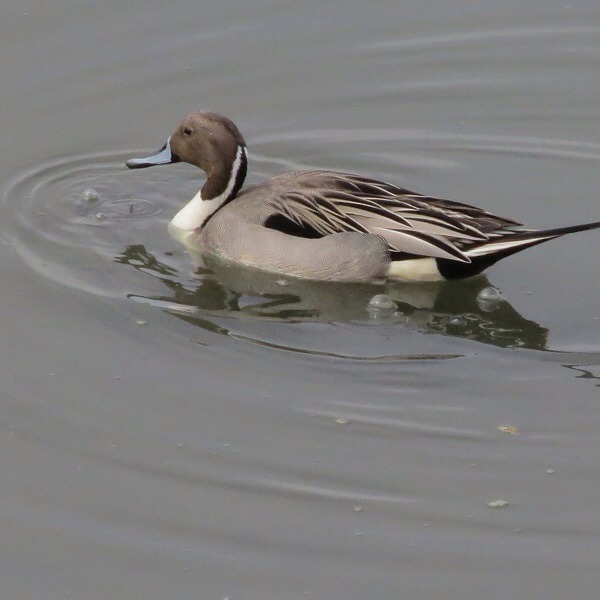
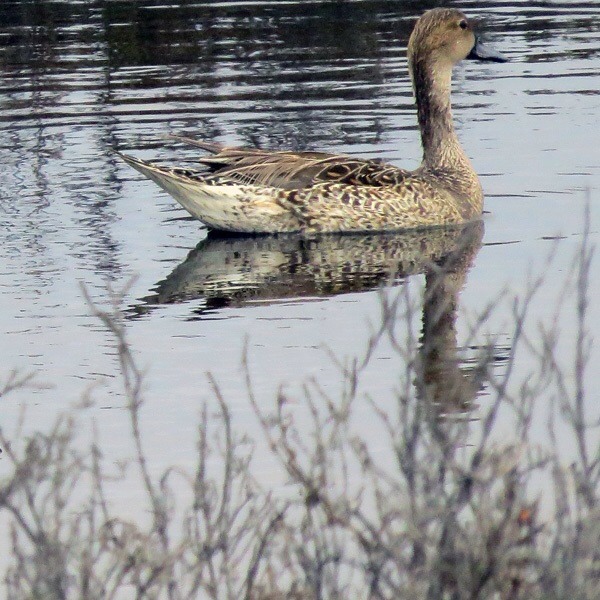
Northern Pintails, like this pair, are in lovely plumage:

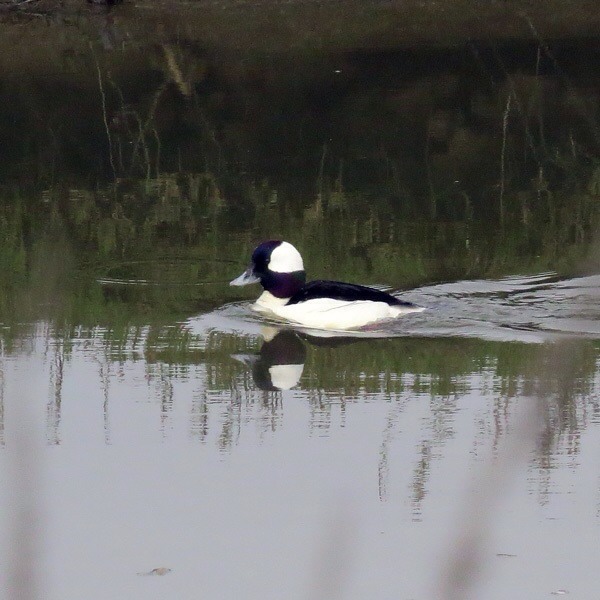
And lastly, I’m including a fellow whose eastern cousins will be visiting Vermont this Spring. What’s not to love about Buffleheads?

A Morning Surprise – #400

One of my 2014 birding goals was to reach 400 life birds – in my fifth year of birding. I saw two Black-tailed Gnatcatchers as I checked into the Salton Sea State Receation Area last weekend (for 398).

The following morning I birded the Wister Unit about 25 miles south and after a great session birding from the truck crawling along managed wetlands, I came right up to a large hawk, who peered at me through the open window about 20 feet away. (Fortunately, the dog was napping in the back seat.). I got my binoculars up slowly, studied the large bill, the feathery legs, and after about a minute, the hawk shook out his feathers, took a dump, and slowly flew away. It was my first Ferruginous Hawk and an "up close and personal" encounter for number 399.

So for several days, I’ve been wondering what number 400 might be. We have been back at Gilbert Ray County Park in Tuscon and while I have had some good outings, the birding has been rather slow. I figured that perhaps in the week ahead in New Mexico, I’d get lucky.

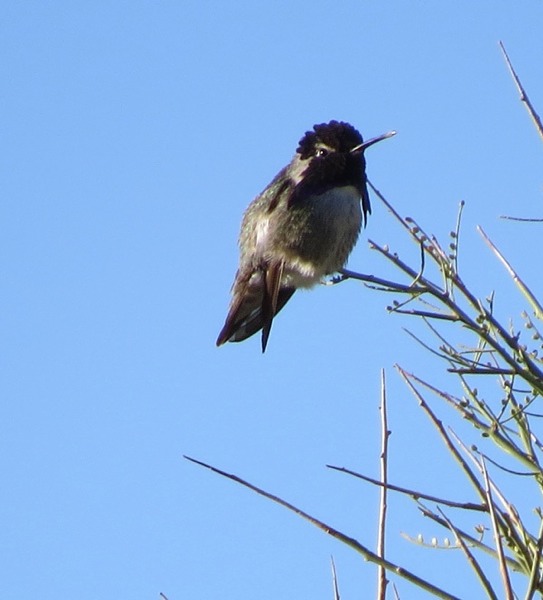
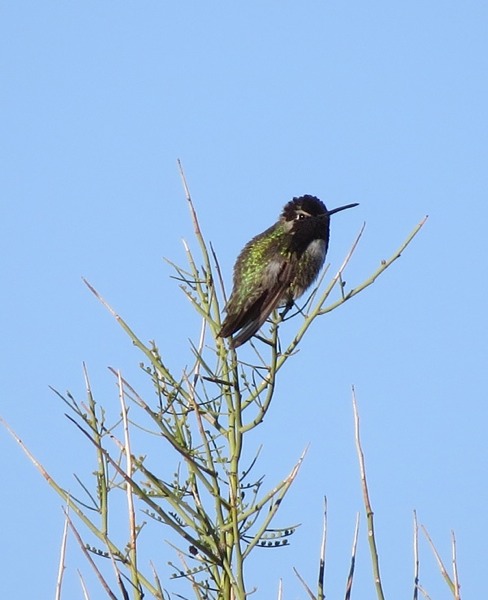
This morning, I walked Penny just at sunrise since we had a long drive to Las Cruces ahead of us. I had my binoculars but no camera as we circled the camp loop. I spotted a hummingbird, the first I had seen there, and thought, "Another Anna’s." When I got my glasses on him, it was a spectacular Costa’s Hummingbird. I got some good looks but then he was gone. The trailer was close by so I dropped off the dog after feeding her, and grabbed my camera. Of course, he was not there – and so I started packing the truck. I went back and found him perched, in bad light, in a far off tree. The shots I got don’t capture the irridescent gorget and crown – but I saw them in the sunlight and they were spectacular. The photos do capture the pot-bellied shape.

What a neat #400. I got it just as we were leaving its range so it literally was the last chance. The morning encounter made the long trek across Arizona and New Mexico desert much more enjoyable and we are settled into a nice New Mexico state campgound.

Hiking Brown Mountain

We are hanging out, enjoying great Arizona weather, at Gilbert Ray Campgound, a county park just west of Tuscon. We have a neat site which is relatively secluded with Cactus Wrens, Verdin, and Gambell’s Quail to entertain us. So do the coyotes who periodically get some barks out of Penny as they tune up on both ends of the day.

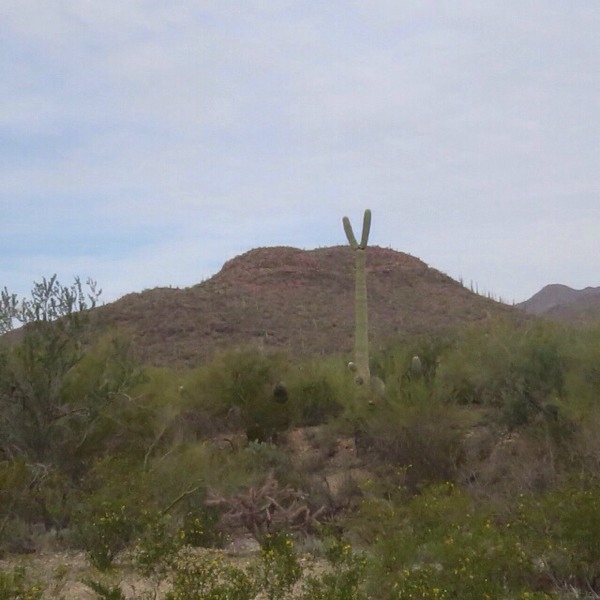
This morning, I decided to climb Brown Mountain, which while not grand in stature, treats you to a view of diverse, spectacular Sonoran desert flora. The hike is only a mile and a half to the summit and rises a modest 400 feet but the views make you forget that you are just outside a major city.

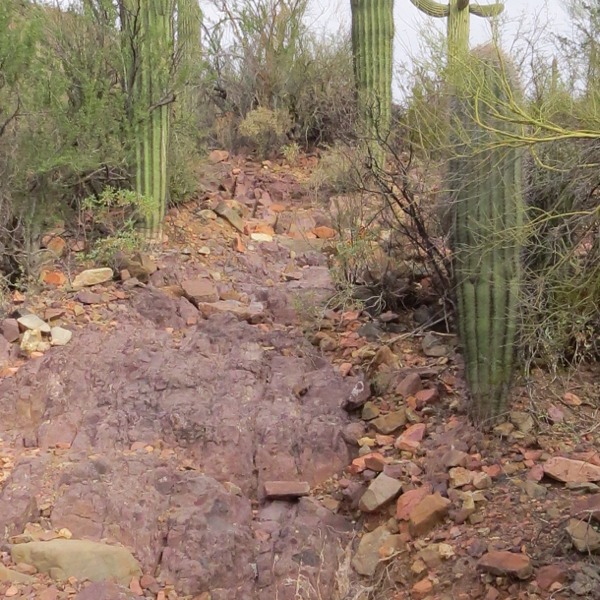
So Penny and I started out early. I let her off leash since no one was around and we cruised down the well-worn path. The trail, as one would expect, was rocky and a number of steps were built into the path. Here’s an example.

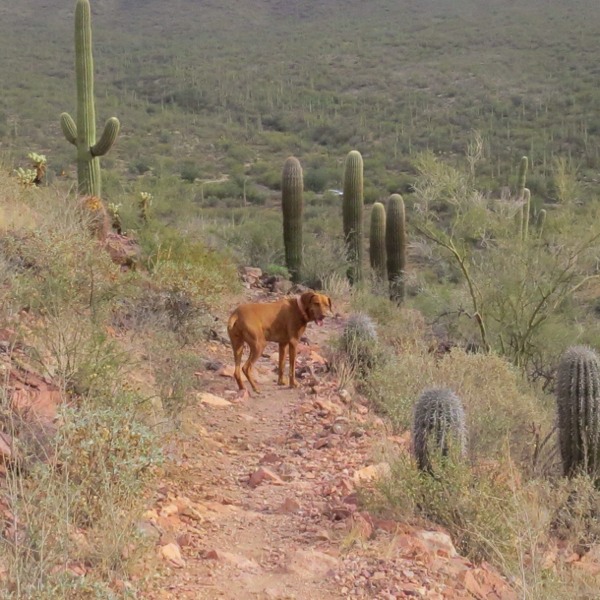
We traversed back and forth up the mountain and at times, Penny seemed to wonder why I was taking my time.
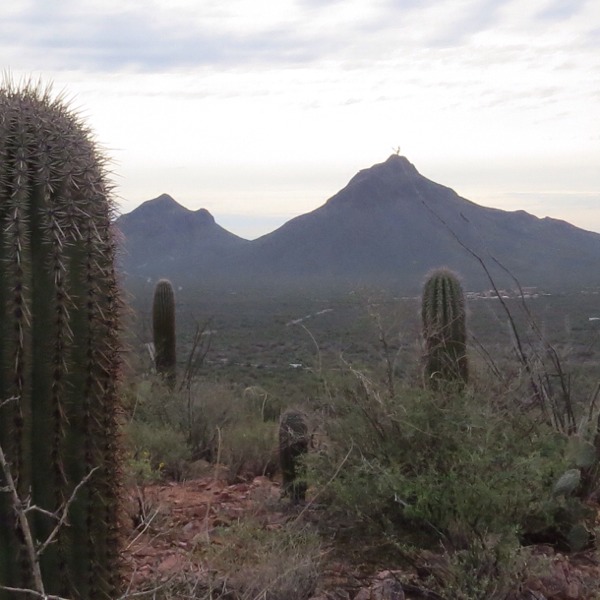
We were rewarded with some nice views at the summit even though it was a little hazy. Here is the view eastward toward Golden Gate Mountain and Tuscon.

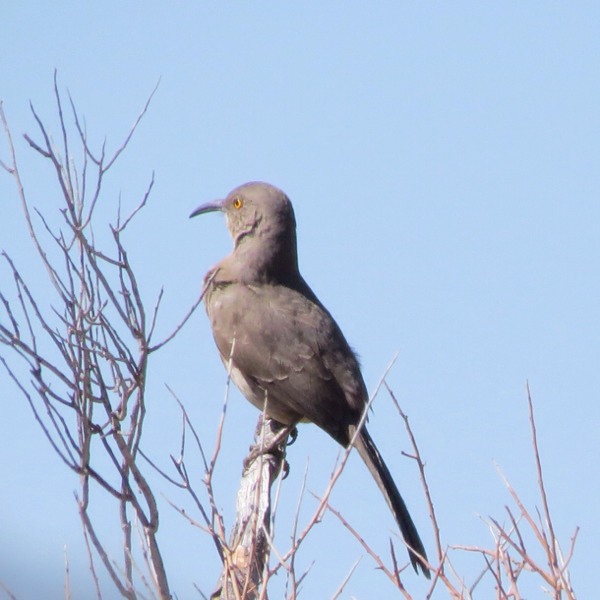
Like any climb, the trip back was easier and a Curve-billed Thrasher sang to us as we returned to the truck.

Nice outing for man and dog.

My Cousin Vinny – Why Do We Keep Thinking Of It?

We changed plans and moved a little east to the Salton Sea Recreation Area where we had better chances of sites with hookup, and where there are thousands of birds. It was an easy drive through the high desert and as we approached the lake, there were hundreds of big RVs parked on the desert, each with its covey of off-road jeeps. The dust, noise, and generally low-class nature (I guess my nordic skiing/paddling bias shows) was quite depressing. Fortunately, we were heading toward the other side of the lake.
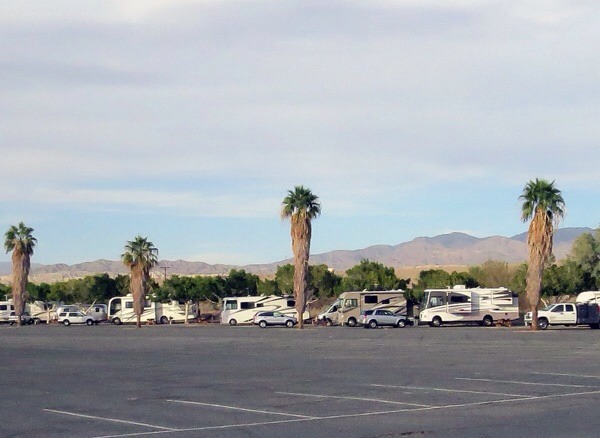
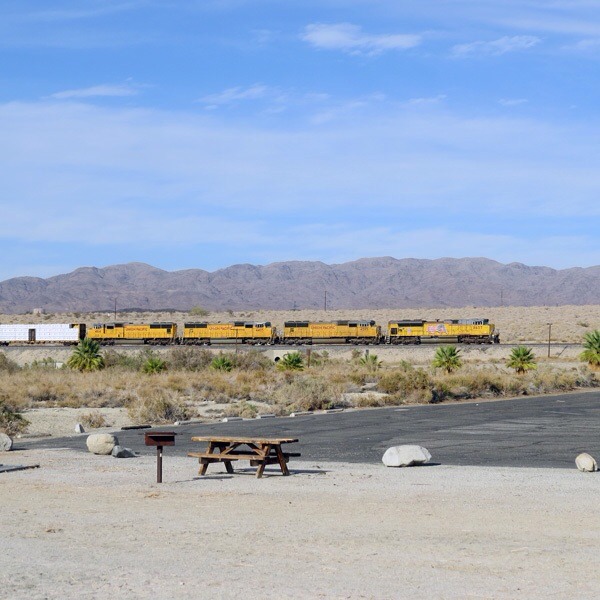
The RV section of the park is just a line of parking places, but there is shade and electric and water. We have some nice Canadian neighbors (curling pals from way back) and it is a good setup. We are hanging out with the big rigs – our Airstream is to the far left in this photo.
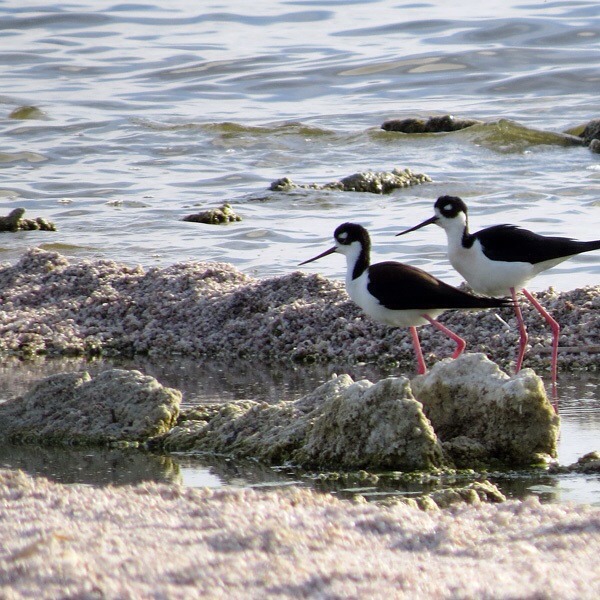
The first birds I saw here were Black-necked Stilts, a species I have seen before, but not on this trip. They are neat, with their bubble-gum legs and constant movement.

If you never saw the movie, My Cousin Vinny, the blog post title won’t mean much. However, right after we unhitched and set up, the first train went by. Followed by another, which sounded the horn for a crossing up ahead. No one who recommended this park mentioned the trains. These are not short Vermont trains – they are long with four or five engines, and sometimes a pusher. Why do I feel that they are filled with Chinese-built stuff shipping from LA to the WalMarts of America?

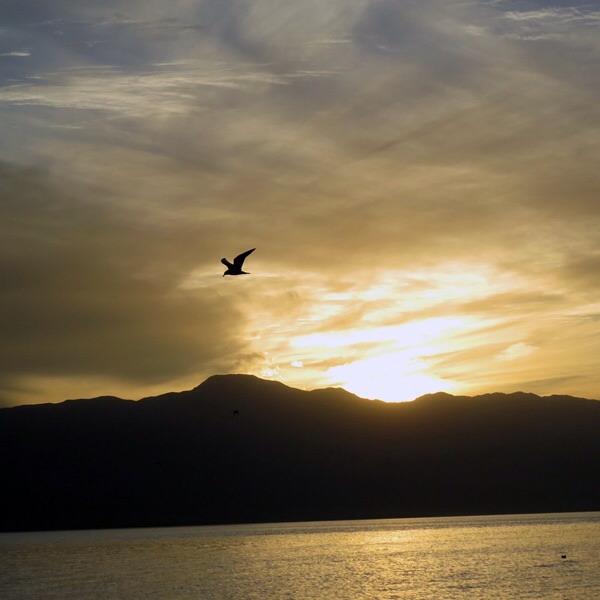
Before supper, Mary and I walked down to the lake to watch the sun set. We can take a little train noise – here comes one now – to be in such a pretty spot. All aboard.