Ducks on Parade

About a mile from Robb and Mary’s home in Del Mar is a neat birding spot called the Los Penasquitos Marsh Preserve. I walked down there several mornings and crossed busy Carmel Valley Drive to check out the ducks and other waterfowl on the quickly-moving river. I didn’t have a scope with me and the trail alongside the highway is a bit tight in places but it was a fine place to check off birds. Because of the moving water, it was a virtual parade with bushes along the creek blocking views and then nice open stretches.

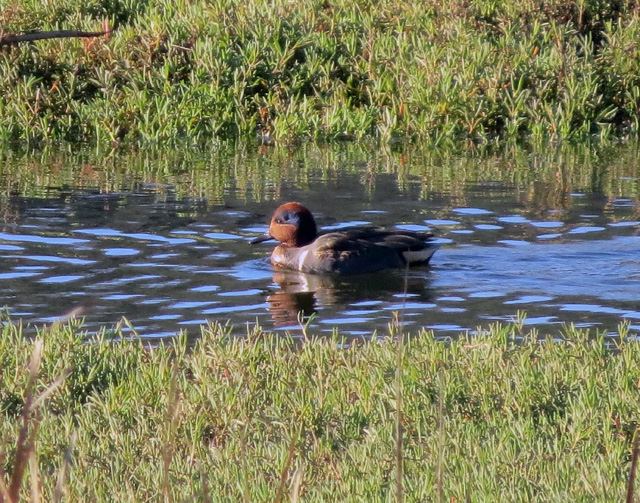
There were several Green-winged Teal pushing the limits of my Canon SX50.

There were several Green-winged Teal pushing the limits of my Canon SX50.

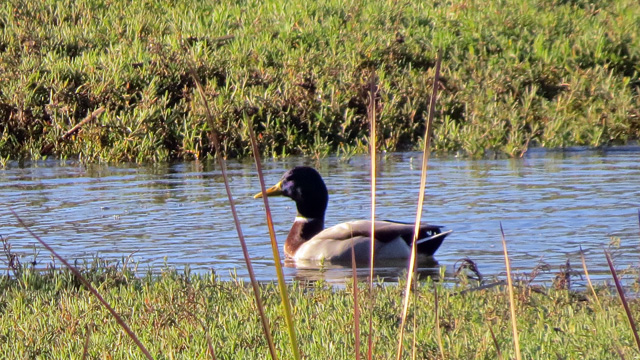
This Mallard's head looked iridescent blue in the bright sunlight.

This Mallard’s head looked iridescent blue in the bright sunlight.

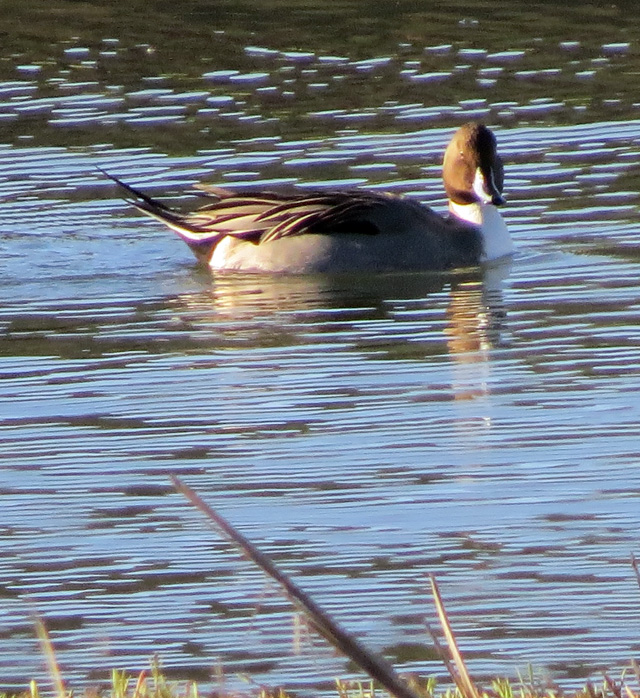
Northern Pintail is one of the common ducks here at this time of year.

Northern Pintail is one of the common ducks here at this time of year.

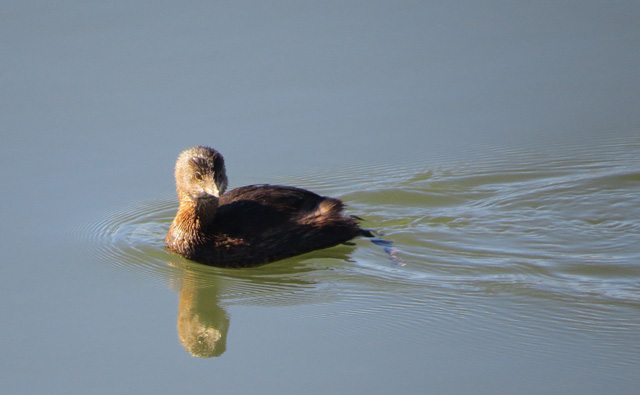
This Pied-billed Grebe cruised in rather closely.

This Pied-billed Grebe cruised in rather closely. See his legs?

It was common to see a wide mix of ducks in the same general area, cruising and feeding together. American Coots, Ruddy Ducks, Cinnamon Teal, Gadwalls, and the above ducks were just a few of the species there. It’s a nice challenge for me to sort them out.


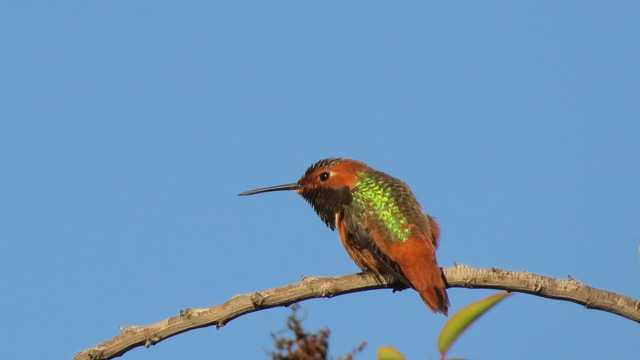
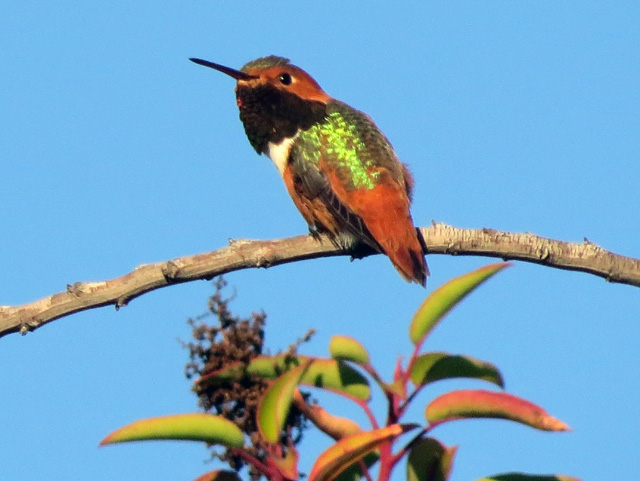
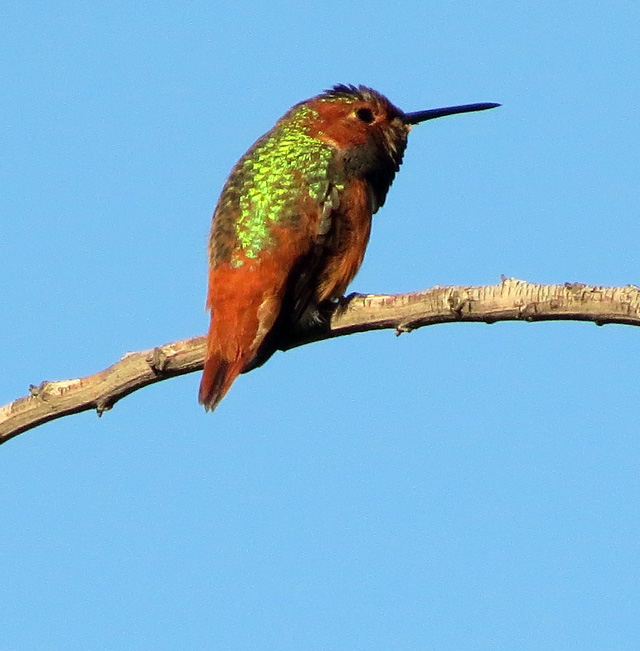
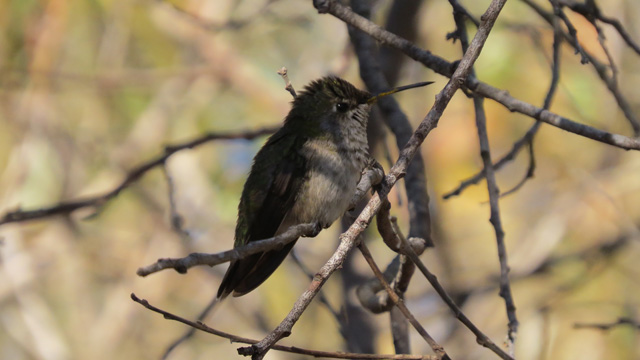
Allen’s Hummingbird

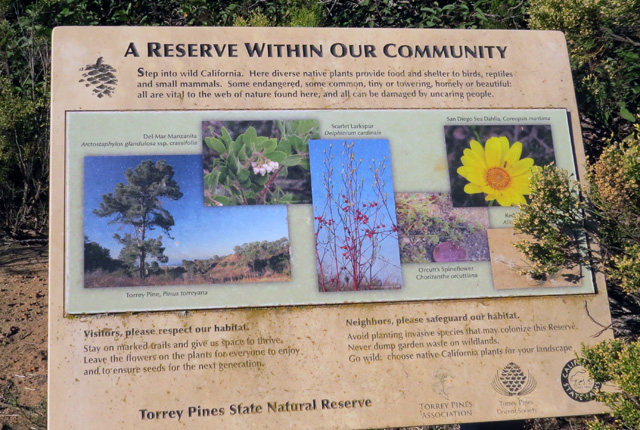
Yesterday morning, I took a walk over to Torrey Pines Reserve Extension, a desert canyon area just a half mile from the house which is accessible only through residential neighborhoods. It’s a unique gem with a nice system of hiking trails and some good birds. SignW

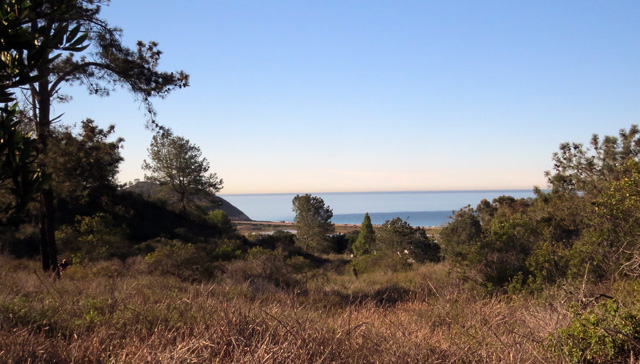
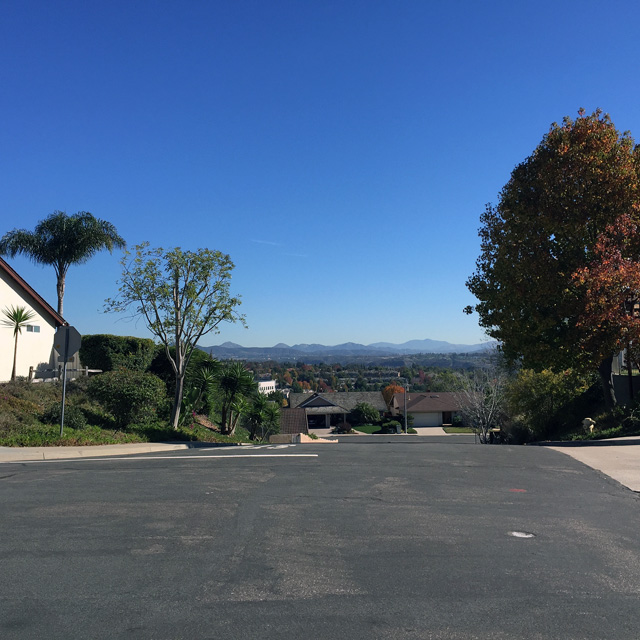
You get some nice views of the ocean from the upper trails. The Pacific Coast Highway is in the distance.

You get some nice views of the ocean from the upper trails. The Pacific Coast Highway is in the distance.

I saw Bushtits, Northern Harriers, dozens of Yellow-rumped Warblers but the star of the walk with this little Allen’s Hummingbird who perched not far from the trail. He flew off for a bit, returned for more photos, and finally left. I was hoping that he might be a Rufous Hummingbird, a species I have not seen, but I don’t think so. This guy was special.

Hummer3W Hummer2W Hummer1W

We leave for Boston this morning after a nice stint of Southern California weather and a chance to be with our kids and grandkids, who we see too infrequently. We hope to be back with the Airstream in early February.

Del Mar Neighborhood Birds

We are in California for a few days seeing our son Robb and his family. What a nice change from the barren “stick season” of Vermont; we awoke early the first morning due to the time change to birdsong and rose bushes in bloom. I have taken some morning walks and while I think it is unusual to have a guy walking around the neighborhood with binoculars and a camera, only one person stopped to ask what I was looking at.

Del Mar is a bedroom community north of San Diego with tropical plantings and lots of birds.

Del Mar is a bedroom community north of San Diego with tropical plantings and lots of birds.

There are hundreds of hummingbirds flitting around — I think most are Anna’s but I did see an Allen’s bronzed back the other morning.

This young Anna's (I think) flew in a perched in the shade of a picture. I was only ten feet away.

This young Anna’s (I think) flew in a perched in the shade of a picture. I was only ten feet away.

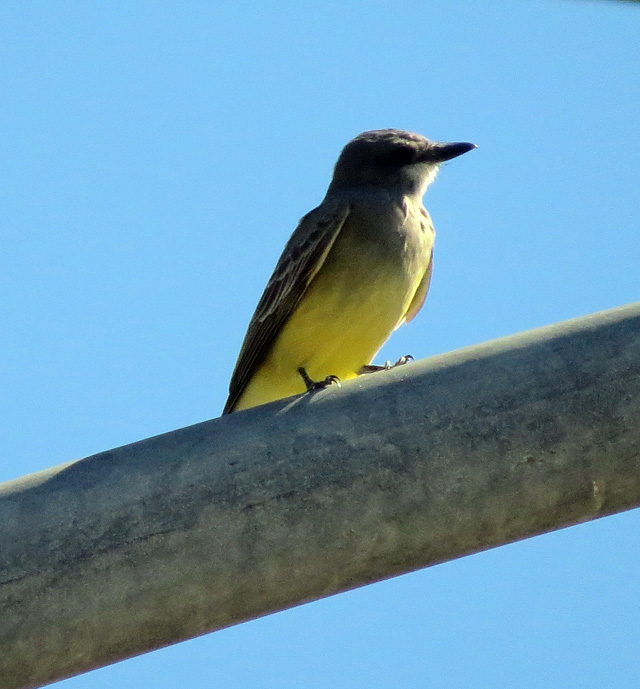
Two days ago, I came across a kingbird doing its flycatcher routine, returning to a nearby wire. I took a few shots with little success but thought I had a Western Kingbird. In reviewing eBird reports and my photos, I realized that it was a Cassin’s Kingbird — fairly common here but a life bird for me.

The lighting on this photo is poor but the field marks are clear in some others.

The lighting on this photo is poor but the field marks are clear in some others.

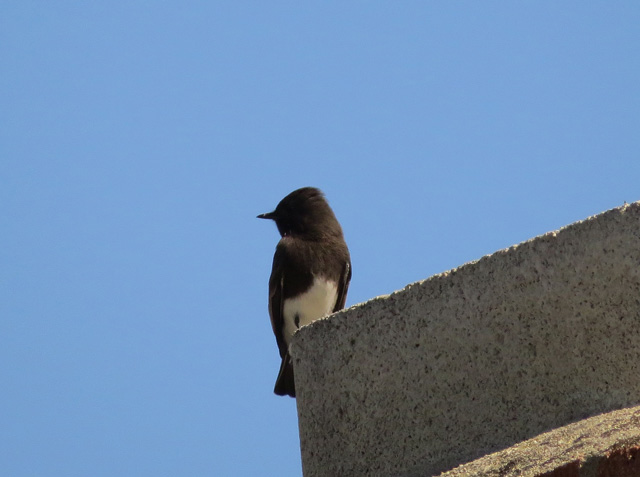
I had a bit of trouble identifying one of the common birds here this time of year: Black Phoebe. I’ve seen a few before but they were always on low branches, doing their bug-catching routine. Here, they perch at the top of conifers, come down to the swimming pool for lunch, and work from rooftops and chimneys.

BPhoebeW

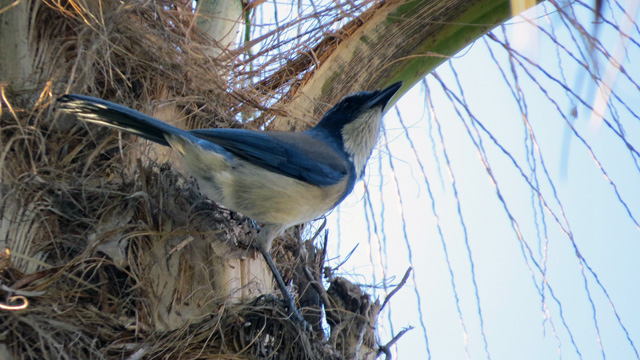
Western Scrub-Jays are noisy and I suspect, pests at time. Here’s one I saw yesterday morning working up in a palm tree, oblivious to my presence (or just ignoring it.)Scrub-jayW

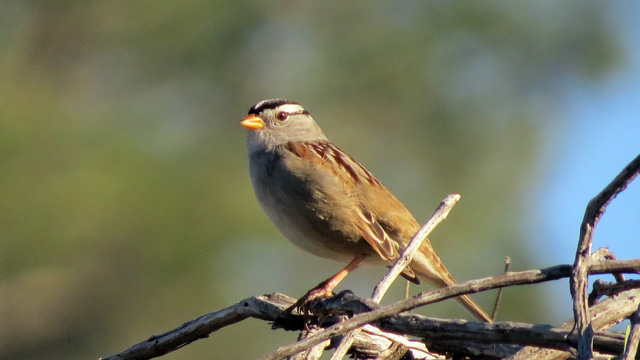
Some of the other birds I’ve seen in this built-up area are: American Kestrel, all sorts of warblers including a Townsend’s Warbler (Life Bird), and dozens of House Finches. This White-crowned Sparrow posed nicely for me on yesterday’s walk.WCSparrowW

I’m not doing a lot of serious birding here, spending more time with the grandkids and just enjoying summer-like temperatures. I have seen some nice ducks and waterfowl and will put together another post in the next day or two. Then back to New England and the reality of November.


Six Weeks To Go

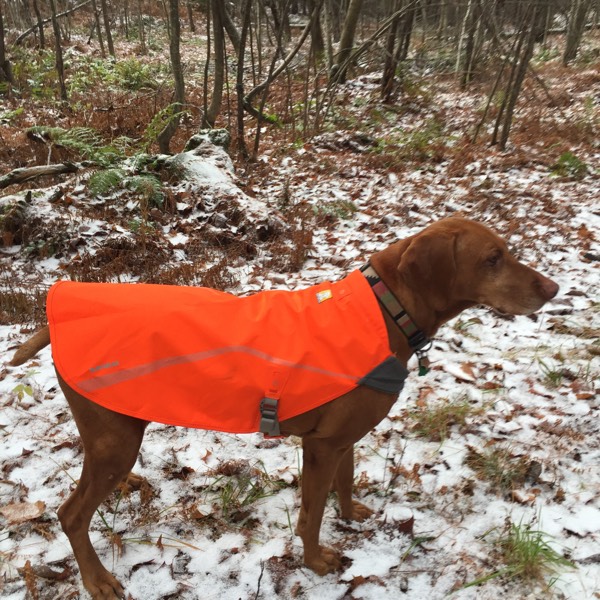
Having gone to bed and then awakened early to the horrific news from Paris, it was good to be nudged out for an early dog walk by Penny. I had heard a rifle shot while it was just getting light so we put on our orange and went out to face the elements. Snow pellets and wind greeted us.

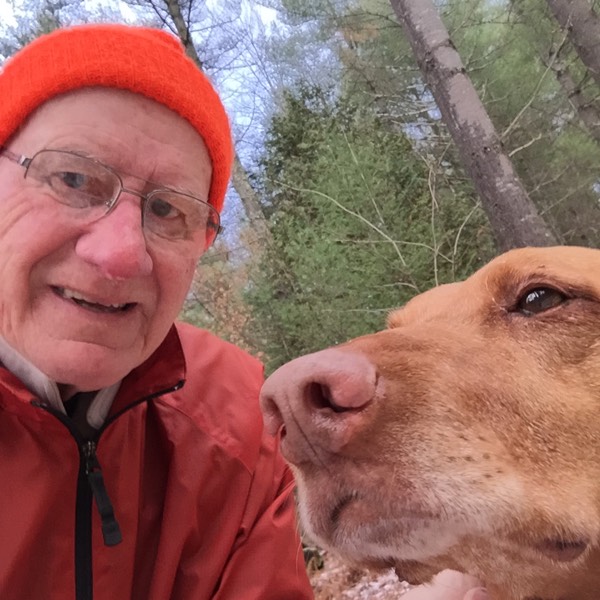
We stopped for “cold noses selfie” along the way.

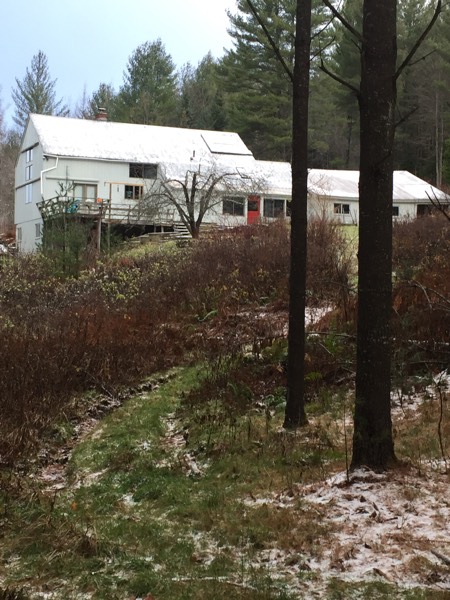
On the way back, I noted that the back of the house is looking wintry – no solar today.

I couldn’t help but think, “It’s still six weeks before we head south” but remembered that we have a quick trip to CA next week which get us out of cold, grey Vermont for a bit.

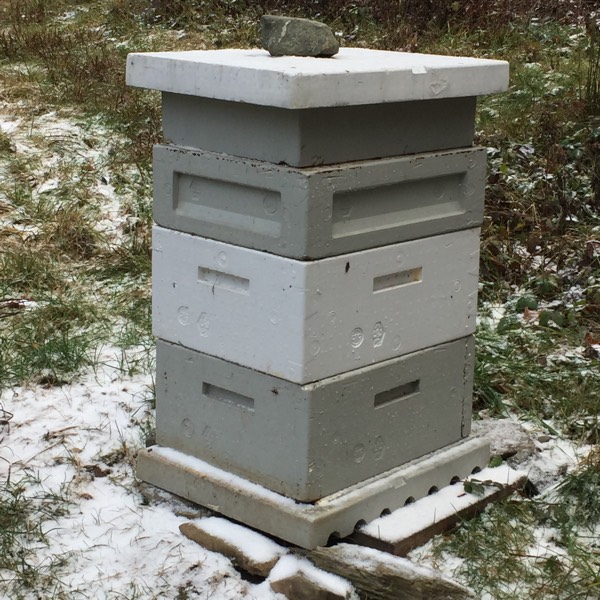
The bees, who had a good fly day a week ago, are tucked in and with luck, ready for a long winter.

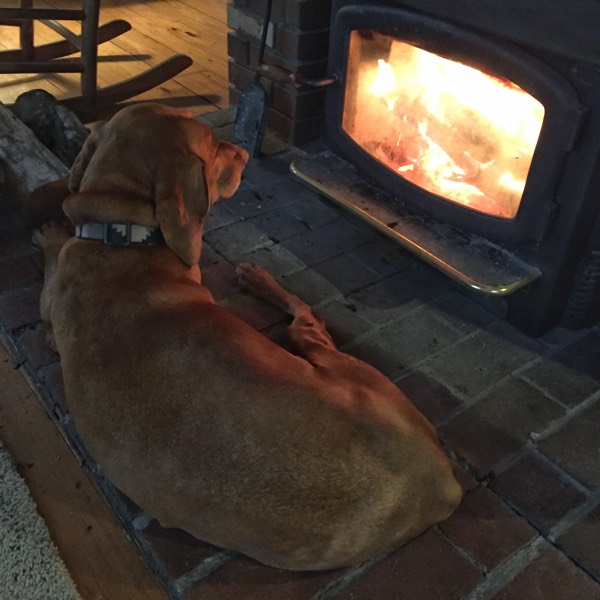
I only heard a nuthatch during our walk but found a mob scene at our feeders, led by five brassy Blue Jays. Chickadees, juncoes, woodpeckers, nuthatches, even a brownish American Goldfinch were sharing the suet and seeds. The dog warmed up fast with her accustomed place by the wood stove.

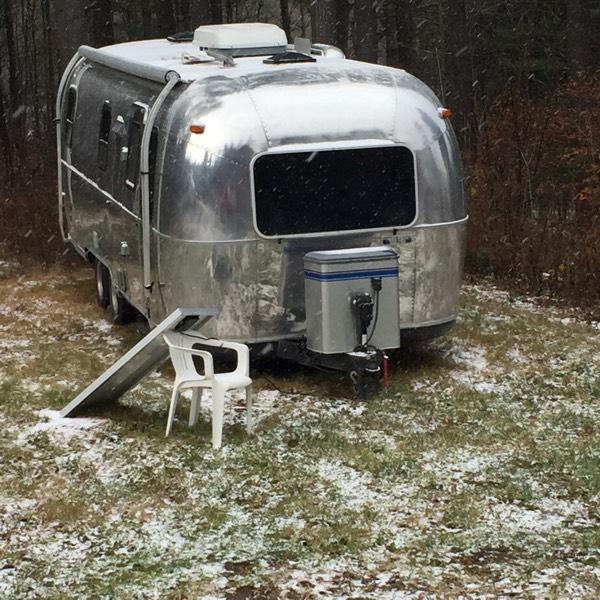
Meanwhile the Airstream sits down by the road, looking a bit forlorn, as we await the departure. It’s winterized, empty for now, but I suspect waiting, like us, for travel to warmer climes.

I know that while we are traveling – or for that matter – camping, wifi will be very limited so I’m practicing photographing and posting from my iPhone using Poster. It has limits but when all you have is a spotty cell signal, it does the job.

Happy deer season folks.

Vote for the Boats

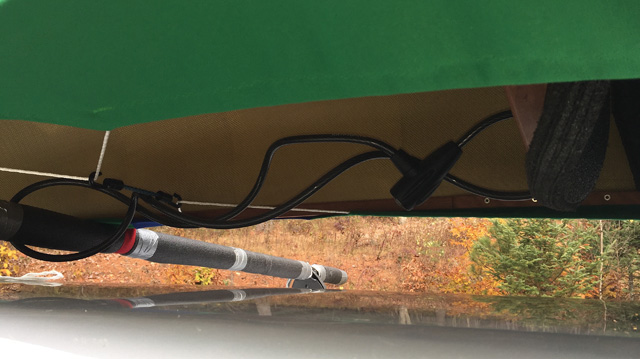
You may recall that we sold our kayaks and purchased two super light Hornbeck boats this summer. We like them a lot but wonder about lugging them 7,000 miles, much of which is desert, for the relatively few chances we might have to paddle. I have worried about possible theft – they are attractive, unique, easy-to-remove, and expensive to replace.

I am a member of a Facebook group called “Hornbeck Boat Lovers” and decided to post my concerns and ask for advice. Most commenters said that they used bike locks and had no problems. The consensus was that it is easy to saw through the wood thwarts but most thieves were probably looking for something more portable. One guy wrote “I’ve got two locks and a sign that says ‘smile you’re on camera’ for subterfuge.”

I looked into insurance under my auto policy and I can get a policy with $500 deductibles for $100 a year. I am not sure whether to pursue that – if I lose one boat I pay $600 to replace a $1300 craft.

Lastly, I looked over our travel plans to determine just how many paddling opportunities we might have. On the way out, we might have chance at one of our two-day stops but the best chance would be at Patagonia Lake – which is perfect for birding and paddling and we are scheduled for two weeks. I don’t think I’ll try the Pacific Ocean but you never know.

Returning, we’ll have more campgrounds with chances to paddle (South Llano, Falcon, Goose Island, Village Creek). I estimate that I’ll probably paddle a dozen times and Mary will try it a few times.

Lock1kW

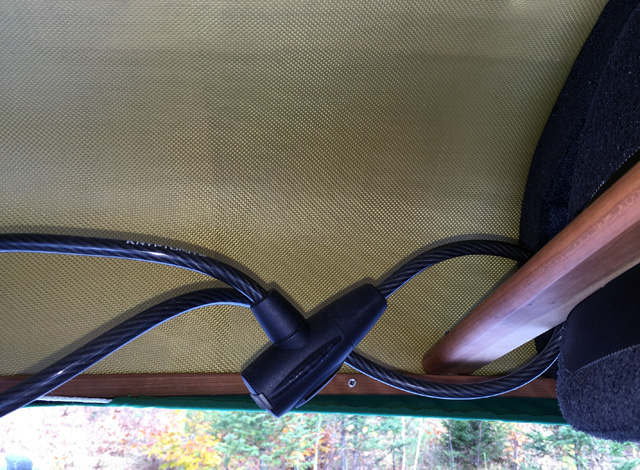
We have two bike locks and locking racks.

The weak link, so to speak, is the wooden cross-piece. I might add a metal strip for the trip.

The weak link, so to speak, is the wooden cross-piece. I might add a metal strip for the trip.

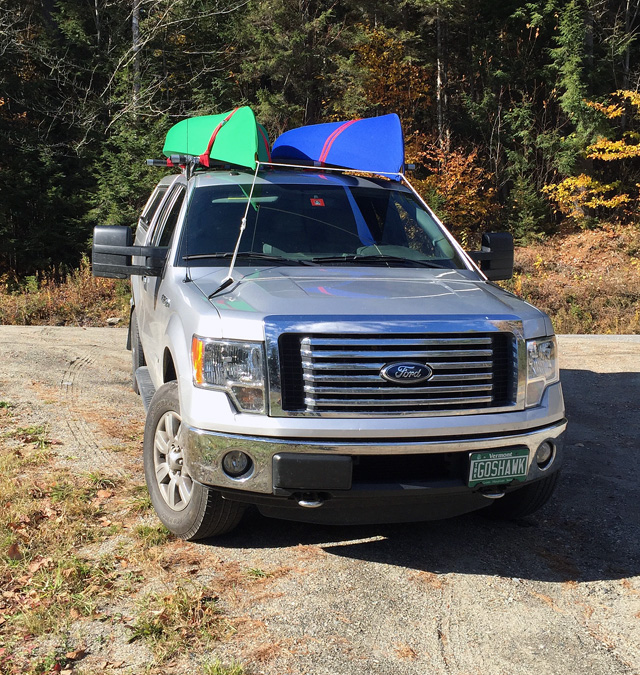
The boats with their covers ride well on the truck, especially when tied down to the front.

The boats with their covers ride well on the truck, especially when tied down to the front.

If we don’t have the boats, we’ll wish we did – if they are on top the whole way, we’ll probably question our decision about Yuma, AZ. However, my inclination is to bring them along. Stay tuned.

2016 Trip – Return Trip

I remember sitting beside the Pacific Ocean a couple of years ago, watching surfers, seabirds, and our grandkids cavorting, and thinking “We’ve got nearly four thousand miles to drive back but this makes it worth it.” Well, God-willing, we’ll have that same situation in a few months.

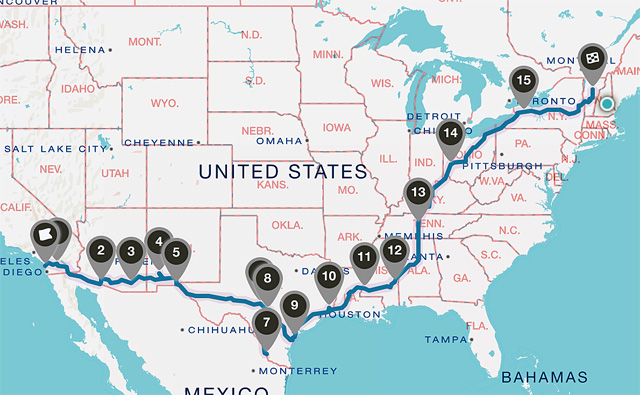
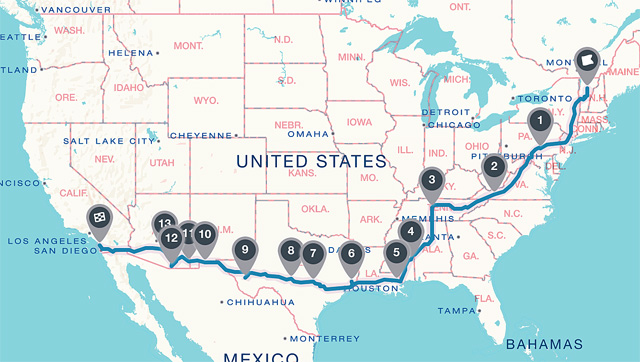
We’ll mosey back, staying for some lengthy stays at some favorite birding state parks, and try to visit some friends and family along the way. We’ll hunker down at Falcon State Park on the border during part of Texas spring break since that park is not overrun like so many of them. We like kids but hundreds unleashed at the same time can be challenging. I should mention that the maps are developed on a neat website: Roadtrippers.com. Here’s how the map looks at this point.

TripHomeMap

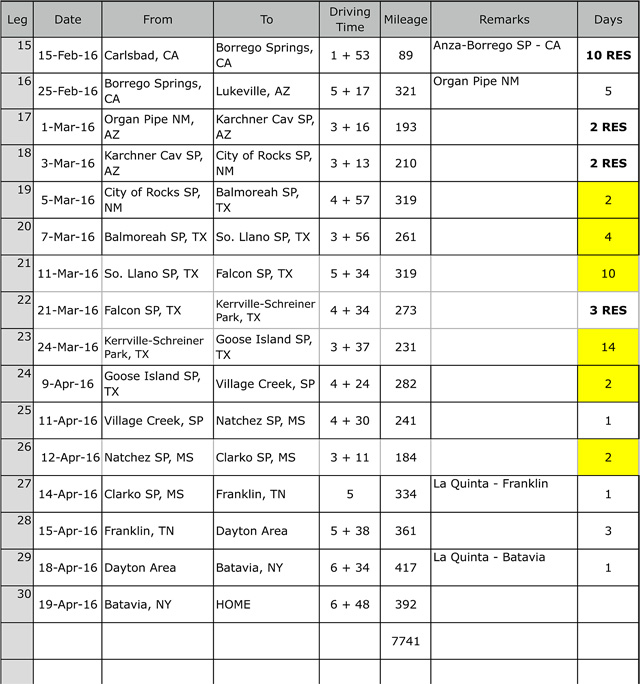
And the blow by blow itinerary.

Trip_Mileage2016B-2

The yellow blocks have a significance – I’ll discuss them in my next blog post.

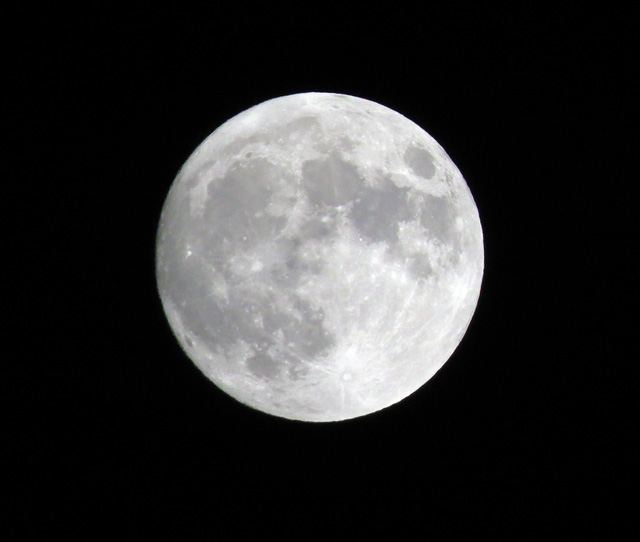
I hope that you enjoyed this year’s last superman, a Hunter’s Moon, in last night’s sky. It looked like this from our deck, once it cleared the tall pine trees:

Moon1W


2016 Trip – Westbound Portion

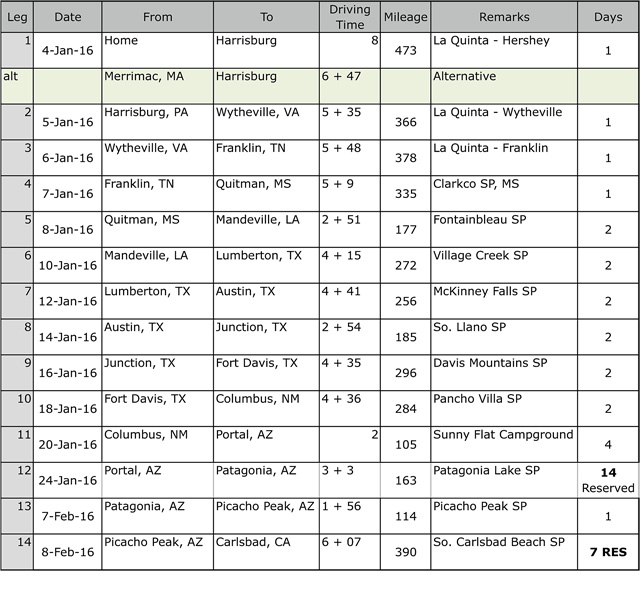
As I  noted a while back, I’ve been doing some trip planning and locking in some reservations in parks that fill up fast. The initial half of our trip is to do some birding in Arizona and visit our son Robb and his family in San Diego. It’s a long haul but here is the plan:

San-Diego-Trip-Map

Here’s how it looks in a spreadsheet:

Trip_Mileage2016A-1

Getting home we have to deal with Texas Spring Break in March and will likely change this schedule along the way. We hope to stop in Ohio to see our son Rich and his family. Still a few things to sort out and it will be ready to go.


All Inspected and Ready to Go

The state inspection on the Airstream ran out in August but I decided to wait until September in order to gain a couple of months on the sticker — and then got busy and it slid to October. I don’t know if police check trailer stickers but my mechanic friend says that he’s seen inspectors wander around gatherings of trailers at a county fair looking for outdated rigs — so even though I really only need it for a day next January when we head out of the state, I decided to schedule the inspection at a local RV dealer that I like, M’s RV in Berlin, VT. It’s a mom and pop operation but the owners are very knowledgeable and they’ve helped me with several problems: every time I go there I learn something.

The co-owner Marcel gives me heat for owning an Airstream – alluding to the “glamping” aspect of Airstream owners – knowing all along that our rig is modest and priced less than many of the trailers and fifth-wheelers he has for sale on the lot. Plus, I found out that he is quietly restoring an old Airstream Caravel in his work space.

Last week, I took the ten mile drive down through Montpelier, outdated sticker and all, and we got started on the  inspection. Lights good, tires etc fine, but when we tested the brake controller, I got a “disconnected” signal. We tried and tried but nada. I explained that I had changed the 7-pin plug a while ago after problems and during our last trip, had a couple of “trailer disconnected” signals after a tight turn or a sharp bump. Everything seemed to work fine all the way home and since then – but we talked about how tough it is to connect each thick wire to the screws in the plug and how prone to coming loose they seem to be. We decided to try a better setup.
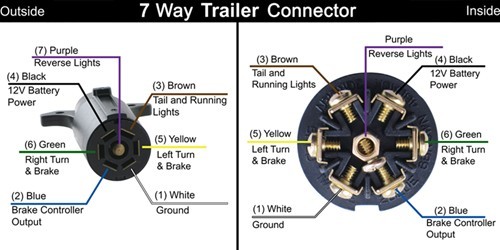
It's not easy connecting 18 year-old wires to screws in a replacement plug.

It’s not easy connecting 18 year-old wires to screws in a replacement plug.

Joanne, spouse and co-owner, took me into their parts department and showed me the setup that Marcel could install to fix the problem. (I could do it but it seemed smart to let a pro handle it.) It involves using a new plug already molded into a long lead and a junction box to hold all the wires, getting away from the “rat’s nest” of wires in the plug. I left the rig and while they had a lot of winterization of trailers to do (It got down into the 20’s this weekend), they called the other day to say that it was ready to go.
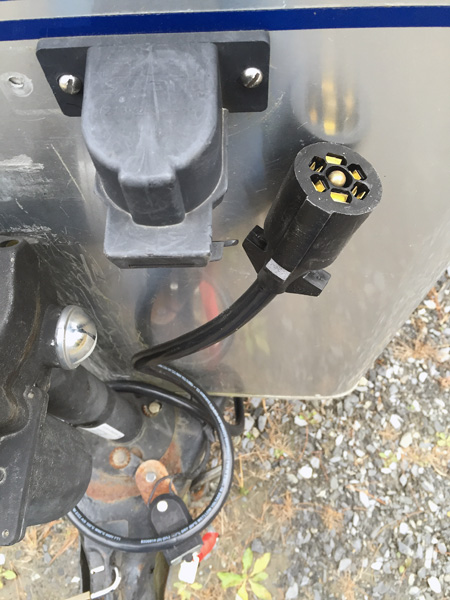
The molded plug comes with a long cord whose wires are connected in a terminal box.
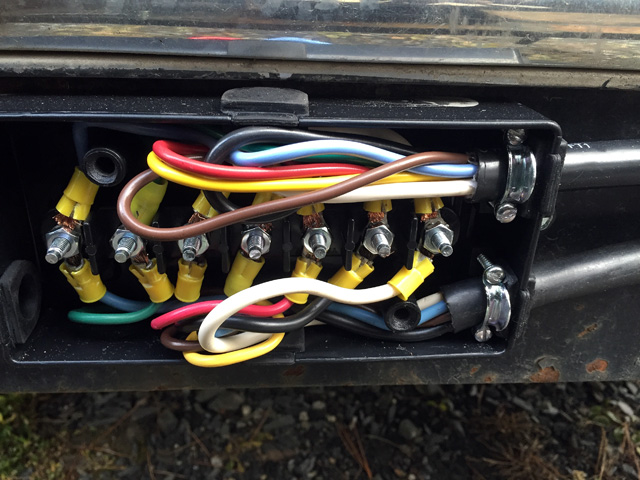
The molded plug comes with a long cord whose wires are connected in a terminal box.

I wish I could say that I did this wiring but after seeing the quality, am glad that I left it to Marcel.
I wish I could say that I did this wiring but after seeing the quality, am glad that I left it to Marcel.

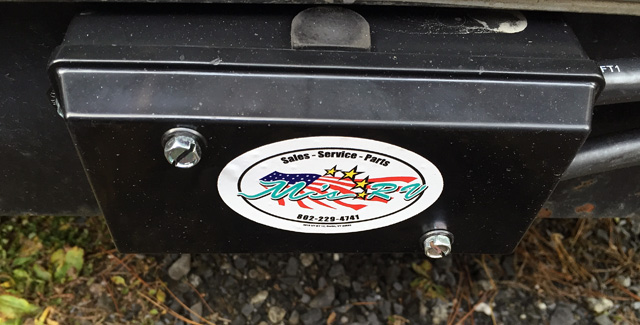
So I don't mind if he slapped a sticker on the waterproof cover.

So I don’t mind if he slapped a sticker on the waterproof cover.

Yesterday everything checked out great, Joanne slapped on a new inspection sticker, I paid the bill and was on the way. But first, Marcel gave me a lesson in using the brake controller to change settings as we travelled.

Wouldn’t you know, I went by three police cars waiting beside the road in the first three miles back to Montpelier. While no one seemed interested, it was nice to know that the Airstream was legal. More importantly, it was nice to know that the trailer brake system is working as it should as we face an 8,000 mile trip with some challenging climbs and descents. (Mendon Mountain, you’ll be the first.)

New Battery System

As I noted last week, I have been looking at options to strengthen our electrical system for those times where we are not hooked up. I decided to install two AGM batteries and a new controller under our couch which would double our capacity and also give us room for further expansion.

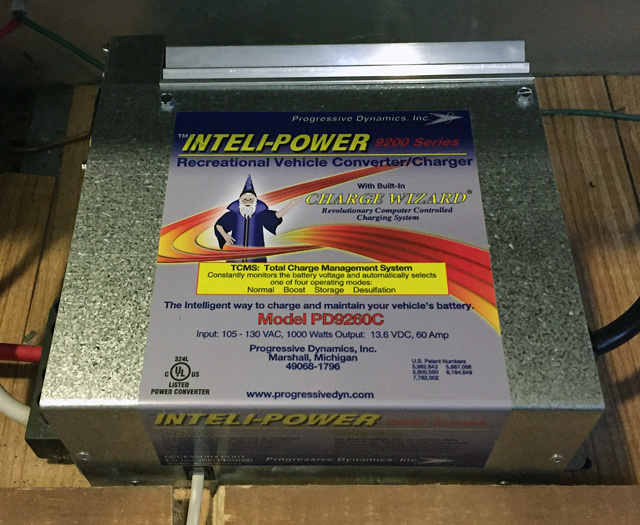
So I went down to my friends at Vintage Trailer Supply and talked to them about converters. Steve, the owner, thought that my existing converter would probably work ok but I opted to buy a new INTEL-POWER 9200 which “monitors the battery voltage then automatically adjusts the converter output voltage to provide the proper charging voltage for fast recharge and long-term maintenance.”

I felt that the expensive AGM batteries needed a state-of-the-art converter.

I felt that the expensive AGM batteries needed a state-of-the-art converter.

I had pretty much narrowed my battery choices down to 105 AH units from Fullriver or Lifeline which sell for over $300 per unit. I went with Lifeline because they are American-made and I got a good price from Powerstride Battery who got them here in four days with free shipping.

The installation of the converter was relatively smooth with just two leads to change – but of course it wasn’t that easy – the grounding wire was almost too short because it attaches on the far end of the unit. I got it going and soon was testing it on my existing battery, which it brought up to full charge over a day or so.

The major project while I awaited the new batteries was to move all the wires into the trailer. First, from inside the trailer, I labeled all the wires since some stay as is (the solar lines) and others (the wire for the tongue jack) have to be extended to come inside.

I reluctantly the terminal clamps off (the new units don’t use posts) and used my torch and solder to attach two new leads. Since I did it outside right near the tongue, I disconnected and moved the two propane tanks far away. I pulled all the lines inside, brought my old battery inside, and hooked it up to test the new setup. I got it done on a sunny day just before a front brought an all-day rainstorm.

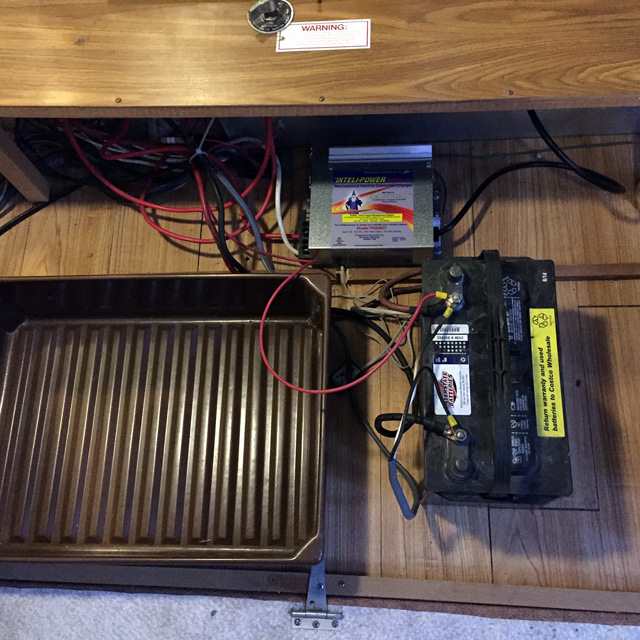
Testing out the new wiring with my old battery. The container will be under the couch - it's there for spacing. We are sacrificing the middle storage unit for the batteries.

Testing out the new wiring with my old battery. The container will be under the couch – it’s there for spacing. We are sacrificing the middle storage unit for the batteries.

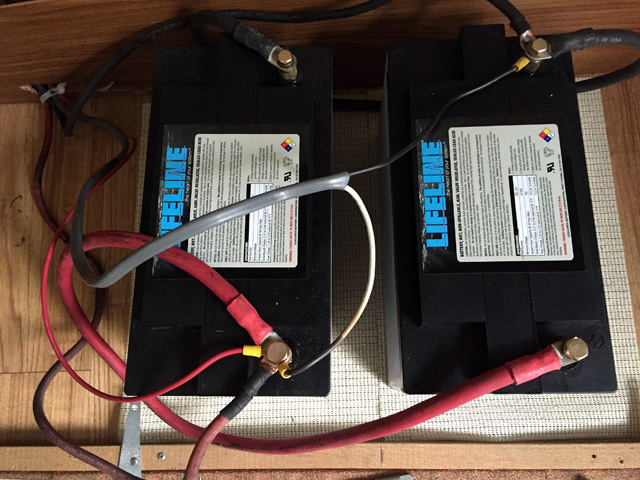
The Lifeline batteries came UPS yesterday afternoon and soon I was moving them into place. They have a 6mm terminal and a positive 8mm one. I knew that but it turned into a hassle as all my positive fittings had holes that were too small. I reamed and drilled out a couple, with some colorful language but I wired them up in parallel and while several leads are too long, the system seems to be in good shape. The converter started polishing off their charge right away.

The two Lifelines in parallel with a wiring setup that could use some cleanup - although no one will see it under the couch.

The two Lifelines in parallel with a wiring setup that could use some cleanup – although no one will see it under the couch.

I need to build a containment system around the batteries to keep them from moving. I have the materials and then it’s just moving the couch back, fastening it down, and cleaning it up. I think that this is going to be a good project to give us more flexibility in camping sites – and it is nice to have it done.

Stuff on Trees

I try to get out for a long walk with Penny every other day at least, in addition to her regular loops that we do in our woods. Yesterday afternoon, we hiked two and a half miles up on our adjoining forest land. It was a great early fall day but bird activity was very light so after spotting this fungal growth, I decided to focus on what I could find on trees.

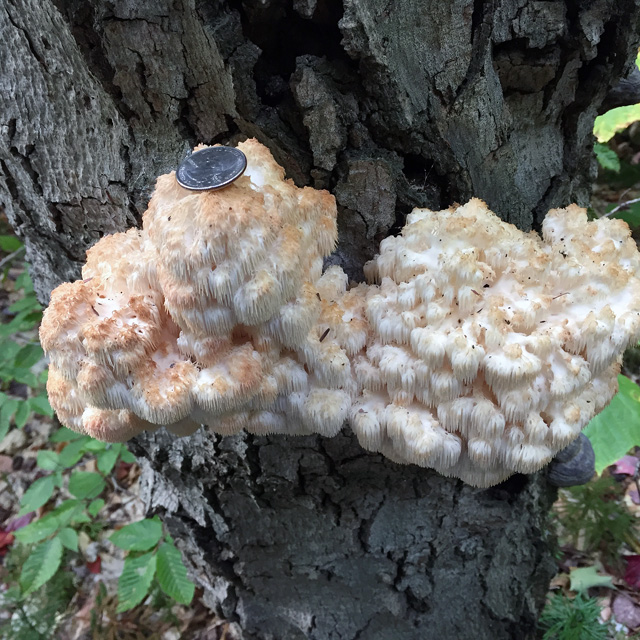
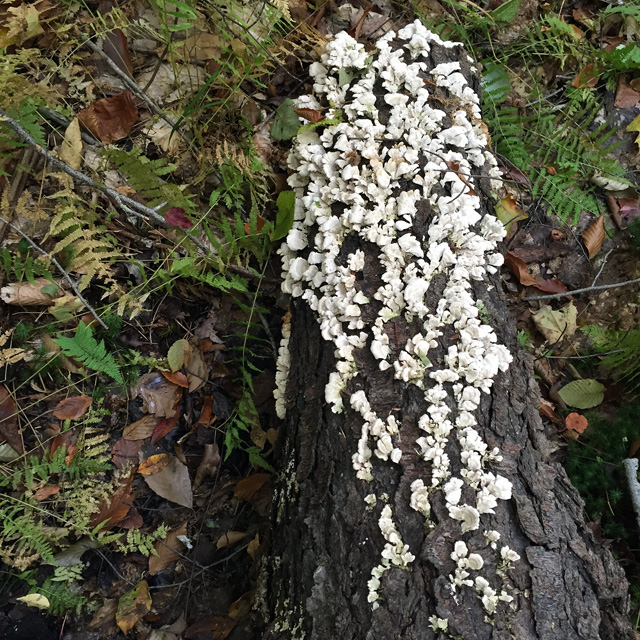
One nice thing about fungi is that they stay still for photographs. The cauliflower-like growth is apparently called Sparassis (also known as cauliflower mushroom)

One nice thing about fungi is that they stay still for photographs. The cauliflower-like growth is apparently called Sparassis (also known as cauliflower mushroom)

The route we took climbs up into some pretty rough country which is pretty damp and filled with soft maples and other trees very susceptible to growths and deformities.

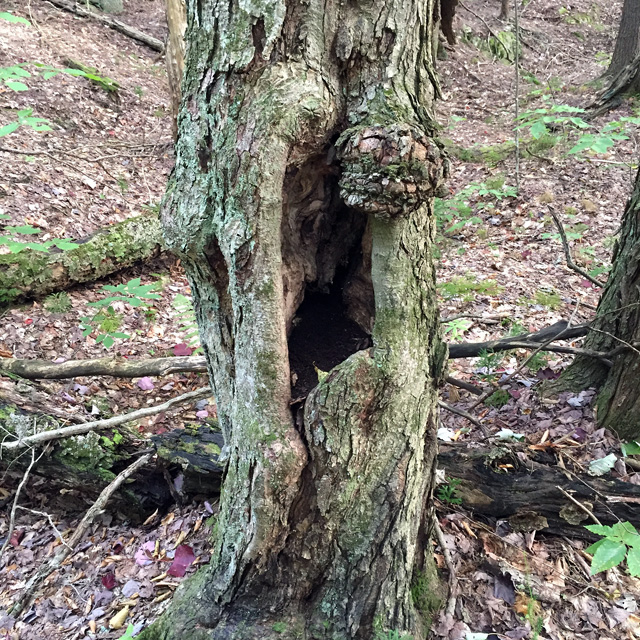
Penny loves to explore openings like this, hoping that a critter is home.

Penny loves to explore openings like this, hoping that a critter is home.

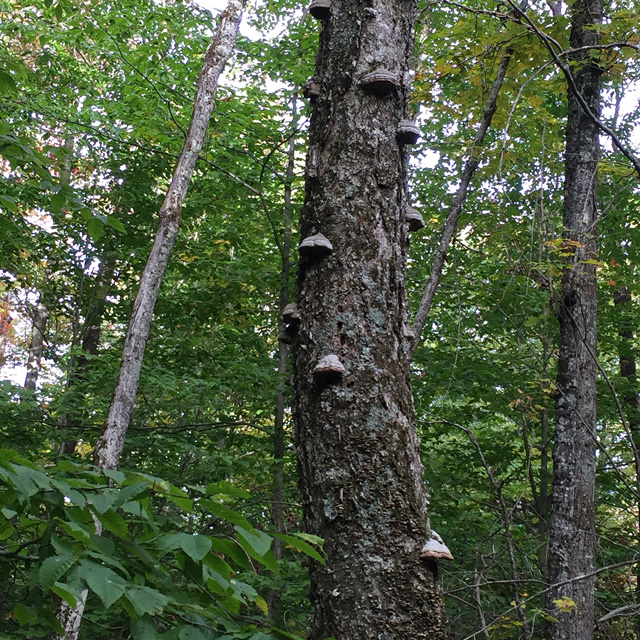
This tree is doomed from all the fungal growth.

This tree is doomed from all the fungal growth.

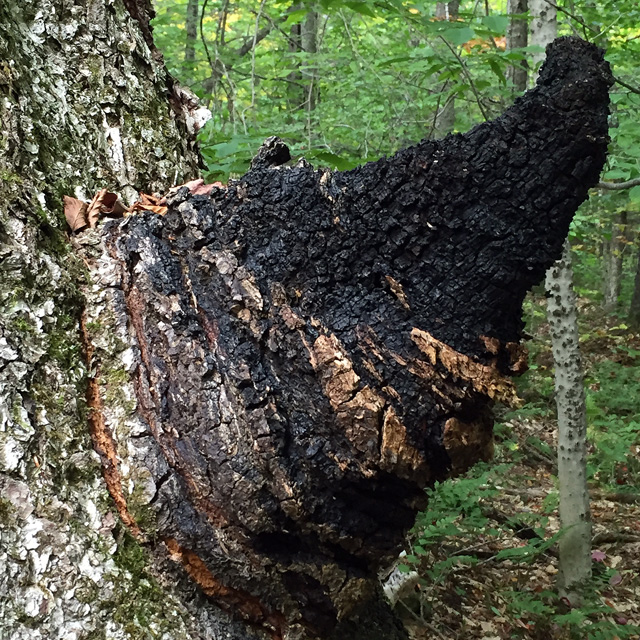
At the high point of our hike I began to look for a growth that has fascinated me for years. The first time I saw it I thought it was a small bear — and when the grandkids were young, took them up by it with some made-up story about it.

In this long election season, this now reminds me of an old elephant, with many options for analogies which I'll keep to myself.

In this long election season, this now reminds me of an old elephant, with many options for analogies which I’ll keep to myself.

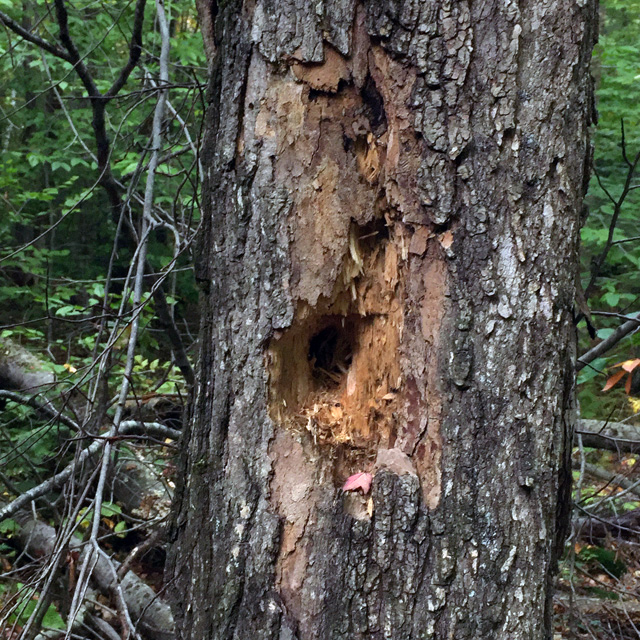
This looks like a Pileated Woodpecker was at work.

This looks like a Pileated Woodpecker was at work.

Fungus killed this tree which was down across the trail.

Fungus killed this tree which was down across the trail.

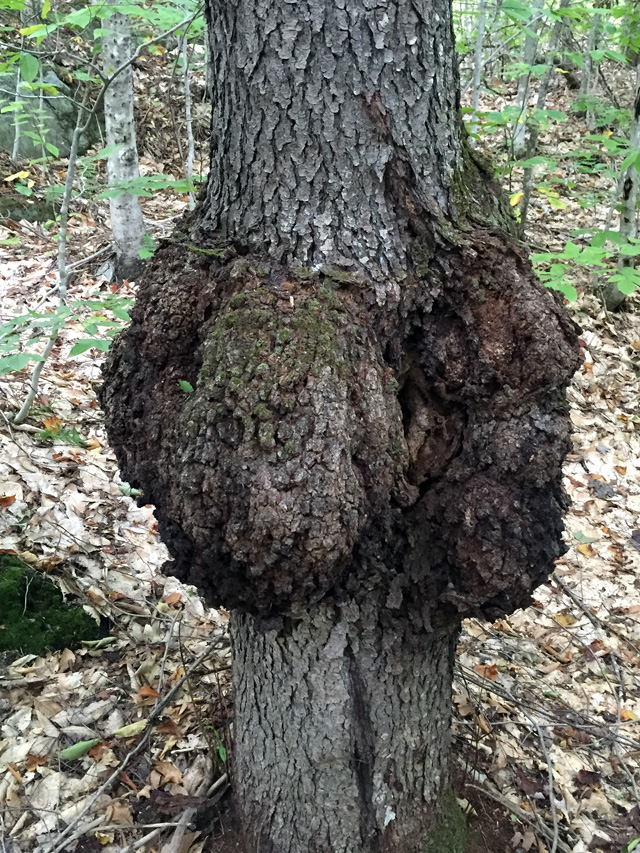
This deformity is called a burl (I think.) It was much larger than it appears in the photo.
This deformity is called a burl (I think.) It was much larger than it appears in the photo.
One of the things I notice about naturalists on bird walks that they are interested in about everything. It’s a good lesson for me to keep in mind, especially in transition seasons when the birds are sparse. The fresh air, sunshine, exercise, and watching our old Vizsla romping through the woods made it a great outing. We are blessed.

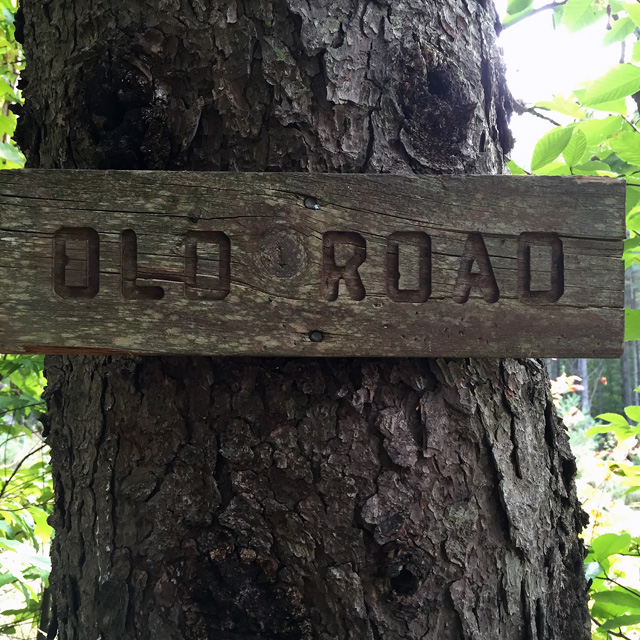
The sign marking the end of our jaunt -- made many years ago by the first owner of the property.

The sign marking the end of our jaunt — made many years ago by the first owner of the property.