Birds Can Brighten a Damp Misty Day

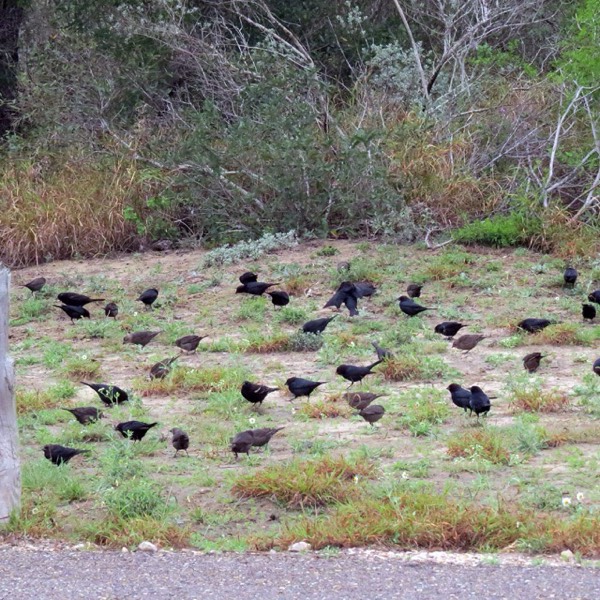
While my Vermont friends are waiting for the “konk-a-ree” of the Red-winged Blackbird as a sign of spring, we are overwhelmed by them. We’ve been feeding birds on our site and if you put out a suet feeder, there’s a dollar a day fix for them. Same with peanut butter, oranges, and seeds. We get 50 or more, as well as their buddies the Brown-headed Cowbirds, as soon as feeders are loaded and we think, “Isn’t it time you folks shoved off?”

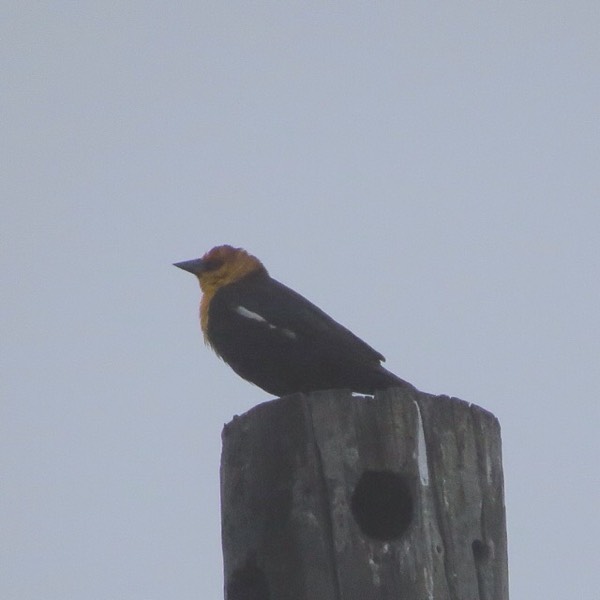
One thing you do in Texas is to scan blackbird flocks for the stray Yellow-headed Blackbird. I’ve been doing that for years with no luck, until yesterday.

The previous night a birder friend asked me whether I had seen the Yellow-headed that she and several others had spotted that day. So, armed with seed and goodies, I loaded up our feeders early yesterday morning. Soon, a hundred blackbirds, with a few brave doves and quail, were at it – all flying off when something spooked them, and returning en masse. Nothing but black and brown as I watched from the Airstream window.
After an hour, I decided to double-down and throw even more seeds on the ground since the early crowd had cleaned things up. As I put the feed back in the truck, I noticed about 50 blackbirds on the power lines across from our unit. I scanned them with the binos- black, black, black, etc. Half flew off and another group arrived. I looked them over and right on top of the pole, Bingo. I got a good look and snuck back into the trailer for my camera, capturing a long-range shot in the mist, before the bird departed. Life bird #419!
We went off for a few groceries and computer time with wifi and bought a bag of oranges from a roadside stand. I cut up one of the oranges and put it on the tree since the blackbirds seem to leave the citrus alone. The GreenJays, Orange-crowned Warblers, and Golden-fronted Woodpeckers feast on them. We grabbed a quick post-lunch nap as the weather continued to be cool and misty.

Mary woke me up to “Dick, there’s a bird on the tree I don’t recognize.” I grabbed my binoculars, saw an oriole, grabbed my camera and squeezed off a few shots through the trailer window.
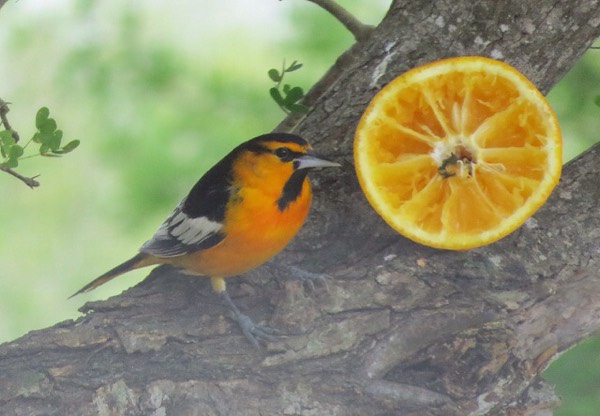
It flew off and as I tried to look at the images, it returned and I hurriedly took a few more. Then it departed and we got out the bird book. We eliminated the big three (Altimira, Hooded, & Audobon’s) but when we came to Bullock’s, we had it nailed. Dark lores, dark eyeline, white patch on wing – check, check, check. In reviewing the images, I noted a band on this guy’s right leg – it would be interesting to know when and where that took place.
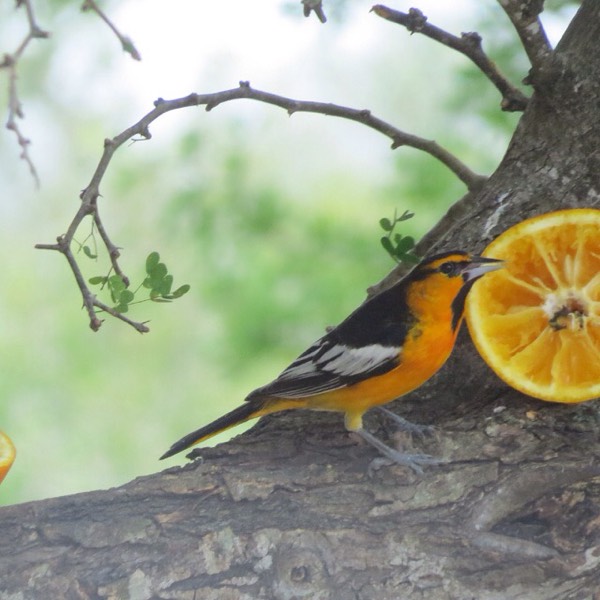
The Bullock’s Oriole is rather unusual here but we got it – a good team effort. Life bird #420. A drizzly Texas day turned into a two life bird day- you just never know. Hasta luego, mi amigos.
Keep Your Paws Off My Cell Signal

We can see the lights of Mexico across the lake from our Airstream windows – and it’s quite lovely at times. Not so lovely is that their telecom companies can overwhelm our AT&T 4G signal and make communicating a challenge. (To put it in non-barnyard language.)

There’s no decent wifi within 15 miles or so – and we rely on 4g for our iPhones and iPads and do ok, as long as we watch the data usage. I’m writing this on my iPhone with only a couple of bars and “AT&T LTE” showing. However, at any time, since we are about a mile from the border, my signal may go to TELCOM, the powerful Mexican system.

I’ve turned off “roaming” on all our devices to avoid international charges so when this rogue system takes over, my connection just dies.

My iPad is hijacked by a system called MOVISTAR so that’s been useless here at the campground.

Now we have been here before and know the drill but it’s still frustrating. We called the kids yesterday afternoon after driving five miles or so to get a decent signal. (Of course, that’s the distance I have to drive on Vermont to get coverage when our power goes out.) we have learned some tricks to get our electronic fixes. Libraries are great, coffee shops ( if there was one within 50 miles) and many fast food places are wired. I’ve found that some box stores have great wifi.

So, if you see this guy in Walmart or H.E.B. carrying his iPad, glancing at it surreptitiously from time to time, it’s only me using the wifi to download *Sports Illustrated* or *The New Yorker*, or TurboTax updates. As our son Rich quipped, “Download not quite done yet, time to cruise the baby food aisle again.”

I’d better finish this before TELCEL gets greedy. I’m down to one bar.

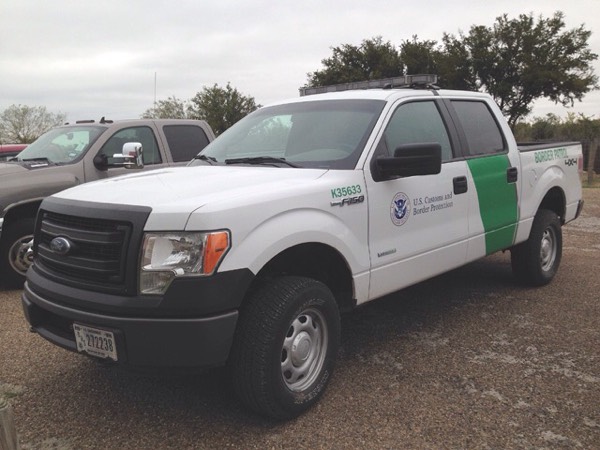
Are We Secure Yet?

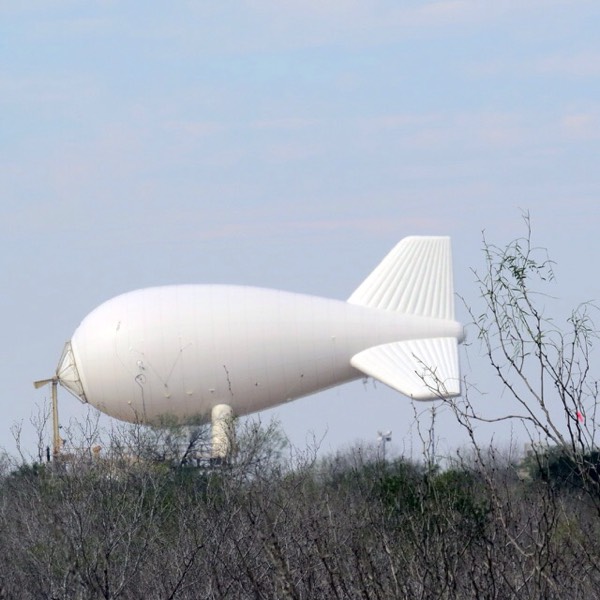
It is still disconcerting, after many trips to the Southwest, to take the dog for a walk and see, up over the tree line, a tethered surveillance balloon. Often it is miles away but I still always am tempted to wave. Here’s one not far from here that was on the ground, probably because of forecast high winds.

We had a presentation this week by a young Border Patrol agent who told us that these came from duty in Iraq, complete with bullet holes, but were very effective, especially at night, for spotting people and drugs. They still are eerie – your binoculars catch them when you look for birds – they are just silent reminders of border issues.

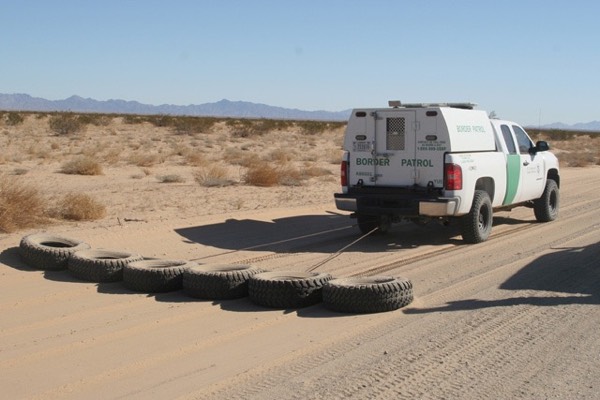
So, during the question period I asked him why, with all the high tech gear (balloons, helps, drones, sensors) why there were still so many agents dragging tires along fence lines like this:

He told that “cutting sign” is still there most effective system because drug traffickers know how to use the blind spots – the washes and arroyos – and it also , by studying footprints in the smoothed-out dirt, gives the BP a good count of “got acrossers.”

The resources deployed here are unbelievable – and that’s just what we can see. I talked about this in a [post last year.](https://www.vtbirder.com/homeland-security/)

Of course, former Governor Perry, after a snit over Federal troops, is responsible for hundreds of State Troopers stationed here. In a forty mile drive, it is not uncommon to see 40 patrol cars, usually parked along the highway, sometimes stopping a vehicle. The troopers have to be bored to tears – it looks like they are sitting in their air-conditioned vehicles playing games on their cell phones. Texans, white ones, think it’s a great program from side conversations that I hear but stay out of.

So, two weeks ago, some friend were down on the river at Salenino, a birding hotspot, when they look about a half mile upriver to see six men with bales of marijuana strapped to their backs, wading the river. John, our neighbor, aimed his big camera at them and got some shots that were amazing. Most of us thought it was rather unwise – it’s not the mules you worry about – it’s the guys on each bank running the operation.

We learned yesterday that unlike lower in the Valley where crystal meth is coming across in all sorts of containers and vehicles, here the main drug smuggled is still marijuana. This is the #1 district for the Border Patrol for narcotics in the country. Last year they seized 393,000 pounds.

It does make one wonder about the cost-benefit of going after a drug that is like alcohol in the Prohibition days. But as our young speaker told us with a grin: “Drugs and illegal immigrants: that’s my job security.”

Collector’s Items

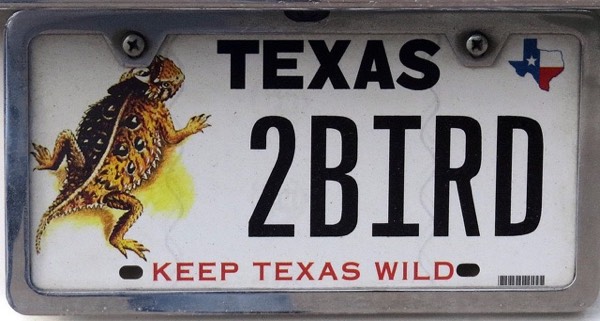
Just before I left the lower Valley, I found this license plate at the [Bentsen-Rio Grande Valley State Park](http://www.tpwd.state.tx.us/state-parks/bentsen-rio-grande-valley). I did not find the owner but thought it was a good birder plate.

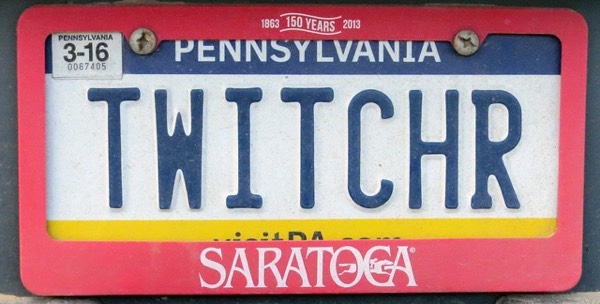
The other day, here at [Falcon State Park](http://tpwd.texas.gov/state-parks/falcon), I came across this one while walking the dog. John, the owner, is an old single guy traveling nearly full-time in a 2005 Airstream and a serious birder.

For you non-birders, twitchers are committed bird-watchers who travel long distances to see a new species just to add a species their “lifelist”, “year list” or other lists. (I generally do not include myself in that category but a really rare bird …..)

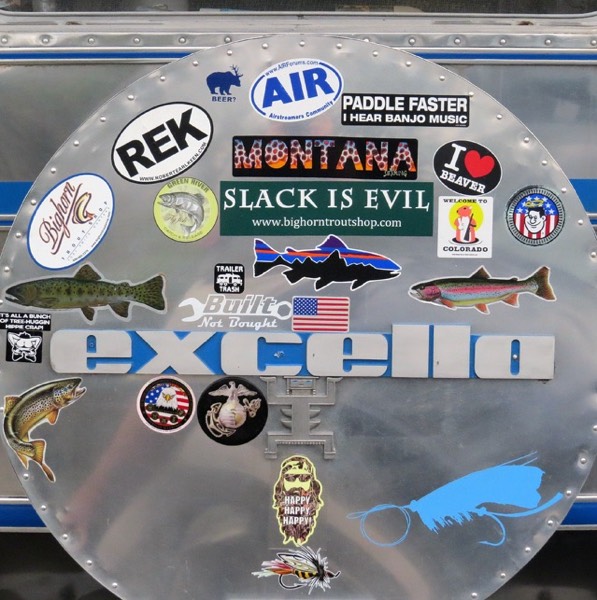
John is not only a chaser, he’s a collector. I should have figured this from the back of his vehicle which had probably fifty stickers – non political – all birding places and events he’d been to. Then, while visiting with him, I learned of his liking for old postcards, old photos and the like. He invited me into the trailer for a look and it was indescribable: hundreds of cloth patches from everywhere, a stuffed dog, all sorts of, to me, crap. I can see why he travels alone.

John collects old license plates as well and has a 1972 Wyoming plate on the front of his truck. He switches them out periodically since PA, like many states, only requires a rear plate.

To each his own. I think I’ll stick to electronic images of license plates. And continue to avoid flea markets and lawn sales.

A Birding Surprise

The other evening it was still 80 degrees after supper (Yeah, I know I’m pushing some friendships here) so we decided to take a five mile drive up to a small pond where waterfowl gather. It is on a private ranch so you have to peer through a fence, past brush and trees, often with good luck. It is perfectly safe, right beside a main road, and a local birding hotspot.

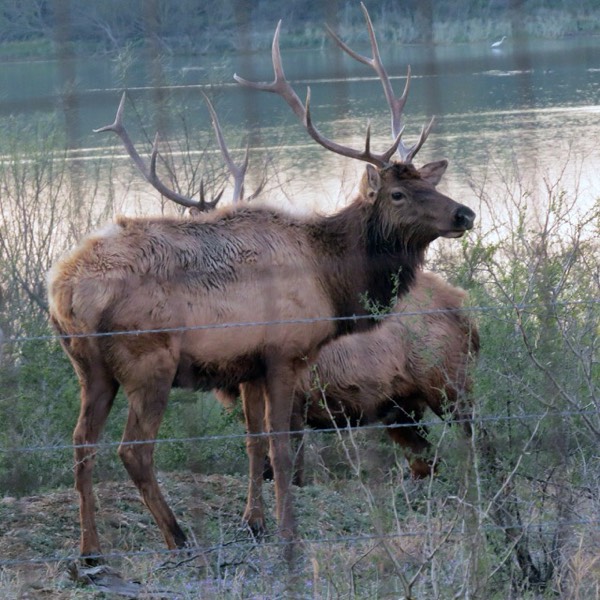
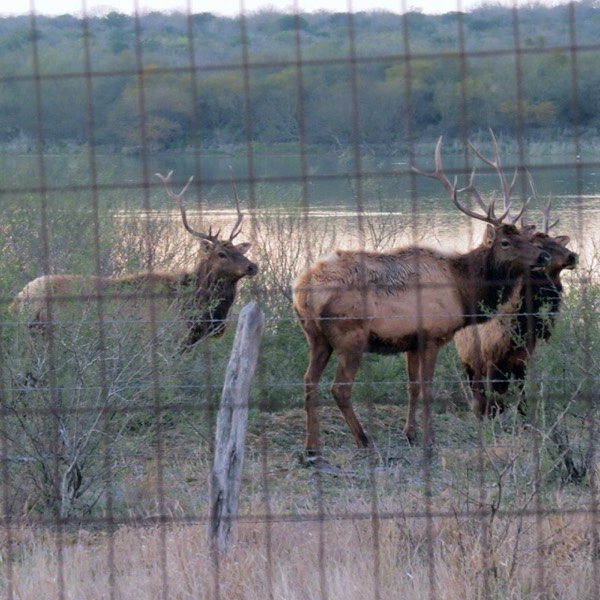
There’s a big dip in the road just before the turnoff and I had seen headlights approaching and was cautious. Sure enough, just as we pulled on to the little path that goes up by the fence, a state trooper was pulling someone over. We watched that as I approached the pond and when we looked left, it was a “Holy “&@$!” moment. Here’s what we saw:

Now I knew that there were some elk out on the vast tract and had seen one way off a few years ago, but these guys could almost stir our coffee. There were at least four who just moseyed off as I took a few photos.

You can see some Wales from Northern Shovelers and Gadwalls in the background and the first photo has a Great Egret fishing. I did get a new bird for the county – a Black-crowned Night Heron on the far bank.

Driving back with the truck windows down and the last of the sunset fading over Mexico, it just had been a great hour. We have no TV and lousy internet but there are certainly trade offs. Adios, amigos.

Aluminum Envy – A Vintage Airstream Moterhome

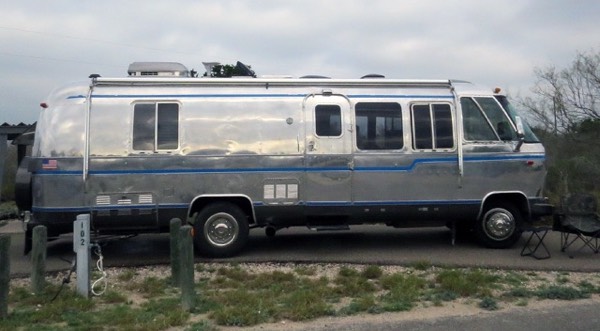
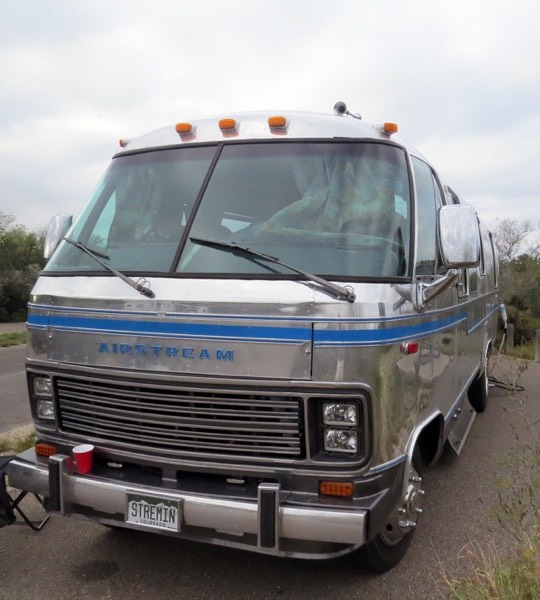
Mary noticed that the shiny Airstream as we drove down our loop at the state park, and I nearly hit a post gawking at it. Not only was it an antique, it was self-propelled and towing a Jeep. Here’s what we saw:

I walked Penny past it yesterday morning and later at our rig a voice asked, “Did you polish that yourself?” Steve and Ann were out for a walk so, after asking, we heard some of the story of the vintage Airstream.

Steve told me that he bought the 28 foot unit for $5,000 and it was a wreck. “The windshield was so cracked and crazed that I had to drive it home with my head out the window,” he said demonstrating the technique. “It leaked so much gas that I had to carry gas cans and stop and fill it every few miles. people thought I was crazy.” His partner Ann just grinned and certainly didn’t disagree.

It went into his garage and didn’t emerge for four and a half years, as he worked on it in his spare time. By then, he’d replaced the engine and complete drivetrain (did I mention that he was a GM mechanic?), replaced the dashboard and much of the interior, and spent neTly five months polishing it.

I have had enough experience stripping and polishing an Airstream that I could relate to that. The rest of the work is well beyond my ability or life expectancy.

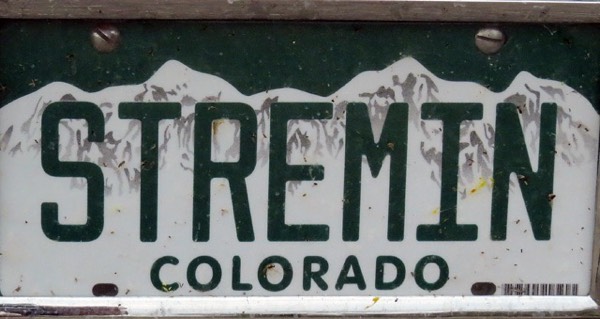
To top it of, he even has a cool license plate.

And is an angler and free spirit as reflected on his spare tire cover:

Airstream are rather rare out here – we often are the only one in a park. To have one arrive that is so unique and beautiful is a treat. Happy “stremin.”

Raptors Rule The Rio Grande Valley

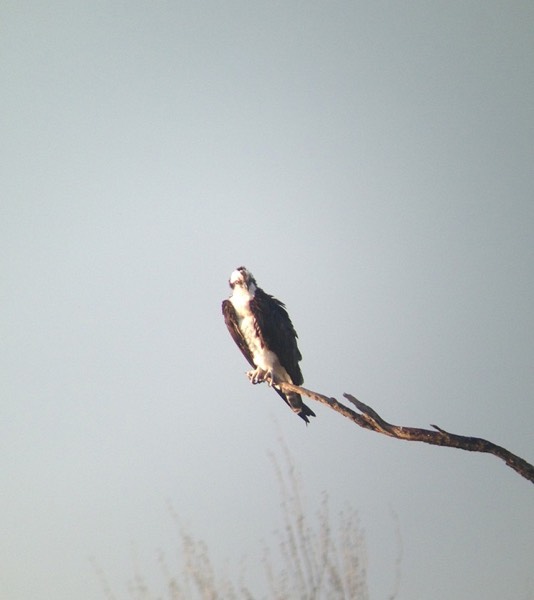
Wherever you go in the Rio Grande Valley, you find hawks – yesterday morning we found a Zone-tailed Hawk in among some Turkey Vultures (it was too far away for photos) and also saw this Osprey waiting for breakfast.

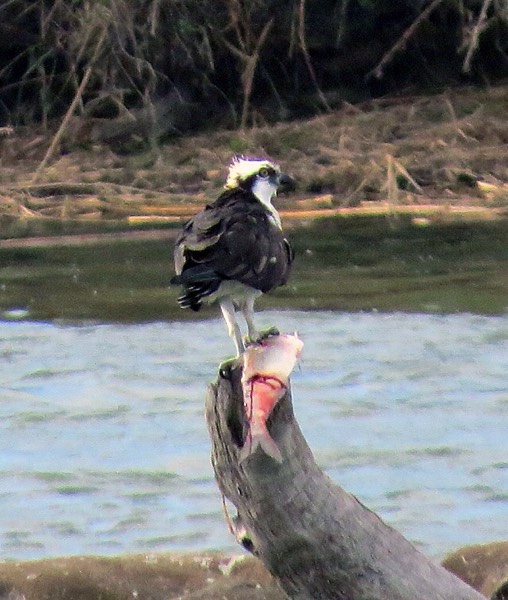
Pretty soon, along the bird came with a fish too large to lift so he/she rested on a rock to think it over. That is the Rio Grande River and you can wade across it – and folks do – but that’s another story.

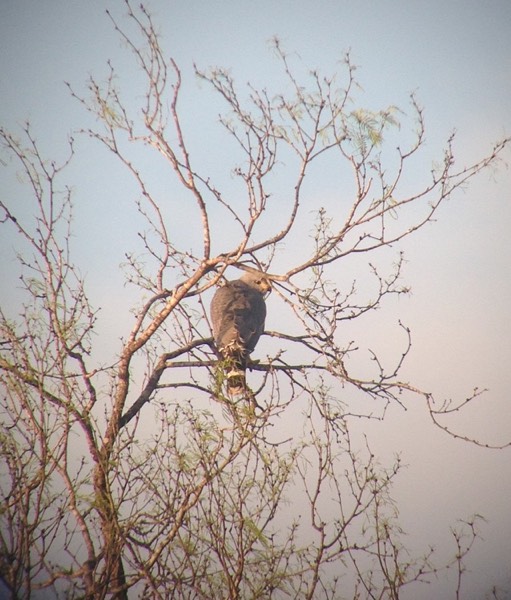
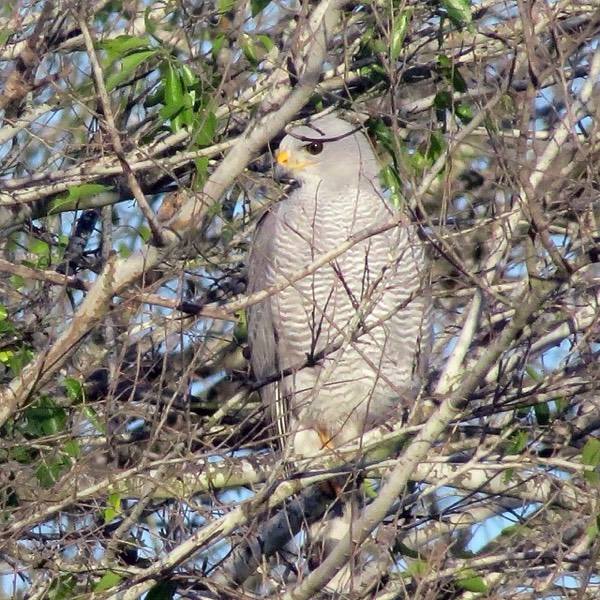
Grey Hawks are a special bird down here and still rather unique on this side of the border. Here’s one perched on the Mexican side digiscoped at long range.

This one is on U.S. soil and can be counted as such.

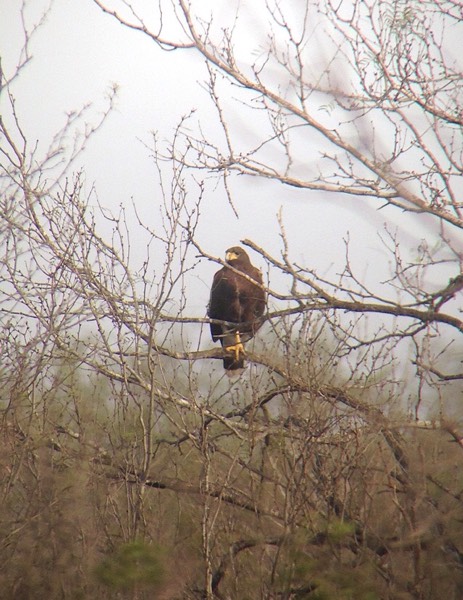
Another SW hawk is the Harris’s Hawk distinguished by its rusty color. The one was giving me the hairy eyeball as I viewed him through the scope.

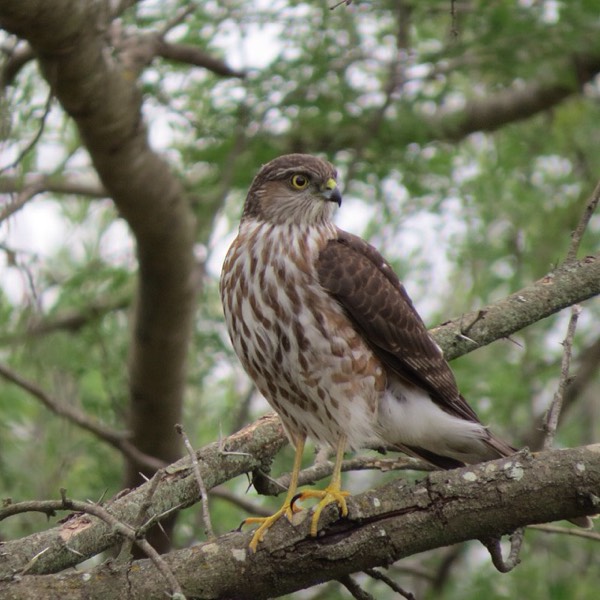
One of my favorite shots of the trip so far is of this Cooper’s Hawk, which I came up on while walking Penny. I stepped on her leash and shot quickly.

I struggle to identify hawks, especially when they are flying. This is a great region to practice and learn to separate Cooper’s, Merlins, Sharp-shinned, and the rare Broadwing from one another. Good birding to you.

Penny Meets Some Pigs Out Back

Signs and Sounds of Spring

As I sat outside last evening, dozens of Red-wing Blackbirds were in the tree above me, chattering and calling away, and I thought, "I’m certainly not in Vermont anymore."

Here in deep South Texas where spring comes early (winter never arrives), Northern Mockingbirds are starting to work on their great array of songs. At times it seems like there is a tree full of different birds as the "mocker" run through its repertoire.

Growing season in the Southern Rio Grande Valley is listed as 340 days – I have no idea when the twenty-five non-growing days occur. The thing I have noticed is that fields, one day barren, are after a few days of plowing and planting, are in about a week, green ( often with stoop laborers bent over, tweaking things.) it is an amazing growing system, complete with scarce water from the shrunken Rio Grande, intensive pesticide and fertilizer use, and cheap migrant labor.

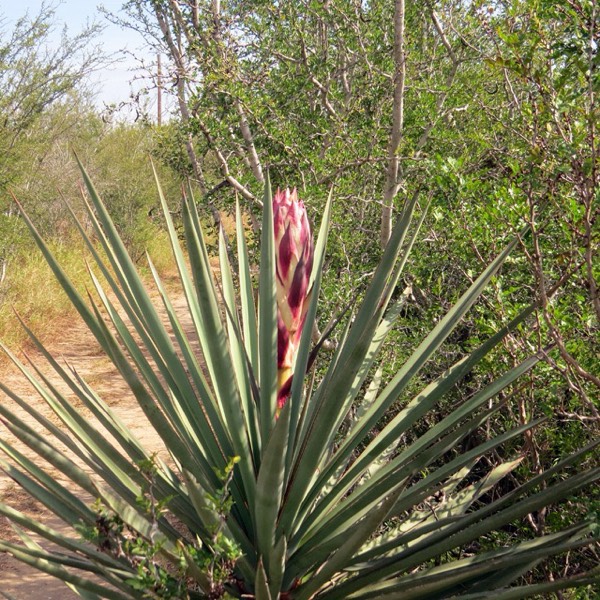
Here at Falcon State Park, the Yucca plants are blossoming.

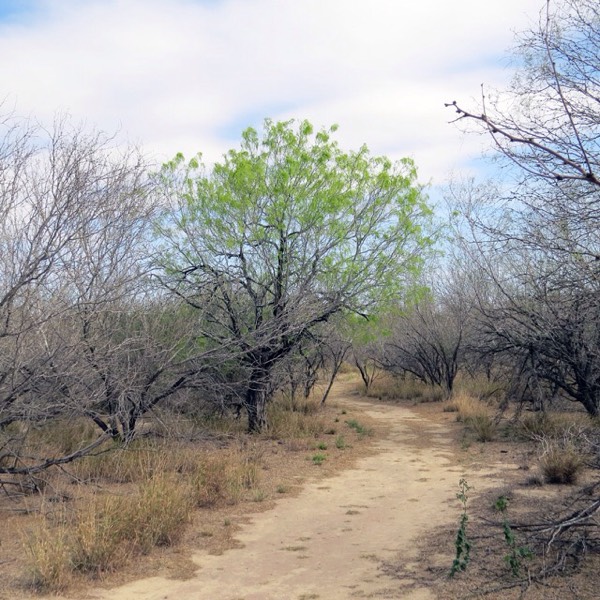
One of the indicators of spring for many Texans is the greening of Mesquite trees, such as this one I saw yesterday on the trail. It is a sure sign for many that the last frost has occurred and that it is safe to plant.

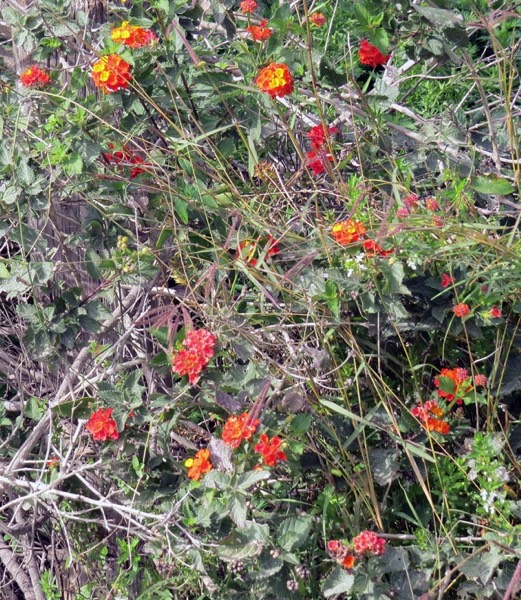
After a brief rain the other night, some flowers are beginning to pop. Here’s some Texas Lantana, a common, but pretty shrub.

I just walked by two Curved-bill Thrashers perched in a tree, singing away to one another. Love is in the air in South Texas.

Father Bird

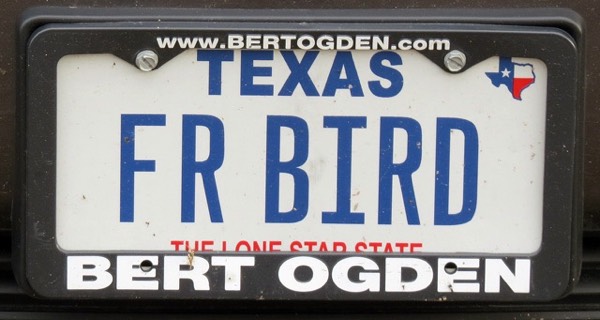
Yesterday morning, Mary and I ( and our bird dog) were at Estero Grande Llano State Park to check out some of the wonderful array of birds there – it was Mary’s first visit. As is my custom, I did a quick scan of the parking lot for birder license plates and found this interesting one.

We wondered for a moment about it (not realizing it belonged to one of the pillars of Valley birding) and went on to a great couple of hours with the birds, and a bellowing male alligator, before heading home.

Last evening, I started reading a book, Heralds of Spring in Texas, that I had borrowed from the RV park’s library.
I was just reading the Preface skimming the acknowledgements when I saw, "Father Tom Pincinellli, a Catholic priest with a deep interest in birds of the Rio Grande Valley and in helping other birders;" and I was on to Google to see if this might be the owner.

Three pages of articles flashed up and it was obvious that a.k.a. "Father Bird" had been at Estero as well. He’s a well-known birder, environmentalist, spokesperson, and articulate person of faith and I think we passed him on the trail, but of course, did not know him. From all that I have read, he would (will) be a wonderful guy to talk with. Mary, as a retired Episcopal priest would have a lot in common while I, a "learning" birder, would have a lot of questions.

Here’s a snip from one article describing his leadership role in the Rio Grande Valley Birding Festival:

That expert would be Tom Pincelli, a Catholic priest who has been a fixture in RGV birding community since arriving in south Texas in 1980. In birding circles, all you need to say is "Father Tom" or "Father Bird," and many in the Rio Grande Valley and beyond will know exactly who you are talking about. Pincell is a Connecticut native, who started birding in 1972. By the time the church offered him a congregation in Harlingen in 1980, he was well acquainted with the special birding opportunities in south Texas. For a birding priest, this assignment must have been like winning the lottery. Ever since, Father Tom has tirelessly promoted birding and bird habitat conservation in the Valley. When the festival organizers came calling, he was arguably the region’s most well-known birder, thus his involvement brought the fledgling event instant credibility.

Here is a short interview with him.

So, while we are heading westward in a few days, I’m sure that we will try to connect by email now, and in person on a future visit. I’ll also be more aggressive in tracking down the owner’s of birding plates – right then. As this exercise taught me, there are a lot of interesting people driving vehicles with avian vanity plates. Do you know any?